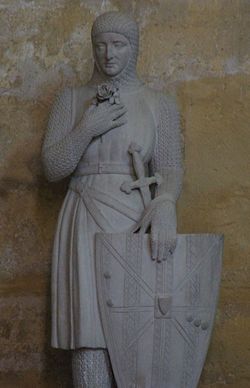
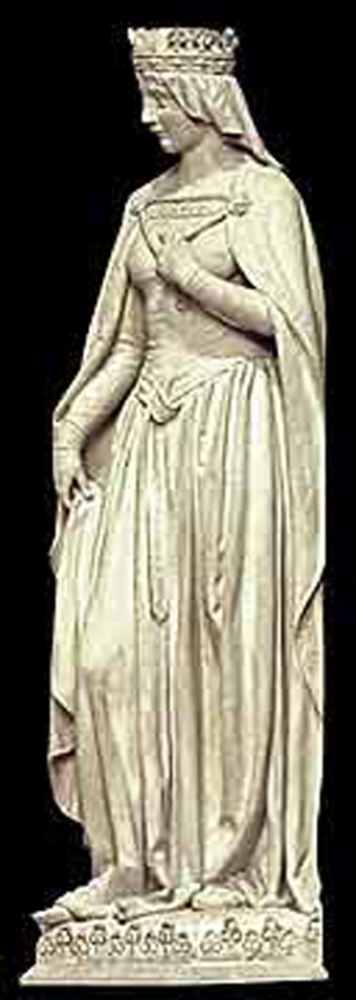
Bernard II , Duke in Saxony
Husband Bernard II , Duke in Saxony 1 2 3
AKA: Bernard II Billung Born: Abt 995 - <Namur>, Belgium Christened: Died: 29 Jun 1059 Buried: - Church of St. Michael, LüneburgMarriage:
Other Spouse: Eilika , of Schweinfurt ( - ) - Abt 1020
Noted events in his life were:
• Duke of Saxony, 1011-1059
Wife
Born: Christened: Died: Buried:
Children
Death Notes: Husband - Bernard II , Duke in Saxony
Ancestral Roots has d. 1057. Wikipedia has d. 29 June 1059.
Research Notes: Husband - Bernard II , Duke in Saxony
From Wikipedia - Bernard II, Duke of Saxony :
Bernard II (c. 995 - 29 June 1059 ) was the Duke of Saxony (1011 - 1059), the third of the Billung dynasty, a son of Bernard I and Hildegard. He had the rights of a count in Frisia .
Bernard expanded the powers of the duke in Saxony and is regarded as the greatest of the Billungers. He was originally a supporter of Emperor Henry II and he accompanied him into Poland and negotiated the treaty of Bautzen of 1018. In 1019-1020, he revolted and gained the recognition of the tribal laws of Saxony, something his father had just failed to do. He returned then to war with the Slavs and drew them into his sphere of power and influence through their leader, Godescalc (Gottschalk).
He supported Conrad II in 1024 and his son Henry III , though he began to fear the latter for his closeness to the Archbishop Adalbert of Bremen , an inveterate enemy of the dukes of Saxony. Though he was a critical ally of the Danes, so fundamental to Henry's wars in the Low Countries , Bernard was on the brink of rebellion until the death of Adalbert. The remainder of his reign, however, was quiet.
In 1045, he erected the Alsterburg in Hamburg . He died in 1059 and was succeeded without incident by his son Ordulf . He is buried in the Church of Saint Michael in Lüneburg .
Issue of Bernard II, Duke of Saxony and Eilika of SchweinfurtGertrude of Saxony (c. 1030 - August 4 , 1113 ) Married: Floris I, Count of Holland , Married (secondly): Robert I, Count of Flanders Ordulf, Duke of Saxony (c. 1020 - March 28 , 1072 ) Married: Ulfhilde or Wulfhilde of Norway (c. 1023 - May 24 , 1070 ), daughter of Saint & King Olaf II (St.Olaf) of Norway & Astrid of SwedenHermann Ida of Saxony Married: Albert III , Count of Namur
Bernard II , Comte d'Auvergne and Ermengarde , de Chalons
Husband Bernard II , Comte d'Auvergne 4 5
AKA: Bernard II d'Auvergne Count Born: Abt 841 - Auvergne, France Christened: Died: Buried:
Father: Bernard I , Comte d'Auvergne (Abt 0815- ) 6 Mother: Luitgarde (Abt 0817- ) 7
Marriage:
Wife Ermengarde , de Chalons 4 8
AKA: Ermengarde de Chalons Born: Abt 843 - France Christened: Died: Buried:
Father: Gueron , Count of Chalons (Abt 0818-0856) 9 Mother: Avane (Abt 0820- ) 10
Children
1 M Raculfe de Macon 11
Born: Abt 867 - France Christened: Died: Buried:
2 F Adelaide 4
Born: Abt 867 - Auvergne, France Christened: Died: Buried:Spouse: Alfred , Count of Carcassonne (Abt 0860- ) 4
Olderich Manfred II , Margrave of Turin and Berta
Husband Olderich Manfred II , Margrave of Turin 12
Born: Christened: Died: 1035 Buried:Marriage:
Wife Berta 13
Born: Christened: Died: Aft 4 Nov 1037 Buried:
Father: Margrave Udalrich Manfred ( - ) 13 Mother:
Children
1 F Alix , Duchess of Turin 14 15 16
AKA: Adelaide of Susa, Duchess of Turin Born: Abt 1015 Christened: Died: 27 Dec 1091 Buried:Spouse: Eudes I , Count of Maurienne and Savoy (Abt 1002-1060) 12 15 Marr: Abt 1046
Walter FitzRoger, of Gloucester and Bertha
Husband Walter FitzRoger, of Gloucester 17 18 19
AKA: Walter of Gloucester, Walter de Gloucester, Walter de Pitres Born: Abt 1065 - <Gloucester, Gloucestershire, > England Christened: Died: 1129 - England Buried:
Father: Roger de Pîtres (Abt 1035- ) 17 19 Mother: Eunice , de Balun (Abt 1150- ) 18 19
Marriage:
Noted events in his life were:
• High Sheriff of Gloucestershire
Wife Bertha 18
Born: Christened: Died: Buried:
Children
1 M Miles , of Gloucester, 1st Earl of Hereford 19 20 21
AKA: Miles de Gloucester 1st Earl of Hereford, Milo de Gloucester 1st Earl of Hereford Born: Abt 1100 - <Gloucester, Gloucestershire, > England Christened: Died: 24 Dec 1143 Buried: - Llanthony Priory, Monmouthshire, WalesSpouse: Sibyl de Neufmarché (Abt 1096-Aft 1143) 19 22 Marr: 1121
Research Notes: Husband - Walter FitzRoger, of Gloucester
From Wikipedia - Walter de Gloucester :
Walter de Gloucester (also Walter FitzRoger or Walter de Pitres) (1065 - 1129) was an early Norman official of the King of England during the early years of the Norman conquest of the South Welsh Marches .
Lineage
He was the only son of Roger de Pitres and his wife, Eunice de Balun .
Titles
Walter de Gloucester was High Sheriff of Gloucestershire and lived in Gloucester Castle of which he was constable, making improvements to this early fortification.
Family
He was married to Bertha, a relative of Hamelin de Balun . They were the parents of Miles de Gloucester, 1st Earl of Hereford and a daughter, Maud, who married a Roger FitzPons .
Birth Notes: Child - Miles , of Gloucester, 1st Earl of Hereford
Henry IV , Holy Roman Emperor and Bertha , of Savoy
Husband Henry IV , Holy Roman Emperor 13 23
![]()
AKA: Heinrich IV Holy Roman Emperor![]()
Born: 11 Nov 1050 - Goslar, Lower Saxony, Germany Christened: Died: 7 Aug 1106 - Liège, (Belgium) Buried: Aug 1111 - Speyer Cathedral, Speyer, [Rhineland-Palatinate, ] Germany
Father: Henry III "the Black" , Holy Roman Emperor (1017-1056) 24 25 Mother: Agnes , of Poitou (Abt 1025-1077) 25
Marriage: 13 Jul 1066 - Trebur, (Groß-Gerau, Hesse, Germany)
Noted events in his life were:
• Crowned, King of Germany, 1056
• Crowned, Holy Roman Emperor, 31 Mar 1084 - Rome, (Italy)
• Abdicated, as Holy Roman Emperor, 1105
Forced to abdicate
Wife Bertha , of Savoy 26 27
AKA: Bertha of Turin Born: 21 Sep 1051 Christened: Died: 27 Dec 1087 - Mainz, Germany![]()
Buried: - Speyer Cathedral, Speyer, [Rhineland-Palatinate, ] Germany
Father: Eudes I , Count of Maurienne and Savoy (Abt 1002-1060) 12 15 Mother: Alix , Duchess of Turin (Abt 1015-1091) 14 15 16
Noted events in her life were:
• Betrothal, to Henry IV, 25 Dec 1055 - Zürich, (Switzerland)
• Crowned, Holy Roman Empress, 31 Mar 1084 - Rome, (Italy)
Children
1 F Agnes , of Germany 28
![]()
Born: 1072 Christened: Died: 24 Sep 1143 Buried:Spouse: Frederick I von Büren , of Hohenstaufen, Duke of Alsace and Swabia (1050-1105) Marr: 1089Spouse: Leopold III , Margrave of Austria (1073-1136) 29 Marr: abt or aft 1105
2 F Adelheid 27
AKA: Adelaide Born: 1070 Christened: Died: 4 Jun 1079 Buried:
3 M Henry
Born: 1071 Christened: Died: 2 Aug 1071 Buried:
4 M Conrad , King of Italy
Born: 12 Feb 1074 Christened: Died: 27 Jul 1101 Buried:
5 M Henry V , Holy Roman Emperor
Born: 8 Jan 1086 Christened: Died: 23 May 1125 Buried:Spouse: Empress Matilda , Countess of Anjou (Abt 1102-1167) 30 31 Marr: 7 Jan 1114 - Worms, (Rhine-Palatinate, Germany)
Research Notes: Husband - Henry IV , Holy Roman Emperor
From Wikipedia - Henry IV, Holy Roman Emperor :
Henry IV (November 11 , 1050 -August 7 , 1106 ) was King of Germany from 1056 and Holy Roman Emperor from 1084 until his forced abdication in 1105 . He was the third emperor of the Salian dynasty and one of the most powerful and important figures of the 11th century. His reign was marked by the Investiture Controversy with the Papacy and several civil wars with pretenders to his throne in Italy and Germany.
Biography
Regency
Henry was the eldest son of the Emperor Henry III , by his second wife Agnes de Poitou , and was probably born at the royal palace at Goslar . His christening was delayed until the following Easter so that Abbot Hugh of Cluny could be one of his godparents. But even before that, at his Christmas court Henry III induced the attending nobles to promise fidelity to his son. Three years later, still anxious to ensure the succession, Henry III had a larger assembly of nobles elect the young Henry as his successor, and then, on July 17 , 1054 , had him elected as king by Herman II , Archbishop of Cologne at Trebur . The coronation was held in Aachen in 1054 . When Henry III unexpectedly died in 1056 , the accession of the six-year-old Henry IV was not opposed by his vassals. The dowager Empress Agnes acted as regent, and, according to the will of the dead emperor, the German pope Victor II was named as her counsellor. The latter's death in 1057 soon showed the political ineptitude of Agnes, and the powerful influence held over her by German magnates and Imperial functionaries.
Agnes assigned the Duchy of Bavaria , given by her husband to Henry IV, to Otto of Nordheim . This deprived the young king of a solid base of power. Likewise, her decision to assign the Duchies of Swabia and Carinthia to Rudolf of Rheinfelden (who married her daughter) and Berthold of Zähringen , respectively, would prove mistakes, as both later rebelled against the king. Unlike Henry III, Agnes proved incapable of influencing the election of the new popes, Stephen IX and Nicholas II . The Papal alliance with the Normans of southern Italy, formed to counter the communal resistance in Rome, resulted in the deterioration of relations with the German King, as well as Nicholas' interference in the election of German bishops. Agnes also granted local magnates extensive territorial privileges that eroded the King's material power.
In 1062 the young king was kidnapped during a conspiracy of German nobles led by archbishop Anno II of Cologne . Henry, who was at Kaiserwerth, was persuaded to board a boat lying in the Rhine; it was immediately unmoored and the king sprang into the stream, but was rescued by one of the conspirators and carried to Cologne. Agnes retired to a convent, the government subsequently placed in the hands of Anno. His first move was to recognize the Pope Alexander II in his conflict with the antipope Honorius II , who had been initially recognized by Agnes but was subsequently left without support.
Anno's rule proved unpopular. The education and training of Henry were supervised by Anno, who was called his magister, while Adalbert of Hamburg , archbishop of Bremen , was styled Henry's patronus. Henry's education seems to have been neglected, and his willful and headstrong nature developed under the conditions of these early years. The malleable Adalbert of Hamburg soon became the confidant of the ruthless Henry. Eventually, during an absence of Anno from Germany, Henry managed to obtain the control of his civil duties, leaving Anno only with the ecclesiastical ones.
First years of rule and Saxon War
In March 1065 Henry was declared of age. The whole of his future reign was apparently marked by efforts to consolidate Imperial power. In reality, however, it was a careful balancing act between maintaining the loyalty of the nobility and the support of the pope.
In 1066 , one year after his enthroning at the age of fifteen, he expelled Adalbert of Hamburg, who had profited off his position for personal enrichment, from the Crown Council. Henry also adopted urgent military measures against the Slav pagans, who had recently invaded Germany and besieged Hamburg.
In June 1066 Henry married Bertha of Maurienne , daughter of Count Otto of Savoy , to whom he had been betrothed in 1055 . In the same year he assembled an army to fight, at the request of the Pope, the Italo-Normans of southern Italy. Henry's troops had reached Augsburg when he received news that Godfrey of Tuscany , husband of the powerful Matilda of Canossa , marchioness of Tuscany , had already attacked the Normans. Therefore the expedition was halted.
In 1068 , driven by his impetuous character and his infidelities, Henry attempted to divorce Bertha[1]. His peroration at a council in Mainz was however rejected by the Papal legate Pier Damiani , who hinted that any further insistence towards divorce would lead the new pope, Alexander II , to deny his coronation. Henry obeyed and his wife returned to Court, but he was convinced that the Papal opposition aimed only at overthrowing lay power within the Empire, in favour of an ecclesiastical hierarchy.
In the late 1060s Henry set up with strong determination to reduce any opposition and to enlarge the national boundaries. He led expeditions against the Liutici and the margrave of a district east of Saxony; and soon afterwards he had to quench the rebellions with Rudolf of Swabia and Berthold of Carinthia. Much more serious was Henry's struggle with Otto of Nordheim, duke of Bavaria. This prince, who occupied an influential position in Germany and was one of the protagonists of Henry's early kidnapping, was accused in 1070 by a certain Egino of being privy to a plot to murder the king. It was decided that a trial by battle should take place at Goslar , but when the demand of Otto for a safe conduct for himself and his followers, to and from the place of meeting, was refused, he declined to appear. He was thereupon declared deposed in Bavaria, and his Saxon estates were plundered. He obtained sufficient support, however, to carry on a struggle with the king in Saxony and Thuringia until 1071 , when he submitted at Halberstadt . Henry aroused the hostility of the Thuringians by supporting Siegfried, archbishop of Mainz , in his efforts to exact tithes from them; but still more formidable was the enmity of the Saxons, who had several causes of complaint against the king. He was the son of one enemy, Henry III, and the friend of another, Adalbert of Bremen. He had ordered a restoration of all crown lands in Saxony and had built forts among this people, while the country was ravaged to supply the needs of his courtiers, and its duke Magnus was a prisoner in his hands. All classes were united against him, and when the struggle broke out in 1073 the Thuringians joined the Saxons. The war, which lasted with slight intermissions until 1088 , exercised a most potent influence upon Henry's fortunes elsewhere.
Investiture Controversy
Main article: Investiture Controversy
Initially in need of support for his expeditions in Saxony and Thuringia, Henry adhered to the Papal decrees in religious matters. His apparent weakness, however, had the side effect of spurring the ambitions of Gregory VII , a reformist monk elected as pontiff in 1073, for Papal hegemony.
The tension between Empire and Church culminated in the councils of 1074-1075, which constituted a substantial attempt to delegitimate Henry III's policy. Among other measures, they denied to secular rulers the right to place members of the clergy in office; this had dramatic effects in Germany, where bishops were often powerful feudatories who, in this way, were able to free themselves from imperial authority. Aside from the reacquisition of all lost privileges by the ecclesiasticals, the council's decision deprived the imperial crown of rights to almost half its lands, with grievous consequences for national unity, especially in peripheral areas like the Kingdom of Italy .
Suddenly hostile to Gregory, Henry did not relent from his positions: after his defeat of Otto of Nordheim, he continued to interfere in Italian and German episcopal life, naming bishops at his will and declaring papal provisions illegitimate. In 1075 Gregory excommunicated some members of the Imperial Court, and threatened to do the same with Henry himself. Further, in a synod held in February of that year, Gregory clearly established the supreme power of the Catholic Church, with the Empire subjected to it. Henry replied with a counter-synod of his own.
The beginning of the conflict known as the Investiture Controversy can be assigned to Christmas night of 1075: Gregory was kidnapped and imprisoned by Cencio I Frangipane , a Roman noble, while officiating at Santa Maria Maggiore in Rome. Later freed by Roman people, Gregory accused Henry of having been behind the attempt. In the same year, the emperor had defeated a rebellion of Saxons in the First Battle of Langensalza , and was therefore free to accept the challenge.
At Worms, on January 24 , 1076 , a synod of bishops and princes summoned by Henry declared Gregory VII deposed. Hildebrand replied by excommunicating the emperor and all the bishops named by him on February 22 , 1076 . In October of that year a diet of the German princes in Tribur attempted to find a settlement for the conflict, conceding Henry a year to repent from his actions, before the ratification of the excommunication that the pope was to sign in Swabia some months later. Henry did not repent, and, counting on the hostility showed by the Lombard clergy against Gregory, decided to move to Italy. He spent Christmas of that year in Besançon and, together with his wife and his son, he crossed the Alps with help of the Bishop of Turin and reached Pavia .
Gregory, on his way to the diet of Augsburg , and hearing that Henry was approaching, took refuge in the castle of Canossa (near Reggio Emilia ), belonging to Matilda. Henry's troops were nearby.
Henry's intent, however, was apparently to perform the penance required to lift his excommunication and ensure his continued rule. The choice of an Italian location for the act of repentance, instead of Augsburg, was not accidental: it aimed to consolidate the Imperial power in an area partly hostile to the Pope; to lead in person the prosecution of events; and to oppose the pact signed by German feudataries and the Pope in Tribur with the strong German party that had deposed Gregory at Worms, through the concrete presence of his army.
He stood in the snow outside the gates of the castle of Canossa for three days, from January 25 to January 27 , 1077 , begging the pope to rescind the sentence (popularly portrayed as without shoes, taking no food or shelter, and wearing a hairshirt - see Walk of Canossa ). The Pope lifted the excommunication, imposing a vow to comply with certain conditions, which Henry soon violated.
Civil war and recovery
Rudolf of Rheinfeld , a two-time brother-in-law of Henry, took advantage of the momentary weakness of the Emperor by having himself declared antiking by a council of Saxon, Bavarian, and Carinthian princes in March of 1077 in Forchheim . Rudolf promised to respect the electoral concept of the monarchy and declared his willingness to be subservient to the pope.
Despite these difficulties, Henry's situation in Germany improved in the following years. When Rudolf was crowned at Mainz in May 1077, the population revolted and forced him to flee to Saxony, where he was deprived of his territories (later he was also stripped of Swabia). After the inconclusive battle of Mellrichstadt (August 7 , 1077 ) and the defeat of Flarchheim (27 January 1080 ) Gregory instead launched a second anathema against Henry in March 1080 . However, the evidence that Gregory's hate had such a personal connotation led much of Germany to re-embrace Henry's cause.
On October 14 , 1080 the armies of the two rival kings met at the Elster River , in the plain of Leipzig . Rudolf was mortally wounded and died soon afterwards, and the rebellion against Henry lost momentum. Another antiking , Henry of Luxembourg , was fought successfully by Frederick of Swabia , Rudolf's successor in Swabia who had married Henry's daughter Agnes . Henry convoked a synod of the highest German clergy in Bamberg and Brixen (June, 1080). Here Henry had Gregory (dubbed "The False Monk") again deposed and replaced by the primate of Ravenna , Guibert (the antipope Clement III ).
Second voyage to Italy
Henry entered in Pavia and was crowned here as King of Italy, receiving the Iron Crown . He also assigned a series of privileges to the Italian cities who had supported him, and marched against the hated Matilda, declaring her deposed for lese majesty and confiscating her possessions. Then he moved to Rome, which he besieged first in 1081 : he was however compelled to retire to Tuscany, where he granted privileges to various cities, and obtained monetary assistance (360,000 gold pieces)[2] from a new ally, the eastern emperor, Alexios I Komnenos , who aimed to thwart the Norman's aims against his empire. A second and equally unsuccessful attack on Rome was followed by a war of devastation in northern Italy with the adherents of Matilda; and towards the end of 1082 the king made a third attack on Rome. After a siege of seven months the Leonine city fell into his hands. A treaty was concluded with the Romans, who agreed that the quarrel between king and pope should be decided by a synod, and secretly bound themselves to induce Gregory to crown Henry as emperor, or to choose another pope. Gregory, however, shut up in Castel Sant'Angelo , would hear of no compromise; the synod was a failure, as Henry prevented the attendance of many of the pope's supporters; and the king, in pursuance of his treaty with Alexios, marched against the Normans. The Romans soon fell away from their allegiance to the pope; and, recalled to the city, Henry entered Rome in March 1084, after which Gregory was declared deposed and Clement was recognized by the Romans. On 31 March 1084 Henry was crowned emperor by Clement, and received the patrician authority. His next step was to attack the fortresses still in the hands of Gregory. The pope was saved by the advance of Robert Guiscard , duke of Apulia, who left the siege of Durazzo and marched towards Rome: Henry left the city and Gregory could be freed. The latter however died soon later at Salerno (1085), not before a last letter in which he exhorted the whole Christianity to a crusade against the emperor.
Feeling secure of his success in Italy, Henry returned to Germany.
The Emperor spent 1084 in a show of power in Germany, where the reforming instances had still ground due to the predication of Otto of Ostia, advancing up to Magdeburg in Saxony . He also declared the Peace of God in all the Imperial territories to quench any sedition. On March 8 , 1088 Otto of Ostia was elected pope as Victor III : with the Norman support, he excommunicated Henry and Clement III, who was defined "a beast sprung out from the earth to wage war against the Saints of God". He also formed a large coalition against the Holy Roman Empire, including, aside from the Normans, the Rus of Kiev , the Lombard communes of Milan , Cremona , Lodi and Piacenza and Matilda of Canossa, who had she remarried to Welf II of Bavaria , therefore creating a concentration of power too formidable to be neglected by the emperor.
Internecine wars and death
In 1088 Henry of Luxembourg died and Egbert II, Margrave of Meissen , a longtime enemy of the emperor's, proclaimed himself the antiking's successor. Henry had him condemned by a Saxon diet and then a national one at Quedlinburg and Regensburg respectively, but was defeated by Egbert when a relief army came to the margrave's rescue during the siege of Gleichen . Egbert was murdered two years later (1090 ) and his ineffectual insurrection and royal pretensions fell apart.
Henry then launched his third punitive expedition in Italy. After some initial success against the lands of Canossa, his defeat in 1092 caused the rebellion of the Lombard communes. The insurrection extended when Matilda managed to turn against him his elder son, Conrad , who was crowned King of Italy at Monza in 1093 . The Emperor therefore found himself cut off from Germany. He could return there only in 1097 : in Germany his power wall still at its height, as Welf V of Bavaria separated from Matilda and Bavaria gave back to Welf IV .
Henry reacted by deposing Conrad at the diet of Mainz in April 1098, and designating his younger son Henry (future Henry V) as successor, under the oath sworn that he would never follow his brother's example.
The situation in the Empire remained chaotic, worsened by the further excommunication against Henry launched by the new pope Paschal II , a follower of Gregory VII's reformation ideals elected in the August of 1099. But this time the emperor, meeting with some success in his efforts to restore order, could afford to ignore the papal bana. A successful campaign in Flanders was followed in 1103 by a diet at Mainz, where serious efforts were made to restore peace, and Henry IV himself promised to go on crusade. But this plan was shattered by the revolt of his son Henry in 1104 , who, encouraged by the adherents of the pope, declared he owed no allegiance to an excommunicated father. Saxony and Thuringia were soon in arms, the bishops held mainly to the younger Henry, while the emperor was supported by the towns. A desultory warfare was unfavourable, however, to the emperor, who was taken as prisoner at an alleged reconciliation meeting at Koblenz . At a diet held in Mainz in December, Henry IV was forced to resign to his crown, being subsequently imprisoned in the castle of Böckelheim . Here he was also obliged that he had unjustly persecuted Gregory VII and to have illegally named Clement III.
When these conditions became known in Germany, a vivid movement of dissension spread. In 1106 the loyal party set up a large army to fight Henry V and Paschal. Henry IV managed to escape to Cologne from his jail, finding a considerable support in the lower Rhineland . He also entered into negotiations with England , France and Denmark .
Henry was also able to defeat his son's army near Visé, in Lorraine, on March 2 , 1106 . He however died soon afterwards after nine days of illness, while he was guest of his friend Othbert, Bishop of Liège . He was 56.
His body was buried by the bishop of Liege with suitable ceremony, but by command of the papal legate it was unearthed, taken to Speyer and placed in the at that time unconsecrated chapel of Saint Afra that was build on the side of the Imperial Cathedral . After being released from the sentence of excommunication, the remains were buried in the Speyer cathedral in August 1111 .
Evaluation
Henry IV was known for licentious behaviour in his early years, being described as careless and self-willed. In his later life, he displayed much diplomatic ability. His abasement at Canossa can be regarded as a move of policy to weaken the pope's position at the cost of a personal humiliation to himself. He was always regarded as a friend of the lower orders, was capable of generosity and gratitude, and showed considerable military skill.
Marriages
Henry's wife Bertha died on December 27 , 1087 . She was also buried at the Speyer Cathedral . Their children were:
Agnes of Germany (born 1072 ), married Frederick I von Staufen , Duke of Swabia .
Conrad (February 12 , 1074 -July 27 , 1101 )
Adelaide, died in infancy
Henry, died in infancy
Henry V, Holy Roman Emperor
In 1089 Henry married Eupraxia of Kiev , a daughter of Vsevolod I, Prince of Kiev , and sister to his son Vladimir II Monomakh , prince of Kievan Rus . She assumed the name "Adelaide" upon her coronation. In 1094 she joined the rebellion against Henry, accusing him of holding her prisoner, forcing her to participate in orgies, and attempting a black mass on her naked body.
Notes
^ Bertha in the meantime had retired to the Abbey of Lorscheim .
^ J. Norwich, Byzantium: The Decline and Fall, 21
Research Notes: Wife - Bertha , of Savoy
From Wikipedia - Bertha of Savoy :
Bertha of Savoy, also called Bertha of Turin (21 September 1051 - 27 December 1087 in Mainz) was the first wife of Emperor Henry IV , and was German Queen and Holy Roman Empress. She is buried in the cathedral of Speyer.
Life
Bertha of Savoy was a daughter of Otto of Savoy (also called Eudes and Odo) and Adelaide of Susa . Her maternal grandparents were Ulric Manfred II of Turin and Bertha of the Obertenghi .
As children, during the lifetime of Emperor Henry III , Bertha and Henry IV were betrothed on 25 December 1055 in Zürich . The wedding took place on 13 July 1066 in Trebur . While Bertha was apparently in love with Henry from the outset, Henry initially viewed his wife with aversion. Although she was apparently a pretty young woman, the Saxon chronicler Bruno, an avowed opponent of Henry IV, reported on the Emperor's continual unfaithfulness: "He had two or three Kebsweiber (concubines ) at the same time, in addition [to his wife], yet he was not content. If he heard that someone had a young and pretty daughter or wife, he instructed that she be supplied to him by force. (...) His beautiful and noble wife Bertha (...) was in such a manner hated by him that he never saw her after the wedding any more than necessary, since he had not celebrated the wedding out of free will."
In 1069, Henry began procedures for a divorce, supplying what was for the time an unusually honest reason for the divorce: "The king explained publicly (before the princes), that his relationship with his wife was not good; for a long time he had deceived others, but now he did not want to do so any longer. He could not accuse her of anything that justified a divorce, but he was not capable of carrying out conjugal relations with her any longer. He asked them for the sake of God to remove him from the bonds of a marriage closed under bad signs ... so that the way to a luckier marriage might be opened. And nobody knowing any objection to raise, and his wife being an obstacle to a second marriage ceremony, he then swore that she was as he received her, unstained and her virginity intact." (Bruno of Merseburg)
The German episcopacy dared not submit to the King's demands, and called on Pope Alexander II for assistance. He sent Petrus Damiani as his Legate to the Synod in Frankfurt, and rejected the divorce. Henry then apparently submitted to his fate, his first daughter by Bertha being born in the year after the divorce attempt.
Bertha also accompanied her husband on his dangerous journey to Canossa , carrying her three-year-old son Conrad. She remained with her husband between 25-28 January 1077 in freezing cold weather before the walls of the castle, in order to reach the solution to Henry's dispute with the Pope. Together with Henry, Bertha later also journeyed to Rome , and on 31 March 1084 was crowned Empress.
On 27 December 1087, Bertha died in Mainz.
Children
From her marriage with Henry there were eventually five children:Adelheid (1070-4 June 1079) Henry (1071-2 August 1071) Agnes of Germany (1072/73-24 September 1143 )Conrad (12 February 1074 -27 July 1101 ), later Roman-German King and King of ItalyHenry V (8 January 1086 -23 May 1125 ), later Roman-German King and Holy Roman Emperor
SourcesBruno von Merseburg: Brunonis Saxonicum bellum. Brunos Sachsenkrieg. - Übersetzt v. Franz-Josef Schmale. - In: Quellen zur Geschichte Kaiser Heinrichs IV. - Darmstadt, 1968. - (= Ausgewählte Quellen zur deutschen Geschichte des Mittelalters. Freiherr vom Stein-Gedächtnisausgabe ; 12). - S. 191-405. Ancestral Roots of Certain American Colonists Who Came to America Before 1700 by Frederick Lewis Weis, Lines 45-23, 274-22, 274-23.
Hugh II , Count of Pontieu and Bertha , of Aumale
Husband Hugh II , Count of Pontieu
Born: Christened: Died: 20 Nov 1052 Buried:Marriage:
Wife Bertha , of Aumale
Born: Christened: Died: Buried:
Children
1 M Enguerrand II , Count of Ponthieu
Born: Christened: Died: 1053 - Arques Buried:Spouse: Adelaide , of Normandy, Countess of Aumale (Abt 1030-Betw 1081/1090) 32 33 34
Research Notes: Husband - Hugh II , Count of Pontieu
Source: Ancestral Roots of Certain American Colonists Who Came to America before 1700 by Frederick Lewis Weis and Walter Lee Sheppard, Jr, ed. by William R. Beall & Kaleen E. Beall, Baltimore, 2008, Line 130-24 (Adelaide)
Research Notes: Wife - Bertha , of Aumale
Source: Ancestral Roots of Certain American Colonists Who Came to America before 1700 by Frederick Lewis Weis and Walter Lee Sheppard, Jr, ed. by William R. Beall & Kaleen E. Beall, Baltimore, 2008, Line 130-24 (Adelaide)
Death Notes: Child - Enguerrand II , Count of Ponthieu
Herbert I , Count of Vermandois and Bertha , de Morvois
Husband Herbert I , Count of Vermandois 35 36 37
AKA: Hubert I de Vermandois, Herbert I de Vermandois Born: Abt 850 Christened: Died: 6 Nov 900-907 Buried:
Father: Pepin , Count of Senlis, Peronne, St. Quentin (Betw 0817/0818- ) 38 39 Mother:
Marriage:
Noted events in his life were:
• Count of Soissons
• Count of Méaux
• Count of Vermandois, 877-900
Wife Bertha , de Morvois 40
AKA: Beatrice of Morvois Born: Abt 844 - Namur, Namur, Belgium Christened: Died: Buried:
Father: Guerri I , Count of Morvois ( - ) Mother: Eve , of Roussillon ( - ) 41
Children
1 M Herbert II , Count of Vermandois, Soissons and Troyes 42 43 44 45
AKA: Herbert II de Vermandois Born: Betw 880 and 890 - Vermand, Picardy, France Christened: Died: 23 Feb 943 - St. Quentin, Picardy, France Buried:Spouse: Liegarde , of France (Abt 0886-Aft 0931) 46 47 Marr: by 907
2 F Beatrice de Vermandois 48 49
AKA: Beatrix de Vermandois Born: 880 - <Vermandois, Neustria (France)> Christened: Died: Aft Mar 931 Buried:Spouse: Robert I , Duke of France (0866-0923) 50 Marr: Aft 893
3 F Cunigunde de Vermandois
Born: Christened: Died: 943 Buried:
4 F Adele , of Vermandois 36
Born: Christened: Died: Buried:
5 M Berenger de Vermandois, Count of Bayeaux
Born: Christened: Died: Buried:
Research Notes: Husband - Herbert I , Count of Vermandois
Source: Ancestral Roots of Certain American Colonists Who Came to America before 1700 by Frederick Lewis Weis and Walter Lee Sheppard, Jr, ed. by William R. Beall & Kaleen E. Beall, Baltimore, 2008, Line 50-17 has b. abt. 850, d. 6 Nov bet. 900/907. Count of Soissons, Count of Méaux, Count of Vermandois 877/900
Source: familysearch.org (Kevin Bradford) has b. abt 840, d. abt 902. Has name as Hubert I.
From Wikipedia - Herbert I, Count of Vermandois :
Herbert I of Vermandois (c. 848 /850 - 907 ), Count of Vermandois , lord of Senlis , of Peronne and of Saint Quentin , was the son of Pepin of Vermandois .
Marriage and issue
He married Bertha de Morvois . They had the following:Herbert II of Vermandois (c. 880 -943 ) Béatrice of Vermandois (c. 880-931 ), married King Robert I of France .Cunigunde of Vermandois (d. 943) Adele of Vermandois Berenger of Vermandois, Count of Bayeaux whose grandson was Conan I of Rennes .
Research Notes: Wife - Bertha , de Morvois
Source: Also familysearch.org (Kevin Bradford)
William de Braose, 3rd Lord of Bramber and Bertha , of Hereford
Husband William de Braose, 3rd Lord of Bramber 19 51 52
AKA: William de Braose of Brecknock, Abergavenney and Gower Born: Abt 1100 - Brecon, Breconshire, (Powys), Wales Christened: Died: Abt 1193 - England Buried:
Father: Philip de Braose, 2nd Lord of Bramber, Sussex (Betw 1070/1073-1135) 19 53 54 Mother: Aenor de Totenais (Abt 1084- ) 53 55
Marriage: Abt 1150
Noted events in his life were:
• 1st Baron of Gwentland
• Acquired, lordships of Brecon and Abergavenny, 1166
upon the death of his wife's fourth and last brother. (Her brothers all died without heirs.)
• Sheriff of Hereford, 1174
Wife Bertha , of Hereford 19 21 56
AKA: Bertha de Pitres, Bertha de Gloucester Born: Abt 1130 - <Gloucester, Gloucestershire, > England Christened: Died: Buried:
Father: Miles , of Gloucester, 1st Earl of Hereford (Abt 1100-1143) 19 20 21 Mother: Sibyl de Neufmarché (Abt 1096-Aft 1143) 19 22
Children
1 F Sibyl de Braose 57 58
AKA: Sibila de Braose Born: Abt 1157 - Bramber, Sussex, England Christened: Died: Aft 5 Feb 1228 - England Buried:Spouse: William de Ferrers, 3rd Earl of Derby (Abt 1140-Bef 1190) 59 60 61 Marr: Abt 1174 - Sussex, England
2 M William de Braose, 5th Lord de Braose 62 63
Born: Abt 1175 - <Bramber, Sussex>, England Christened: Died: 9 Aug 1211 - Corbeil near Paris, Marne, France Buried: 10 Aug 1211 - FranceSpouse: Maud de St. Valerie, of Haie (Abt 1155-1210) 63 64
3 F Bertha de Braose 19
AKA: Maud de Braose Born: Abt 1151 - Bramber, Sussex, England Christened: Died: 1170 - England Buried:Spouse: Walter de Beauchamp, of Elmley, Worcestershire (Abt 1173-1235) 65 Marr: Abt 1175 - <Bramber, Sussex>, England
Research Notes: Husband - William de Braose, 3rd Lord of Bramber
Eldest son fo Philip de Braose.
From Wikipedia - William de Braose, 3rd Lord of Bramber :
William de Braose, Third Lord of Bramber (born 1112 in Brecon ) (d. ca. 1192) was the eldest son of Philip de Braose , Second Lord of Bramber.
Family and early career
William was born into a second generation English Norman dynasty holding Lordships and land in Sussex at Bramber , also at Totnes in Devon and Radnor and Builth in the Welsh Marches of Wales . He maintained his Sussex lands and titles, extended St Mary de Haura Church in Shoreham and contributed to a priory at Sele, West Sussex . His mother was Aenor Fitz Judhel of Totnes.
He also inherited one half of the honour of Barnstaple in Devon , paying a fee of 1000 marks for the privilege.
William married Bertha de Pitres , also known as Bertha de Hereford , daughter of Miles of Gloucester , Earl of Hereford . Through this marriage, William acquired lordships of Brecon and Abergavenny in 1166 because Bertha's four brothers all died young without heirs.
These vast land holdings greatly expanded the territorial power and income of the de Braose dynasty. They now held the Middle March with extensive interests in Sussex and Devon.
William's younger brother Phillip accompanied King Henry II to Ireland , receiving in 1172 the honour of Limerick .
Marcher titles
In 1174, William became sheriff of Hereford . He died in about 1192 and was succeeded as Lord of Bramber by his son, William . He had also fathered two daughters, Maud and Sibilla, who married well and possibly a later son, named John.
Birth Notes: Child - William de Braose, 5th Lord de Braose
FamilySearch has b. abt. 1153, Bramber, Sussex, England.
Bertha , of Hereford
Husband
Born: Christened: Died: Buried:Marriage:
Wife Bertha , of Hereford 19 21 56
AKA: Bertha de Pitres, Bertha de Gloucester Born: Abt 1130 - <Gloucester, Gloucestershire, > England Christened: Died: Buried:
Father: Miles , of Gloucester, 1st Earl of Hereford (Abt 1100-1143) 19 20 21 Mother: Sibyl de Neufmarché (Abt 1096-Aft 1143) 19 22
Other Spouse: William de Braose, 3rd Lord of Bramber (Abt 1100-Abt 1193) 19 51 52 - Abt 1150
Children
Pepin , King of Italy and Lombardy and Bertha
Husband Pepin , King of Italy and Lombardy 66 67
Born: Apr 773 Christened: 12 Apr 781 - Rome, (Italy) Died: 8 Jul 810 - Milan, Italy Buried:
Father: Charlemagne , King of France, Holy Roman Emperor (0747-0814) 68 69 70 71 Mother: Hildegard , of Vinzgouw (Abt 0758-0783) 44 72 73 74
Marriage: Bef 800
Other Spouse: < > , [Daughter of Duke Bernard] ( - ) 75
Noted events in his life were:
• Baptized, by Pope Adrian I, 12 Apr 781 - Rome, (Italy)
• King of Italy, 781-810
• Consecrated, King of Lombardy, 15 Apr 781
Wife Bertha
Born: Christened: Died: Buried:
Children
Christening Notes: Husband - Pepin , King of Italy and Lombardy
Baptized at Rome, 12 Apr. 781, by Pope Adrian I
Research Notes: Husband - Pepin , King of Italy and Lombardy
Source: Ancestral Roots of Certain American Colonists Who Came to America before 1700 by Frederick Lewis Weis and Walter Lee Sheppard, Jr, ed. by William R. Beall & Kaleen E. Beall, Baltimore, 2008, Line 50-14
Source: familysearch.org (Kevin Bradford) has b. Apr 777.
Wikipedia has b. April 773.
From Wikipedia - Pepin of Italy :
Pepin (April 773 - 8 July 810 ) was the son of Charlemagne and king of Italy (781 -810) under the authority of his father.
Pepin was the third son of Charlemagne , and the second with his wife Hildegard . He was born Carloman, but when his brother Pepin the Hunchback betrayed their father, the royal name Pepin passed to him. He was made king of Italy after his father's conquest of the Lombards , in 781, and crowned by Pope Hadrian I with the Iron Crown of Lombardy .
He was active as ruler of Italy and worked to expand the Frankish empire. In 791 , he marched a Lombard army into the Drava valley and ravaged Pannonia , while his father marched along the Danube into Avar territory. Charlemagne left the campaigning to deal with a Saxon revolt in 792 . Pepin and Duke Eric of Friuli continued, however, to assault the Avars' ring-shaped strongholds. The great Ring of the Avars, their capital fortress, was taken twice. The booty was sent to Charlemagne in Aachen and redistributed to all his followers and even to foreign rulers, including King Offa of Mercia .
His activities included a long, but unsuccessful siege of Venice in 810. The siege lasted six months and Pepin's army was ravaged by the diseases of the local swamps and was forced to withdraw. A few months later Pepin died.
He married Bertha, daughter of William of Gellone , count of Toulouse , and had five daughters with her (Adelaide , married Lambert I of Nantes ; Atala; Gundrada; Bertha; and Tetrada), all of whom but the eldest were born between 800 and Pepin's death and died before their grandfather's death in 814 . Pepin also had an illegitimate son Bernard . Pepin was expected to inherit a third of his father's empire, but he predeceased him. The Italian crown passed on to his son Bernard, but the empire went to Pepin's younger brother Louis the Pious .
Research Notes: Wife - Bertha
Source: Ancestral Roots of Certain American Colonists Who Came to America before 1700 by Frederick Lewis Weis and Walter Lee Sheppard, Jr, ed. by William R. Beall & Kaleen E. Beall, Baltimore, 2008, Line 50-14 (Pepin)
Sources
1. Weis, Frederick Lewis and Walter Lee Sheppard, Jr; William R. Beall and Kaleen E. Beall, eds, Ancestral Roots of Certain American Colonists Who Came to America before 1700 (8th ed. Baltimore: Genealogical Publishing Company, 2008.), Line 164-23 (Robert I), 149-22 (Albert III).
2. Wikipedia.org, Bernard II, Duke of Saxony.
3. http://www.familysearch.org, Cit. Date: 31 Jul 2009.
4. http://www.familysearch.org, Cit. Date: 8 Aug 2009.
5. http://wc.rootsweb.ancestry.com/cgi-bin/igm.cgi. Rec. Date: 25 Aug 2001, http://wc.rootsweb.com/cgi-bin/igm.cgi?op=GET&db=:3174654&id=I593876623.
6. http://wc.rootsweb.ancestry.com/cgi-bin/igm.cgi. Rec. Date: 25 Aug 2001, http://wc.rootsweb.com/cgi-bin/igm.cgi?op=GET&db=:3174654&id=I593876624.
7. http://wc.rootsweb.ancestry.com/cgi-bin/igm.cgi. Rec. Date: 25 Aug 2001, http://wc.rootsweb.com/cgi-bin/igm.cgi?op=GET&db=:3174654&id=I593876625.
8. http://wc.rootsweb.ancestry.com/cgi-bin/igm.cgi. Rec. Date: 25 Aug 2001, http://wc.rootsweb.com/cgi-bin/igm.cgi?op=GET&db=:3174654&id=I593876626.
9. http://wc.rootsweb.ancestry.com/cgi-bin/igm.cgi. Rec. Date: 25 Aug 2001, http://wc.rootsweb.com/cgi-bin/igm.cgi?op=GET&db=:3174654&id=I593876419.
10. http://wc.rootsweb.ancestry.com/cgi-bin/igm.cgi. Rec. Date: 25 Aug 2001, http://wc.rootsweb.com/cgi-bin/igm.cgi?op=GET&db=:3174654&id=I593876622.
11. http://wc.rootsweb.ancestry.com/cgi-bin/igm.cgi. Rec. Date: 25 Aug 2001, http://wc.rootsweb.com/cgi-bin/igm.cgi?op=GET&db=:3174654&id=I593876621.
12. Weis, Frederick Lewis and Walter Lee Sheppard, Jr; William R. Beall and Kaleen E. Beall, eds, Ancestral Roots of Certain American Colonists Who Came to America before 1700 (8th ed. Baltimore: Genealogical Publishing Company, 2008.), Line 274-22.
13. Weis, Frederick Lewis and Walter Lee Sheppard, Jr; William R. Beall and Kaleen E. Beall, eds, Ancestral Roots of Certain American Colonists Who Came to America before 1700 (8th ed. Baltimore: Genealogical Publishing Company, 2008.), Line 45-23.
14. Weis, Frederick Lewis and Walter Lee Sheppard, Jr; William R. Beall and Kaleen E. Beall, eds, Ancestral Roots of Certain American Colonists Who Came to America before 1700 (8th ed. Baltimore: Genealogical Publishing Company, 2008.), Line 274-22 & 274A-22.
15. http://www.familysearch.org, Cit. Date: 6 Aug 2009.
16. Wikipedia.org, Bertha of Savoy. Cit. Date: 6 Aug 2009.
17. Weis, Frederick Lewis and Walter Lee Sheppard, Jr; William R. Beall and Kaleen E. Beall, eds, Ancestral Roots of Certain American Colonists Who Came to America before 1700 (8th ed. Baltimore: Genealogical Publishing Company, 2008.), Line 177-4 (Sibyl de Neufmarche).
18. Wikipedia.org, Walter de Gloucester.
19. http://www.familysearch.org, Cit. Date: 17 Jul 2009.
20. Weis, Frederick Lewis and Walter Lee Sheppard, Jr; William R. Beall and Kaleen E. Beall, eds, Ancestral Roots of Certain American Colonists Who Came to America before 1700 (8th ed. Baltimore: Genealogical Publishing Company, 2008.), Line 193-4 (Sibyl de Neufmarche).
21. Wikipedia.org, Miles de Gloucester, 1st Earl of Hereford.
22. Weis, Frederick Lewis and Walter Lee Sheppard, Jr; William R. Beall and Kaleen E. Beall, eds, Ancestral Roots of Certain American Colonists Who Came to America before 1700 (8th ed. Baltimore: Genealogical Publishing Company, 2008.), Lines 193-4, 177-4, 237-4.
23. Wikipedia.org, Henry IV, Holy Roman Emperor.
24. Weis, Frederick Lewis and Walter Lee Sheppard, Jr; William R. Beall and Kaleen E. Beall, eds, Ancestral Roots of Certain American Colonists Who Came to America before 1700 (8th ed. Baltimore: Genealogical Publishing Company, 2008.), Line 45-22.
25. Wikipedia.org, Henry III, Holy Roman Emperor.
26. Weis, Frederick Lewis and Walter Lee Sheppard, Jr; William R. Beall and Kaleen E. Beall, eds, Ancestral Roots of Certain American Colonists Who Came to America before 1700 (8th ed. Baltimore: Genealogical Publishing Company, 2008.), Line 274-23.
27. Wikipedia.org, Bertha of Savoy.
28. Wikipedia.org, http://en.wikipedia.org/wiki/Agnes_of_Germany. Cit. Date: 15 Jan 2009.
29. Weis, Frederick Lewis and Walter Lee Sheppard, Jr; William R. Beall and Kaleen E. Beall, eds, Ancestral Roots of Certain American Colonists Who Came to America before 1700 (8th ed. Baltimore: Genealogical Publishing Company, 2008.), Line 45-24.
30. Weis, Frederick Lewis and Walter Lee Sheppard, Jr; William R. Beall and Kaleen E. Beall, eds, Ancestral Roots of Certain American Colonists Who Came to America before 1700 (8th ed. Baltimore: Genealogical Publishing Company, 2008.), Line 1-23, 118-25 (Geoffrey V).
31. Wikipedia.org, Empress Matilda. Cit. Date: 15 Sep 2009.
32. Wikipedia.org, Herleva.
33. Weis, Frederick Lewis and Walter Lee Sheppard, Jr; William R. Beall and Kaleen E. Beall, eds, Ancestral Roots of Certain American Colonists Who Came to America before 1700 (8th ed. Baltimore: Genealogical Publishing Company, 2008.), Line 130-24.
34. Website - Genealogy, thepeerage.com. Cit. Date: 22 Dec 2003.
35. Weis, Frederick Lewis and Walter Lee Sheppard, Jr; William R. Beall and Kaleen E. Beall, eds, Ancestral Roots of Certain American Colonists Who Came to America before 1700 (8th ed. Baltimore: Genealogical Publishing Company, 2008.), Line 50-17, 53-18 (Robert I).
36. Wikipedia.org, Herbert I, Count of Vermandois.
37. http://wc.rootsweb.ancestry.com/cgi-bin/igm.cgi. Rec. Date: 25 Aug 2001, http://wc.rootsweb.com/cgi-bin/igm.cgi?op=GET&db=:3174654&id=I593871673.
38. Wikipedia.org, Pepin, Count of Vermandois.
39. Weis, Frederick Lewis and Walter Lee Sheppard, Jr; William R. Beall and Kaleen E. Beall, eds, Ancestral Roots of Certain American Colonists Who Came to America before 1700 (8th ed. Baltimore: Genealogical Publishing Company, 2008.), Line 50-16.
40. http://wc.rootsweb.ancestry.com/cgi-bin/igm.cgi. Rec. Date: 25 Aug 2001, http://wc.rootsweb.com/cgi-bin/igm.cgi?op=GET&db=:3174654&id=I593871884.
41. Weis, Frederick Lewis and Walter Lee Sheppard, Jr; William R. Beall and Kaleen E. Beall, eds, Ancestral Roots of Certain American Colonists Who Came to America before 1700 (8th ed. Baltimore: Genealogical Publishing Company, 2008.), Line 50-17 (Herbert I), 118-17 (Herbert I).
42. Weis, Frederick Lewis and Walter Lee Sheppard, Jr; William R. Beall and Kaleen E. Beall, eds, Ancestral Roots of Certain American Colonists Who Came to America before 1700 (8th ed. Baltimore: Genealogical Publishing Company, 2008.), Line 50-18.
43. Wikipedia.org, Herbert II, Count of Vermandois.
44. http://www.familysearch.org, (Kevin Bradford).
45. http://wc.rootsweb.ancestry.com/cgi-bin/igm.cgi. Rec. Date: 25 Aug 2001, http://wc.rootsweb.com/cgi-bin/igm.cgi?op=GET&db=:3174654&id=I593871672.
46. Weis, Frederick Lewis and Walter Lee Sheppard, Jr; William R. Beall and Kaleen E. Beall, eds, Ancestral Roots of Certain American Colonists Who Came to America before 1700 (8th ed. Baltimore: Genealogical Publishing Company, 2008.), Line 48-19, 50-18 (Herbert II).
47. http://www.familysearch.org, Cit. Date: 23 Jul 2009.
48. Weis, Frederick Lewis and Walter Lee Sheppard, Jr; William R. Beall and Kaleen E. Beall, eds, Ancestral Roots of Certain American Colonists Who Came to America before 1700 (8th ed. Baltimore: Genealogical Publishing Company, 2008.), Line 48-18, 53-18 (Robert I), 101-18 (Robert I).
49. http://www.familysearch.org, Cit. Date: 24 Jul 2009.
50. Weis, Frederick Lewis and Walter Lee Sheppard, Jr; William R. Beall and Kaleen E. Beall, eds, Ancestral Roots of Certain American Colonists Who Came to America before 1700 (8th ed. Baltimore: Genealogical Publishing Company, 2008.), Lines 48-18, 53-18, 101-18.
51. Weis, Frederick Lewis and Walter Lee Sheppard, Jr; William R. Beall and Kaleen E. Beall, eds, Ancestral Roots of Certain American Colonists Who Came to America before 1700 (8th ed. Baltimore: Genealogical Publishing Company, 2008.), Line 177-5 (Bertha of Hereford), 194-5 (Bertha of Hereford).
52. Wikipedia.org, William de Braose, 3rd Lord of Bramber. Cit. Date: 4 Sep 2009.
53. Weis, Frederick Lewis and Walter Lee Sheppard, Jr; William R. Beall and Kaleen E. Beall, eds, Ancestral Roots of Certain American Colonists Who Came to America before 1700 (8th ed. Baltimore: Genealogical Publishing Company, 2008.), Line 177-5 (Bertha of Hereford).
54. Wikipedia.org, Philip de Braose. Cit. Date: 4 Sep 2009.
55. http://www.familysearch.org, Cit. Date: 18 Jul 2009.
56. Weis, Frederick Lewis and Walter Lee Sheppard, Jr; William R. Beall and Kaleen E. Beall, eds, Ancestral Roots of Certain American Colonists Who Came to America before 1700 (8th ed. Baltimore: Genealogical Publishing Company, 2008.), Line 194-5.
57. Weis, Frederick Lewis and Walter Lee Sheppard, Jr; William R. Beall and Kaleen E. Beall, eds, Ancestral Roots of Certain American Colonists Who Came to America before 1700 (8th ed. Baltimore: Genealogical Publishing Company, 2008.), Line 194-6.
58. http://www.familysearch.org, Cit. Date: 14 Aug 2009.
59. Weis, Frederick Lewis and Walter Lee Sheppard, Jr; William R. Beall and Kaleen E. Beall, eds, Ancestral Roots of Certain American Colonists Who Came to America before 1700 (8th ed. Baltimore: Genealogical Publishing Company, 2008.), Line 132C-28 (Roger de Mortimer), Line 194-6 (Sibyl de Braose).
60. http://www.familysearch.org, Cit. Date: 9 Aug 2009.
61. Wikipedia.org, William de Ferrers, 3rd Earl of Derby. Cit. Date: 9 Aug 2009.
62. Weis, Frederick Lewis and Walter Lee Sheppard, Jr; William R. Beall and Kaleen E. Beall, eds, Ancestral Roots of Certain American Colonists Who Came to America before 1700 (8th ed. Baltimore: Genealogical Publishing Company, 2008.), Line 177-6, 177A-6.
63. http://www.familysearch.org, Cit. Date: 28 Jul 2009.
64. Weis, Frederick Lewis and Walter Lee Sheppard, Jr; William R. Beall and Kaleen E. Beall, eds, Ancestral Roots of Certain American Colonists Who Came to America before 1700 (8th ed. Baltimore: Genealogical Publishing Company, 2008.), Line 177-6 (William de Braose).
65. http://www.familysearch.org, Cit. Date: 16 Jul 2009.
66. Weis, Frederick Lewis and Walter Lee Sheppard, Jr; William R. Beall and Kaleen E. Beall, eds, Ancestral Roots of Certain American Colonists Who Came to America before 1700 (8th ed. Baltimore: Genealogical Publishing Company, 2008.), Line 50-14.
67. Wikipedia.org, Pepin of Italy.
68. Weis, Frederick Lewis and Walter Lee Sheppard, Jr; William R. Beall and Kaleen E. Beall, eds, Ancestral Roots of Certain American Colonists Who Came to America before 1700 (8th ed. Baltimore: Genealogical Publishing Company, 2008.), 50-13, 140-13, 190-13.
69. Wikipedia.org, Charlemagne.
70. Wikipedia.org, Rhenish Hesse.
71. http://www.familysearch.org, Compact Disc #94 Pin #91438 (submitted by Samuel Taylor "Sam" Geer).
72. Weis, Frederick Lewis and Walter Lee Sheppard, Jr; William R. Beall and Kaleen E. Beall, eds, Ancestral Roots of Certain American Colonists Who Came to America before 1700 (8th ed. Baltimore: Genealogical Publishing Company, 2008.), Line 182-5, 140-13 (Charlemagne), 148-13 (Charlemagne), 190-13 (Charlemagne).
73. Wikipedia.org, Hildegard of Vinzgouw.
74. http://www.familysearch.org, Compact Disc #94 Pin #91440 (submitted by Samuel Taylor "Sam" Geer).
75. Weis, Frederick Lewis and Walter Lee Sheppard, Jr; William R. Beall and Kaleen E. Beall, eds, Ancestral Roots of Certain American Colonists Who Came to America before 1700 (8th ed. Baltimore: Genealogical Publishing Company, 2008.), Line 50-14 (Pepin).
1 Weis, Frederick Lewis and Walter Lee Sheppard, Jr; William R. Beall and Kaleen E. Beall, eds, Ancestral Roots of Certain American Colonists Who Came to America before 1700 (8th ed. Baltimore: Genealogical Publishing Company, 2008.), Line 164-23 (Robert I), 149-22 (Albert III).
2 Wikipedia.org, Bernard II, Duke of Saxony.
3 http://www.familysearch.org, Cit. Date: 31 Jul 2009.
4 http://www.familysearch.org, Cit. Date: 8 Aug 2009.
5 http://wc.rootsweb.ancestry.com/cgi-bin/igm.cgi. Rec. Date: 25 Aug 2001, http://wc.rootsweb.com/cgi-bin/igm.cgi?op=GET&db=:3174654&id=I593876623.
6 http://wc.rootsweb.ancestry.com/cgi-bin/igm.cgi. Rec. Date: 25 Aug 2001, http://wc.rootsweb.com/cgi-bin/igm.cgi?op=GET&db=:3174654&id=I593876624.
7 http://wc.rootsweb.ancestry.com/cgi-bin/igm.cgi. Rec. Date: 25 Aug 2001, http://wc.rootsweb.com/cgi-bin/igm.cgi?op=GET&db=:3174654&id=I593876625.
8 http://wc.rootsweb.ancestry.com/cgi-bin/igm.cgi. Rec. Date: 25 Aug 2001, http://wc.rootsweb.com/cgi-bin/igm.cgi?op=GET&db=:3174654&id=I593876626.
9 http://wc.rootsweb.ancestry.com/cgi-bin/igm.cgi. Rec. Date: 25 Aug 2001, http://wc.rootsweb.com/cgi-bin/igm.cgi?op=GET&db=:3174654&id=I593876419.
10 http://wc.rootsweb.ancestry.com/cgi-bin/igm.cgi. Rec. Date: 25 Aug 2001, http://wc.rootsweb.com/cgi-bin/igm.cgi?op=GET&db=:3174654&id=I593876622.
11 http://wc.rootsweb.ancestry.com/cgi-bin/igm.cgi. Rec. Date: 25 Aug 2001, http://wc.rootsweb.com/cgi-bin/igm.cgi?op=GET&db=:3174654&id=I593876621.
12 Weis, Frederick Lewis and Walter Lee Sheppard, Jr; William R. Beall and Kaleen E. Beall, eds, Ancestral Roots of Certain American Colonists Who Came to America before 1700 (8th ed. Baltimore: Genealogical Publishing Company, 2008.), Line 274-22.
13 Weis, Frederick Lewis and Walter Lee Sheppard, Jr; William R. Beall and Kaleen E. Beall, eds, Ancestral Roots of Certain American Colonists Who Came to America before 1700 (8th ed. Baltimore: Genealogical Publishing Company, 2008.), Line 45-23.
14 Weis, Frederick Lewis and Walter Lee Sheppard, Jr; William R. Beall and Kaleen E. Beall, eds, Ancestral Roots of Certain American Colonists Who Came to America before 1700 (8th ed. Baltimore: Genealogical Publishing Company, 2008.), Line 274-22 & 274A-22.
15 http://www.familysearch.org, Cit. Date: 6 Aug 2009.
16 Wikipedia.org, Bertha of Savoy. Cit. Date: 6 Aug 2009.
17 Weis, Frederick Lewis and Walter Lee Sheppard, Jr; William R. Beall and Kaleen E. Beall, eds, Ancestral Roots of Certain American Colonists Who Came to America before 1700 (8th ed. Baltimore: Genealogical Publishing Company, 2008.), Line 177-4 (Sibyl de Neufmarche).
18 Wikipedia.org, Walter de Gloucester.
19 http://www.familysearch.org, Cit. Date: 17 Jul 2009.
20 Weis, Frederick Lewis and Walter Lee Sheppard, Jr; William R. Beall and Kaleen E. Beall, eds, Ancestral Roots of Certain American Colonists Who Came to America before 1700 (8th ed. Baltimore: Genealogical Publishing Company, 2008.), Line 193-4 (Sibyl de Neufmarche).
21 Wikipedia.org, Miles de Gloucester, 1st Earl of Hereford.
22 Weis, Frederick Lewis and Walter Lee Sheppard, Jr; William R. Beall and Kaleen E. Beall, eds, Ancestral Roots of Certain American Colonists Who Came to America before 1700 (8th ed. Baltimore: Genealogical Publishing Company, 2008.), Lines 193-4, 177-4, 237-4.
23 Wikipedia.org, Henry IV, Holy Roman Emperor.
24 Weis, Frederick Lewis and Walter Lee Sheppard, Jr; William R. Beall and Kaleen E. Beall, eds, Ancestral Roots of Certain American Colonists Who Came to America before 1700 (8th ed. Baltimore: Genealogical Publishing Company, 2008.), Line 45-22.
25 Wikipedia.org, Henry III, Holy Roman Emperor.
26 Weis, Frederick Lewis and Walter Lee Sheppard, Jr; William R. Beall and Kaleen E. Beall, eds, Ancestral Roots of Certain American Colonists Who Came to America before 1700 (8th ed. Baltimore: Genealogical Publishing Company, 2008.), Line 274-23.
27 Wikipedia.org, Bertha of Savoy.
28 Wikipedia.org, http://en.wikipedia.org/wiki/Agnes_of_Germany. Cit. Date: 15 Jan 2009.
29 Weis, Frederick Lewis and Walter Lee Sheppard, Jr; William R. Beall and Kaleen E. Beall, eds, Ancestral Roots of Certain American Colonists Who Came to America before 1700 (8th ed. Baltimore: Genealogical Publishing Company, 2008.), Line 45-24.
30 Weis, Frederick Lewis and Walter Lee Sheppard, Jr; William R. Beall and Kaleen E. Beall, eds, Ancestral Roots of Certain American Colonists Who Came to America before 1700 (8th ed. Baltimore: Genealogical Publishing Company, 2008.), Line 1-23, 118-25 (Geoffrey V).
31 Wikipedia.org, Empress Matilda. Cit. Date: 15 Sep 2009.
32 Wikipedia.org, Herleva.
33 Weis, Frederick Lewis and Walter Lee Sheppard, Jr; William R. Beall and Kaleen E. Beall, eds, Ancestral Roots of Certain American Colonists Who Came to America before 1700 (8th ed. Baltimore: Genealogical Publishing Company, 2008.), Line 130-24.
34 Website - Genealogy, thepeerage.com. Cit. Date: 22 Dec 2003.
35 Weis, Frederick Lewis and Walter Lee Sheppard, Jr; William R. Beall and Kaleen E. Beall, eds, Ancestral Roots of Certain American Colonists Who Came to America before 1700 (8th ed. Baltimore: Genealogical Publishing Company, 2008.), Line 50-17, 53-18 (Robert I).
36 Wikipedia.org, Herbert I, Count of Vermandois.
37 http://wc.rootsweb.ancestry.com/cgi-bin/igm.cgi. Rec. Date: 25 Aug 2001, http://wc.rootsweb.com/cgi-bin/igm.cgi?op=GET&db=:3174654&id=I593871673.
38 Wikipedia.org, Pepin, Count of Vermandois.
39 Weis, Frederick Lewis and Walter Lee Sheppard, Jr; William R. Beall and Kaleen E. Beall, eds, Ancestral Roots of Certain American Colonists Who Came to America before 1700 (8th ed. Baltimore: Genealogical Publishing Company, 2008.), Line 50-16.
40 http://wc.rootsweb.ancestry.com/cgi-bin/igm.cgi. Rec. Date: 25 Aug 2001, http://wc.rootsweb.com/cgi-bin/igm.cgi?op=GET&db=:3174654&id=I593871884.
41 Weis, Frederick Lewis and Walter Lee Sheppard, Jr; William R. Beall and Kaleen E. Beall, eds, Ancestral Roots of Certain American Colonists Who Came to America before 1700 (8th ed. Baltimore: Genealogical Publishing Company, 2008.), Line 50-17 (Herbert I), 118-17 (Herbert I).
42 Weis, Frederick Lewis and Walter Lee Sheppard, Jr; William R. Beall and Kaleen E. Beall, eds, Ancestral Roots of Certain American Colonists Who Came to America before 1700 (8th ed. Baltimore: Genealogical Publishing Company, 2008.), Line 50-18.
43 Wikipedia.org, Herbert II, Count of Vermandois.
44 http://www.familysearch.org, (Kevin Bradford).
45 http://wc.rootsweb.ancestry.com/cgi-bin/igm.cgi. Rec. Date: 25 Aug 2001, http://wc.rootsweb.com/cgi-bin/igm.cgi?op=GET&db=:3174654&id=I593871672.
46 Weis, Frederick Lewis and Walter Lee Sheppard, Jr; William R. Beall and Kaleen E. Beall, eds, Ancestral Roots of Certain American Colonists Who Came to America before 1700 (8th ed. Baltimore: Genealogical Publishing Company, 2008.), Line 48-19, 50-18 (Herbert II).
47 http://www.familysearch.org, Cit. Date: 23 Jul 2009.
48 Weis, Frederick Lewis and Walter Lee Sheppard, Jr; William R. Beall and Kaleen E. Beall, eds, Ancestral Roots of Certain American Colonists Who Came to America before 1700 (8th ed. Baltimore: Genealogical Publishing Company, 2008.), Line 48-18, 53-18 (Robert I), 101-18 (Robert I).
49 http://www.familysearch.org, Cit. Date: 24 Jul 2009.
50 Weis, Frederick Lewis and Walter Lee Sheppard, Jr; William R. Beall and Kaleen E. Beall, eds, Ancestral Roots of Certain American Colonists Who Came to America before 1700 (8th ed. Baltimore: Genealogical Publishing Company, 2008.), Lines 48-18, 53-18, 101-18.
51 Weis, Frederick Lewis and Walter Lee Sheppard, Jr; William R. Beall and Kaleen E. Beall, eds, Ancestral Roots of Certain American Colonists Who Came to America before 1700 (8th ed. Baltimore: Genealogical Publishing Company, 2008.), Line 177-5 (Bertha of Hereford), 194-5 (Bertha of Hereford).
52 Wikipedia.org, William de Braose, 3rd Lord of Bramber. Cit. Date: 4 Sep 2009.
53 Weis, Frederick Lewis and Walter Lee Sheppard, Jr; William R. Beall and Kaleen E. Beall, eds, Ancestral Roots of Certain American Colonists Who Came to America before 1700 (8th ed. Baltimore: Genealogical Publishing Company, 2008.), Line 177-5 (Bertha of Hereford).
54 Wikipedia.org, Philip de Braose. Cit. Date: 4 Sep 2009.
55 http://www.familysearch.org, Cit. Date: 18 Jul 2009.
56 Weis, Frederick Lewis and Walter Lee Sheppard, Jr; William R. Beall and Kaleen E. Beall, eds, Ancestral Roots of Certain American Colonists Who Came to America before 1700 (8th ed. Baltimore: Genealogical Publishing Company, 2008.), Line 194-5.
57 Weis, Frederick Lewis and Walter Lee Sheppard, Jr; William R. Beall and Kaleen E. Beall, eds, Ancestral Roots of Certain American Colonists Who Came to America before 1700 (8th ed. Baltimore: Genealogical Publishing Company, 2008.), Line 194-6.
58 http://www.familysearch.org, Cit. Date: 14 Aug 2009.
59 Weis, Frederick Lewis and Walter Lee Sheppard, Jr; William R. Beall and Kaleen E. Beall, eds, Ancestral Roots of Certain American Colonists Who Came to America before 1700 (8th ed. Baltimore: Genealogical Publishing Company, 2008.), Line 132C-28 (Roger de Mortimer), Line 194-6 (Sibyl de Braose).
60 http://www.familysearch.org, Cit. Date: 9 Aug 2009.
61 Wikipedia.org, William de Ferrers, 3rd Earl of Derby. Cit. Date: 9 Aug 2009.
62 Weis, Frederick Lewis and Walter Lee Sheppard, Jr; William R. Beall and Kaleen E. Beall, eds, Ancestral Roots of Certain American Colonists Who Came to America before 1700 (8th ed. Baltimore: Genealogical Publishing Company, 2008.), Line 177-6, 177A-6.
63 http://www.familysearch.org, Cit. Date: 28 Jul 2009.
64 Weis, Frederick Lewis and Walter Lee Sheppard, Jr; William R. Beall and Kaleen E. Beall, eds, Ancestral Roots of Certain American Colonists Who Came to America before 1700 (8th ed. Baltimore: Genealogical Publishing Company, 2008.), Line 177-6 (William de Braose).
65 http://www.familysearch.org, Cit. Date: 16 Jul 2009.
66 Weis, Frederick Lewis and Walter Lee Sheppard, Jr; William R. Beall and Kaleen E. Beall, eds, Ancestral Roots of Certain American Colonists Who Came to America before 1700 (8th ed. Baltimore: Genealogical Publishing Company, 2008.), Line 50-14.
67 Wikipedia.org, Pepin of Italy.
68 Weis, Frederick Lewis and Walter Lee Sheppard, Jr; William R. Beall and Kaleen E. Beall, eds, Ancestral Roots of Certain American Colonists Who Came to America before 1700 (8th ed. Baltimore: Genealogical Publishing Company, 2008.), 50-13, 140-13, 190-13.
69 Wikipedia.org, Charlemagne.
70 Wikipedia.org, Rhenish Hesse.
71 http://www.familysearch.org, Compact Disc #94 Pin #91438 (submitted by Samuel Taylor "Sam" Geer).
72 Weis, Frederick Lewis and Walter Lee Sheppard, Jr; William R. Beall and Kaleen E. Beall, eds, Ancestral Roots of Certain American Colonists Who Came to America before 1700 (8th ed. Baltimore: Genealogical Publishing Company, 2008.), Line 182-5, 140-13 (Charlemagne), 148-13 (Charlemagne), 190-13 (Charlemagne).
73 Wikipedia.org, Hildegard of Vinzgouw.
74 http://www.familysearch.org, Compact Disc #94 Pin #91440 (submitted by Samuel Taylor "Sam" Geer).
75
Weis, Frederick Lewis and Walter Lee Sheppard, Jr; William R. Beall and Kaleen E. Beall, eds, Ancestral Roots of Certain American Colonists Who Came to America before 1700 (8th ed. Baltimore: Genealogical Publishing Company, 2008.), Line 50-14 (Pepin).
Home | Table of Contents | Surnames | Name List
This Web Site was Created 30 Oct 2011 with Legacy 7.5 from Millennia