Husband Bias of Argos [Mythological] 1
           Born:
     Christened:
           Died:
         Buried:
Marriage:
Wife Pero [Mythological] 2
           Born:
     Christened:
           Died:
         Buried:
         Father: Neleus [Mythological] (      -      ) 3
         Mother: Chloris [Mythological] (      -      ) 4
Children
1 M Talaus King of Argos [Mythological] 5
           Born:
     Christened:
           Died:
         Buried:
Spouse: Lysimache [Mythological] ( - ) 6
Research Notes: Husband - Bias of Argos [Mythological]
From Wikipedia - Bias (mythology) :
In Greek mythology , Bias (Greek : was a brother of Melampus who received one third of Argos (see Melampus for more information). Bias married his cousin Pero and had one child, Talaus , with her. When Pero died he remarried Iphianassa, daughter of Proetus, after Melampus had cured her from madness. He received one third of Proetus's kingdom. Bias and Iphianassa had a daughter Anaxibia who married Pelias , to whom she bore Acastus and several daughters. According to Pausanias , Amythaon is the father of Bias and Melampus .
Research Notes: Wife - Pero [Mythological]
From Wikipedia - Pero :
In Greek mythology , Pero was a daughter of Neleus and Chloris , and the wife of her cousin Bias . Her sons included Areius , Leodocus , and Talaus . The story of Pero is mentioned in Book XI of Homer's Odyssey . Pero's beauty attracted many suitors, but Neleus, her father, refused to give his daughter to any man unless he could raid the cattle of Iphicles from Phylace . In this version of the story, an unnamed seer volunteers to undertake the task. The cowherds capture him and keep him for a year, until he makes a prophesy.
In the Odyssey [1], the story is told by the seer Theoklymenos about his ancestor Melampous . Melampous was a wealthy man from Pylos , but he left Pylos fleeing Neleus who held his possessions by force for a year. During that year, Melampous was held prisoner in the house of Phylakos because of the daughter of Neleus, Pero, and an ate sent by the Erinys. Melampous escaped death and drove the cattle back to Pylos. He took Pero home as a wife for his brother.
According to Pherecydes Melampous overhears two woodworms saying that a beam in the ceiling of his prison is about to collapse. He asks the guards to carry him out, and as they step outside, the ceiling collapses, killing another female guard who treated Melampous badly. One of the surviving guards informs Phylakos and Phylakos tells Iphiklos. The two agree to give Melampous the sought after cattle if Melampous can cure Iphiklos' inability to beget children. Melampous makes the appropriate sacrifices to Zeus and asks the birds to whom he distributes portions of the sacrifice for help. The birds bring Melampous a vulture who tells him that Phylakos chased Iphiklos with a knife, presumably because Iphiklos had seen Phylakos do something mischievous. Phylakos, upon failing to catch Iphiklos, planted the knife in a wild pear tree and the bark grew over it. Melampous retrieved the knife and mixed the rust from the knife with wine. Iphiklos drank the wine for 10 days. Eventually a child, Podarkes, is born and the cattle are given to Melampous, who takes the cattle to Neleus as the bride price for Pero. He gives Pero to Bias to wed.
Apollodoros also tells the same story but with some additions. According to Apollodoros, Amythaon is married to his brother Pheres' daughter, Eidomene. Melampous and Bias are their sons. Melampous comes to have the ability to understand the speech of animals through saving the young of some snakes a servant killed. The snake licked his ear giving him the ability to understand animals. In Pero's story, the cattle belong to the father Phylakos and not Iphiklos. The incident that disallows Iphiklos from having children resulted from Iphiklos seeing Phylakos gelding rams and so Phylakos chases Iphiklos with a knife.[2][3]
Husband Ranulf I Duke of Aquitaine 7
           Born:
     Christened:
           Died: 866 - Aquitaine, (France) 8
         Buried:
Marriage: Abt 845
Wife Bilichilde of Maine 7
           Born:
     Christened:
           Died:
         Buried:
         Father: Rorick Count of Maine (      -      ) 9
         Mother:
Children
1 M Ranulf II Count of Poitou, Duke of Aquitaine
            AKA: Rannoux II Count of Poitou, Duke of Aquitaine
           Born: Abt 855
     Christened:
           Died: 5 Aug 890
         Buried:
Death Notes: Husband - Ranulf I Duke of Aquitaine
"Few details are known about Ranulf I, except that he died in 866 in Aquitaine from wounds received in the Battle of Brissarthe against the Vikings (in which Robert the Strong also died)."
Husband Billung von Stubenskorn 10 11
            AKA: Billung von Stubenskorn Count in Saxony
           Born: Abt 860
     Christened:
           Died: 967
         Buried:
Marriage:
Events
• Count in Saxony:
Wife Ermengarde of Nantes 11
           Born: Abt 900
     Christened:
           Died:
         Buried:
Children
1 M Hermann Billung Duke of Saxony 11 12
            AKA: Herman Duke of Saxony, Herman Billung Duke of Saxony
           Born: Between 900 and 912 - <Saxony, (Germany)>
     Christened:
           Died: 27 Mar 973 - Quedlinburg, (Harz, Saxony-Anhalt), (Germany)
         Buried:
Spouse: Hildegarde of Westerbourg (Abt 0897- ) 11 13 14
Husband Bisinus King of the Thuringii 15 16
            AKA: Basin, Basinus King of the Thuringii
           Born: Abt 440 - <Thuringia (Germany)>
     Christened:
           Died:  - <Thuringia (Germany)>
         Buried:
Marriage:
Other Spouse: Basina Andovera of Thuringia (Abt 0438-Abt 0480) 17 18 19
Wife
           Born:
     Christened:
           Died:
         Buried:
Children
1 F Radigunde
            AKA: Radegunde
           Born:
     Christened:
           Died:
         Buried:
Spouse: Wacho King of the Lombards ( -0539) 20
Research Notes: Husband - Bisinus King of the Thuringii
From Wikipedia - Wacho :
Bisinus, Basinus, Besinus, or Bisin (Lombardic : Pisen) was the king of the Thuringii (fl. c. 460 - 506/510).
According to Gregory of Tours , he supplied refuge from Childeric I , the Frankish king who was exiled by his own people. His wife, Basina , left him for Childeric and the two returned to Tournai together, after eight years.
The historical Bisinus bears some resemblance to the Bisinus of Gregory, but the details are different. Bisinus was the leader of a Thuringian confederation on the Rhine and his wife was a Lombard named Menia. He left three sons, Baderic , Herminafred , and Berthachar , who inherited the throne from him. His daughter Radegund married the Lombard king Wacho .
Husband Henry III Count of Champagne and Brie, King of Navarre 21
           Born:
     Christened:
           Died: 22 Jul 1274
         Buried:
Marriage: 1259
Wife Blanche of Artois 22
            AKA: Blanche de Navarre
           Born: Between 1245 and 1250
     Christened:
           Died: 2 May 1302 - Paris, (Île-de-France), France
         Buried:
         Father: Robert I "the Good" Count of Artois (1216-1250) 23
         Mother: Matilda of Brabant (1224-1288) 24 25
Other Spouse: Edmund "Crouchback" 1st Earl of Lancaster, Earl of Leicester (1245-1296) 26 - 29 Oct 1276 - Paris, (Île-de-France), France
Children
1 F Jeanne of Navarre 27
            AKA: Jeanne de Navarre
           Born: Jan 1272
     Christened:
           Died: 2 Apr 1305
         Buried:
         Spouse: Philip IV King of France (1268-1314) 28
           Marr: 16 Aug 1284 - Paris, (Île-de-France), France
Research Notes: Husband - Henry III Count of Champagne and Brie, King of Navarre
Source: Ancestral Roots of Certain American Colonists Who Came to America before 1700 by Frederick Lewis Weis and Walter Lee Sheppard, Jr, ed. by William R. Beall & Kaleen E. Beall (Baltimore, 2008), line 45-30 (Blanche of Artois)
Research Notes: Wife - Blanche of Artois
Widow of Henry I of Navarre. Second wife of Henry III. Second wife of Edmund "Crouchback."
Source: Ancestral Roots of Certain American Colonists Who Came to America before 1700 by Frederick Lewis Weis and Walter Lee Sheppard, Jr, ed. by William R. Beall & Kaleen E. Beall, Baltimore, 2008, Line 45-30
Wikipedia
Husband Edmund "Crouchback" 1st Earl of Lancaster, Earl of Leicester 26
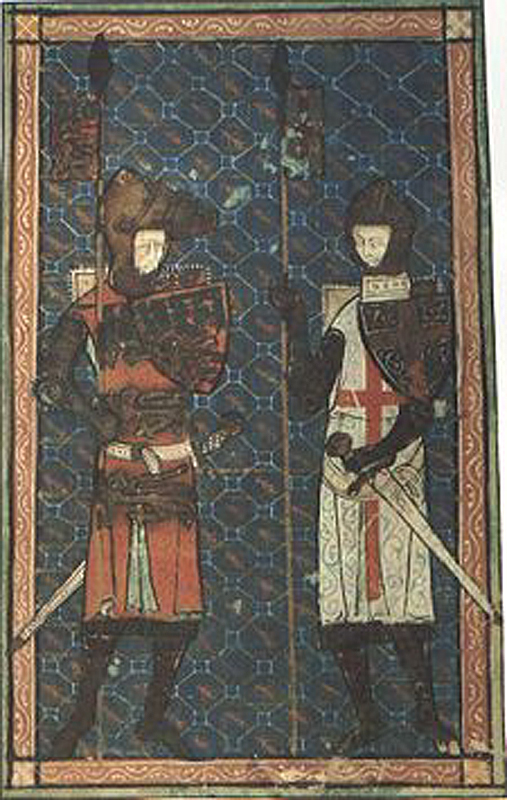
           Born: 16 Jan 1245 - London, England
     Christened:
           Died: 5 Jun 1296 - Bayonne, (Pyrènées-Atlantiques), Aquitaine, France
         Buried: 15 Jul 1296 - Westminster Abbey, London, Midlesex, England
         Father: King Henry III of England (1207-1272) 29 30
         Mother: Eleanor of Provence (Abt 1223-1291) 31 32
Marriage: 29 Oct 1276 - Paris, (Île-de-France), France
Events
• Created: Earl of Leicester, 1265.
• Created: Earl of Lancaster, 1267.
Wife Blanche of Artois 22
            AKA: Blanche de Navarre
           Born: Between 1245 and 1250
     Christened:
           Died: 2 May 1302 - Paris, (Île-de-France), France
         Buried:
         Father: Robert I "the Good" Count of Artois (1216-1250) 23
         Mother: Matilda of Brabant (1224-1288) 24 25
Other Spouse: Henry III Count of Champagne and Brie, King of Navarre ( -1274) 21 - 1259
Children
1 M Thomas Plantagenet 2nd Earl of Lancaster
           Born: 1278
     Christened:
           Died:
         Buried:
2 M Henry 3rd Earl of Lancaster, Earl of Leicester 33 34
AKA: Henry of Lancaster, Earl of Lancaster, Earl of Leicester, Henry Plantagenet Earl of Leicester, 3rd Earl of Lancaster, Henry "Tortcol" Plantagenet
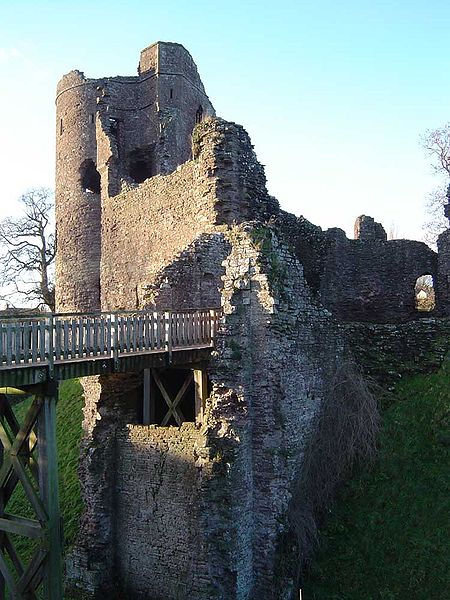
           Born: Abt 1281 - Grosmont Castle, Monmouthshire, England
     Christened:
           Died: 25 Mar 1345 - Canons Monastery, England
         Buried:  - Newark Abbey, Leicestershire, England
         Spouse: Maud de Chaworth Countess of Lancaster & Countess of Leicester (1282-Bef 1322) 35 36 37
           Marr: Bef 2 Mar 1297 - Kidwelly, Carmarthenshire, Wales
Spouse: Alix de Geneville ( -1336) 38
3 M John Plantagenet Lord of Beaufort
           Born: Bef 1286
     Christened:
           Died:
         Buried:
4 F Mary Plantagenet
           Born:
     Christened:
           Died:
         Buried:
Research Notes: Husband - Edmund "Crouchback" 1st Earl of Lancaster, Earl of Leicester
Source: Ancestral Roots of Certain American Colonists Who Came to America before 1700 by Frederick Lewis Weis and Walter Lee Sheppard, Jr, ed. by William R. Beall & Kaleen E. Beall, Baltimore, 2008, Line 17-28
Wikipedia:
"...soon after the forfeiture of Simon de Montfort, 6th Earl of Leicester in 1265, Edmund received the Earldom of Leicester and of Lancaster and also the honour of the Stewardship of England and the lands of Nicolas de Segrave.
"In 1271 he accompanied his elder brother Edward [I Longshanks] on the Ninth Crusade to Palestine. It was because of this he received the nickname Crouchback (or cross back) indicating that he was entitled to wear a cross on his back."
Much more info in Wikipedia & other sources.
Research Notes: Wife - Blanche of Artois
Widow of Henry I of Navarre. Second wife of Henry III. Second wife of Edmund "Crouchback."
Source: Ancestral Roots of Certain American Colonists Who Came to America before 1700 by Frederick Lewis Weis and Walter Lee Sheppard, Jr, ed. by William R. Beall & Kaleen E. Beall, Baltimore, 2008, Line 45-30
Wikipedia
Notes: Marriage
Wikipedia has m. 3 Feb 1276.
Ancestral Roots, line 17-28, has m. bet. 18 Dec. 1275 and 19 Jan 1275/1276
Death Notes: Child - Henry 3rd Earl of Lancaster, Earl of Leicester
Ancestral Roots, line 17-29, has d. 22 Sept. 1345, bur. Neward Abbey, co. Leics.
Wikipedia has d. 25 March 1345.
Husband Louis VIII King of France 39 40
            AKA: Louis VIII "the Lion" King of France
           Born: 3 Sep 1187
     Christened:
           Died: 8 Nov 1226 - Montpensier, (Puy-de-Dôme), Auvergne, France
         Buried:
Marriage: 23 May 1200
Events
• King of France: 1223-1226.
Wife Blanche of Castile 41 42

            AKA: Blanca de Castilla
           Born: 4 Mar 1188 - Palencia, (Palencia, Castile-Léon), Spain
     Christened:
           Died: 26 Nov 1252 - Paris, Île-de-France, France
         Buried:
         Father: Alfonso VIII "the Noble" King of Castile (1155-1214) 43 44
         Mother: Eleanor of England (1162-1214) 45 46
Children
1 M Robert I "the Good" Count of Artois 23
           Born: 1216
     Christened:
           Died: 8 Feb 1250
         Buried:
         Spouse: Matilda of Brabant (1224-1288) 24 25
           Marr: 14 Jun 1237
Research Notes: Husband - Louis VIII King of France
From Wikipedia - Louis VIII of France :
Louis VIII the Lion (5 September 1187 - 8 November 1226) reigned as King of France from 1223 to 1226. He was a member of the House of Capet . Louis VIII was born in Paris , France , the son of Philip II Augustus and Isabelle of Hainaut . He was also Count of Artois from 1190, inheriting the county from his mother.
As Prince Louis
On 23 May 1200, at the age of 12, Louis was married to Blanche of Castile , following prolonged negotiations between Philip Augustus and Blanche's uncle John of England (as represented in William Shakespeare 's historical play King John ).
In 1216, the English barons rebelled in the First Barons' War against the unpopular King John of England (1199-1216) and offered the throne to Prince Louis. Louis and an army landed in England; he was proclaimed King in London in May 1216, although he was not crowned. There was little resistance when the prince entered London. At St Paul's Cathedral , Louis was accepted as ruler with great pomp and celebration in the presence of all of London. Many nobles, as well as King Alexander II of Scotland (1214-49), gathered to give homage. On 14 June 1216, Louis captured Winchester and soon controlled over half of the English kingdom.[1]
After a year and a half of war, King John's death, and his replacement by a regency on behalf of the boy king Henry III (John's son), many of the rebellious barons deserted Louis. When his army was beaten at Lincoln , and his naval forces (led by Eustace the Monk ) were defeated off the coast of Sandwich , he was forced to make peace under English terms.
The principal provisions of the Treaty of Lambeth were an amnesty for English rebels, land possession to return to the status quo ante, the Channel Islands to be returned to the English crown, Louis to undertake not to attack England again, and to attempt to give Normandy back to the English crown, and 10,000 marks to be given to Louis. The effect of the treaty was that Louis agreed he had never been the legitimate king of England.
As King Louis VIII
Louis VIII succeeded his father on 14 July 1223; his coronation took place on 6 August of the same year in the cathedral at Reims . As King, he continued to seek revenge on the Angevins and seized Poitou and Saintonge from them in 1229. There followed the seizure of Avignon and Languedoc .
On 1 November 1223, he issued an ordinance that prohibited his officials from recording debts owed to Jews, thus reversing the policies set by his father Philip II Augustus. Usury (lending money with interest) was illegal for Christians to practice, according to Church law it was seen as a vice in which people profited from others' misfortune (like gambling), and was punishable by excommunication , a severe punishment. However since Jews were not Christian, they could not be excommunicated, and thus fell in to a legal gray area which secular rulers would sometimes exploit by allowing (or requesting) Jews to provide usury services, often for personal gain to the secular ruler, and to the discontent of the Church. Louis VIII's prohibition was one attempt at resolving this legal problem which was a constant source of friction in Church and State courts.
Twenty-six barons accepted, but Theobald IV (1201-53), the powerful Count of Champagne , did not, since he had an agreement with the Jews that guaranteed him extra income through taxation. Theobald IV would become a major opposition force to Capetian dominance, and his hostility was manifest during the reign of Louis VIII. For example, during the siege of Avignon, he performed only the minimum service of 40 days, and left home amid charges of treachery.
In 1225, the council of Bourges excommunicated the Count of Toulouse , Raymond VII , and declared a crusade against the southern barons. Louis happily renewed the conflict in order to enforce his royal rights. Roger Bernard the Great , count of Foix , tried to keep the peace, but the king rejected his embassy and the counts of Foix and Toulouse took up arms against him. The king was largely successful, but he did not complete the work before his death.
While returning to Paris, King Louis VIII became ill with dysentery , and died on 8 November 1226 in the chateau at Montpensier , Auvergne .
The Saint Denis Basilica houses the tomb of Louis VIII. His son, Louis IX (1226-70), succeeded him on the throne.
Ancestry
Marriage and Issue
On 23 May 1200, at the age of twelve, Louis married Blanche of Castile (4 March 1188 - 26 November 1252).
Blanche (1205-1206).
Agnes (b. and d. 1207).
Philippe (9 September 1209 - July 1218), married (or only betrothed) in 1217 to Agnes of Donzy.
Alphonse (b. and d. Lorrez-le-Bocage, 23 January 1213).
John (b. and d. Lorrez-le-Bocage, 23 January 1213), twin of Alphonse.
Louis IX (Poissy, 25 April 1214 - 25 August 1270, Tunis), King of France as successor to his father.
Robert (25 September 1216 - 9 February 1250, killed in Battle of Al Mansurah , Egypt)
Philippe (2 January 1218-1220).
John Tristan (21 July 1219-1232), Count of Anjou and Maine.
Alphonse (Poissy, 11 November 1220 - 21 August 1271, Corneto), Count of Poitou and Auvergne, and by marriage, of Toulouse.
Philippe Dagobert (20 February 1222-1232).
Isabel (14 April 1225 - 23 February 1269).
Charles Etienne (21 March 1226 - 7 January 1285), Count of Anjou and Maine, by marriage Count of Provence and Folcalquier, and King of Sicily.
Death Notes: Wife - Blanche of Castile
Ancestral Roots 113-28 has d. 27 Nov. 1252
Research Notes: Wife - Blanche of Castile
From Wikipedia - Blanche of Castile :
Blanche of Castile (Blanca de Castilla in Spanish ; 4 March 1188 - 26 November 1252), wife of Louis VIII of France . She was born in Palencia , Spain , the third daughter of Alfonso VIII , king of Castile , and of Eleanor of England . Eleanor was a daughter of Henry II of England and his Queen consort Eleanor of Aquitaine .
Biography
In consequence of a treaty between Philip Augustus and John of England , Blanche's sister Urraca was betrothed to the former's son, Louis. Their grandmother Eleanor, upon getting acquainted with the two sisters, judged that Blanche's personality was more fit for a queen of France. In the spring of 1200 she brought her to France instead. On 22 May 1200 the treaty was finally signed, John ceding with his niece the fiefs of Issoudun and Gracay , together with those that André de Chauvigny , lord of Châteauroux, held in Berry , of the English crown. The marriage was celebrated the next day, at Portmort on the right bank of the Seine , in John's domains, as those of Philip lay under an interdict.
Blanche first displayed her great qualities in 1216, when Louis, who on the death of John claimed the English crown in her right, invaded England, only to find a united nation against him. Philip Augustus refused to help his son, and Blanche was his sole support. The queen established herself at Calais and organized two fleets, one of which was commanded by Eustace the Monk , and an army under Robert of Courtenay ; but all her resolution and energy were in vain. Although it would seem that her masterful temper exercised a sensible influence upon her husband's gentler character, her role during his reign (1223-1226) is not well known.
Upon his death he left Blanche regent and guardian of his children. Of her twelve or thirteen children, six had died, and Louis, the heir - afterwards the sainted Louis IX - was but twelve years old.
The situation was critical, for the hard-won domains of the house of Capet seemed likely to fall to pieces during a minority. Blanche had to bear the whole burden of affairs alone, to break up a league of the barons (1226), and to repel the attack of the king of England (1230). But her energy and firmness overcame all dangers.
There was an end to the calumnies circulated against her, based on the poetical homage rendered her by Count Theobald IV of Champagne , a.k.a. KingTheobald I of Navarre since 1234, and the prolonged stay in Paris of the papal legate, Romano Bonaventura , cardinal of Sant' Angelo. The nobles were awed by her warlike preparations or won over by adroit diplomacy, and their league was broken up. St Louis owed his realm to his mother, but he himself always remained somewhat under the spell of her imperious personality.
After he came of age, in 1234, aged 20, her influence upon him may still be traced. The same year, he was married, and Blanche became Queen mother . Louis IX married Marguerite of Provence, who was the eldest of four daughters of Ramon, count of Provence, and Beatrice of Savoy. In 1248 Blanche again became Queen regent, during Louis IX's absence on the crusade, a project which she had strongly opposed. In the disasters which followed she maintained peace, while draining the land of men and money to aid her son in the East. At last her strength failed her. She fell ill into a bale of hay at Melun in November 1252, and was taken to Paris , but lived only a few days. She was buried at Maubuisson .
[edit ] Issue
Blanche (1205-1206).
Agnes (b. and d. 1207).
Philippe (9 September 1209 - July 1218), married (or only betrothed) in 1217 to Agnes of Donzy.
Alphonse (b. and d. Lorrez-le-Bocage, 23 January 1213).
John (b. and d. Lorrez-le-Bocage, 23 January 1213), twin of Alphonse.
Louis IX (Poissy, 25 April 1214 - 25 August 1270, Tunis), King of France as successor to his father.
Robert (25 September 1216 - 9 February 1250, killed in battle, Manssurah, Egypt)
Philippe (2 January 1218-1220).
John Tristan (21 July 1219-1232), Count of Anjou and Maine.
Alphonse (Poissy, 11 November 1220 - 21 August 1271, Corneto), Count of Poitou and Auvergne, and by marriage, of Toulouse.
Philippe Dagobert (20 February 1222-1232).
Isabel (14 April 1225 - 23 February 1269).
Charles Etienne (21 March 1226 - 7 January 1285), Count of Anjou and Maine, by marriage Count of Provence and Folcalquier, and King of Sicily.
Husband Geoffroi de Joinville Seigneur de Joinville 47
           Born:
     Christened:
           Died: 1080
         Buried:
         Father: Étienne de Vaux 1st Sire de Joinville, Count of Joigny (      -      ) 48
         Mother: < > (      -      )
Marriage:
Wife Blanche of Reynel 49
           Born:
     Christened:
           Died:
         Buried:
         Father: Arnoul Count of Reynel (      -      ) 49
         Mother:
Children
1 M Roger I de Joinville Seigneur de Joinville
           Born:
     Christened:
           Died: After 1137
         Buried:
Spouse: Adélarde de Vignory ( -After 1140) 50
Husband Vojen Duke of Bohemia 51
           Born: Abt 737 - <Praha, Praha>, Bohemia (Czechoslovakia)
     Christened:
           Died: 820
         Buried:
         Father: Mnbata Duke of Bohemia (Abt 0716-0804) 51
         Mother: Strezislava (Abt 0711-      ) 52
Marriage:
Wife Blanka 52
           Born: Abt 738 - <Praha, Praha>, Bohemia (Czechoslovakia)
     Christened:
           Died:
         Buried:
Children
1 M Unislav Duke of Bohemia 51
           Born: Abt 758 - <Praha, Praha>, Bohemia (Czechoslovakia)
     Christened:
           Died: 833
         Buried:
Husband Bleiddig
            AKA: Bledri
           Born: Abt 790 - Dyfed, Wales
     Christened:
           Died:
         Buried:
Marriage:
Wife Tangwystl ferch Owain
           Born: Abt 794 - Dyfed, Wales
     Christened:
           Died:
         Buried:
Children
1 M Hyfaidd ap Bleiddig
            AKA: Hyfaidd ap Bledri, Hyfeid ap Bleiddig
           Born: Abt 820 - Dyfed, Wales
     Christened:
           Died: 893
         Buried:
Research Notes: Husband - Bleiddig
Source: http://www.varrall.net/pafg171.htm#3500
Research Notes: Wife - Tangwystl ferch Owain
Source: http://www.varrall.net/pafg171.htm#3500
Sources
1. Wikipedia.org, Bias (mythology).
2. Wikipedia.org, Pero.
3. Wikipedia.org, Neleus.
4. Wikipedia.org, Chloris; Pero.
5. Wikipedia.org, Talaus.
6. Wikipedia.org, Lysimache.
7. Weis, Frederick Lewis and Walter Lee Sheppard, Jr; William R. Beall and Kaleen E. Beall, eds, Ancestral Roots of Certain American Colonists Who Came to America before 1700 (8th ed. Baltimore: Genealogical Publishing Company, 2008.), Line 144A-16.
8. Wikipedia.org, "Ranulf I of Aquitaine." Cit. Date: 20 Jul 2013.
9. Weis, Frederick Lewis and Walter Lee Sheppard, Jr; William R. Beall and Kaleen E. Beall, eds, Ancestral Roots of Certain American Colonists Who Came to America before 1700 (8th ed. Baltimore: Genealogical Publishing Company, 2008.), Line 144A-16 (Ranulf I).
10. http://www.familysearch.org, Cit. Date: 7 Aug 2009.
11. Wikipedia.org, Hermann Billung. Cit. Date: 15 Sep 2009.
12. http://wc.rootsweb.ancestry.com/cgi-bin/igm.cgi. Rec. Date: 25 Aug 2001, http://wc.rootsweb.com/cgi-bin/igm.cgi?op=GET&db=:3174654&id=I593871975.
13. http://www.familysearch.org, Cit. Date: 8 Aug 2009.
14. http://wc.rootsweb.ancestry.com/cgi-bin/igm.cgi. Rec. Date: 25 Aug 2001, http://wc.rootsweb.com/cgi-bin/igm.cgi?op=GET&db=:3174654&id=I593876112.
15. http://www.familysearch.org, Compact Disc #94 Pin #99024 (submitted by Samuel Taylor "Sam" Geer).
16. Wikipedia.org, Wacho.
17. http://www.familysearch.org, Compact Disc #94 Pin #105692 (submitted by Samuel Taylor "Sam" Geer).
18. http://wc.rootsweb.ancestry.com/cgi-bin/igm.cgi. Rec. Date: 25 Aug 2001, http://wc.rootsweb.com/cgi-bin/igm.cgi?op=GET&db=:3174654&id=I593873342.
19. Wikipedia.org, Basina, Queen of Thuringia.
20. Wikipedia.org, Wacho; Theudebald.
21. Weis, Frederick Lewis and Walter Lee Sheppard, Jr; William R. Beall and Kaleen E. Beall, eds, Ancestral Roots of Certain American Colonists Who Came to America before 1700 (8th ed. Baltimore: Genealogical Publishing Company, 2008.), Line 45-30 (Blanche of Artois).
22. Weis, Frederick Lewis and Walter Lee Sheppard, Jr; William R. Beall and Kaleen E. Beall, eds, Ancestral Roots of Certain American Colonists Who Came to America before 1700 (8th ed. Baltimore: Genealogical Publishing Company, 2008.), Line 45-30.
23. Wikipedia.org, Robert I of Artois.
24. Wikipedia.org, Henry II, Duke of Brabant; Marie of Hohenstaufen.
25. Weis, Frederick Lewis and Walter Lee Sheppard, Jr; William R. Beall and Kaleen E. Beall, eds, Ancestral Roots of Certain American Colonists Who Came to America before 1700 (8th ed. Baltimore: Genealogical Publishing Company, 2008.), Line 45-29, 113-29 (Robert).
26. Weis, Frederick Lewis and Walter Lee Sheppard, Jr; William R. Beall and Kaleen E. Beall, eds, Ancestral Roots of Certain American Colonists Who Came to America before 1700 (8th ed. Baltimore: Genealogical Publishing Company, 2008.), Line 17-28, 45-30 (Blanche of Artois).
27. Weis, Frederick Lewis and Walter Lee Sheppard, Jr; William R. Beall and Kaleen E. Beall, eds, Ancestral Roots of Certain American Colonists Who Came to America before 1700 (8th ed. Baltimore: Genealogical Publishing Company, 2008.), Line 45-31.
28. Weis, Frederick Lewis and Walter Lee Sheppard, Jr; William R. Beall and Kaleen E. Beall, eds, Ancestral Roots of Certain American Colonists Who Came to America before 1700 (8th ed. Baltimore: Genealogical Publishing Company, 2008.), Line 101-30, 45-31 (Jeanne of Navarre).
29. Wikipedia.org, Henry III of England.
30. Weis, Frederick Lewis and Walter Lee Sheppard, Jr; William R. Beall and Kaleen E. Beall, eds, Ancestral Roots of Certain American Colonists Who Came to America before 1700 (8th ed. Baltimore: Genealogical Publishing Company, 2008.), Line 1-26, 17-27.
31. Wikipedia.org, Eleanor of Provence.
32. Weis, Frederick Lewis and Walter Lee Sheppard, Jr; William R. Beall and Kaleen E. Beall, eds, Ancestral Roots of Certain American Colonists Who Came to America before 1700 (8th ed. Baltimore: Genealogical Publishing Company, 2008.), Line 111-30, 1-26 (Henry III).
33. Weis, Frederick Lewis and Walter Lee Sheppard, Jr; William R. Beall and Kaleen E. Beall, eds, Ancestral Roots of Certain American Colonists Who Came to America before 1700 (8th ed. Baltimore: Genealogical Publishing Company, 2008.), Line 17-29.
34. Wikipedia.org, Henry Plantagenet, 3rd Earl of Lancaster.
35. Weis, Frederick Lewis and Walter Lee Sheppard, Jr; William R. Beall and Kaleen E. Beall, eds, Ancestral Roots of Certain American Colonists Who Came to America before 1700 (8th ed. Baltimore: Genealogical Publishing Company, 2008.), Line 72-32, 17-29 (Henry "of Lancaster").
36. Wikipedia.org, Maud Chaworth. Cit. Date: 3 Sep 2009.
37. Website:, Chaworth Family Genealogy by Albert Douglass Hart, Jr ("Our Folk").
38. Weis, Frederick Lewis and Walter Lee Sheppard, Jr; William R. Beall and Kaleen E. Beall, eds, Ancestral Roots of Certain American Colonists Who Came to America before 1700 (8th ed. Baltimore: Genealogical Publishing Company, 2008.), Line 71A-31, 17-29 (Henry "of Lancaster").
39. Weis, Frederick Lewis and Walter Lee Sheppard, Jr; William R. Beall and Kaleen E. Beall, eds, Ancestral Roots of Certain American Colonists Who Came to America before 1700 (8th ed. Baltimore: Genealogical Publishing Company, 2008.), Line 101-27.
40. Wikipedia.org, Louis VIII of France.
41. Weis, Frederick Lewis and Walter Lee Sheppard, Jr; William R. Beall and Kaleen E. Beall, eds, Ancestral Roots of Certain American Colonists Who Came to America before 1700 (8th ed. Baltimore: Genealogical Publishing Company, 2008.), Line 113-28, 101-27 (Louis VIII).
42. Wikipedia.org, Blanche of Castile.
43. Weis, Frederick Lewis and Walter Lee Sheppard, Jr; William R. Beall and Kaleen E. Beall, eds, Ancestral Roots of Certain American Colonists Who Came to America before 1700 (8th ed. Baltimore: Genealogical Publishing Company, 2008.), Line 113-27.
44. Wikipedia.org, Alfonso VIII of Castile.
45. Weis, Frederick Lewis and Walter Lee Sheppard, Jr; William R. Beall and Kaleen E. Beall, eds, Ancestral Roots of Certain American Colonists Who Came to America before 1700 (8th ed. Baltimore: Genealogical Publishing Company, 2008.), Line 110-27, 113-27 (Alfonso VIII).
46. Wikipedia.org, Eleanor of England.
47. Weis, Frederick Lewis and Walter Lee Sheppard, Jr; William R. Beall and Kaleen E. Beall, eds, Ancestral Roots of Certain American Colonists Who Came to America before 1700 (8th ed. Baltimore: Genealogical Publishing Company, 2008.), Line 71A-25.
48. Weis, Frederick Lewis and Walter Lee Sheppard, Jr; William R. Beall and Kaleen E. Beall, eds, Ancestral Roots of Certain American Colonists Who Came to America before 1700 (8th ed. Baltimore: Genealogical Publishing Company, 2008.), Line 71A-24.
49. Weis, Frederick Lewis and Walter Lee Sheppard, Jr; William R. Beall and Kaleen E. Beall, eds, Ancestral Roots of Certain American Colonists Who Came to America before 1700 (8th ed. Baltimore: Genealogical Publishing Company, 2008.), Line 71A-25 (Geoffroi de Joinville).
50. Weis, Frederick Lewis and Walter Lee Sheppard, Jr; William R. Beall and Kaleen E. Beall, eds, Ancestral Roots of Certain American Colonists Who Came to America before 1700 (8th ed. Baltimore: Genealogical Publishing Company, 2008.), Line 71A-26.
51. http://www.familysearch.org, Cit. Date: 26 Jul 2009.
52. http://www.familysearch.org, Cit. Date: 28 Jul 2009.