Husband Dunlang King of Leinster
           Born:
     Christened:
           Died: 1014
         Buried:
Marriage:
Wife
           Born:
     Christened:
           Died:
         Buried:
Children
1 F Maelcorcre
           Born:
     Christened:
           Died:
         Buried:
Spouse: Olaf of Dublin ( -1034)
Research Notes: Husband - Dunlang King of Leinster
Source: Ancestral Roots of Certain American Colonists Who Came to America before 1700 by Frederick Lewis Weis and Walter Lee Sheppard, Jr, ed. by William R. Beall & Kaleen E. Beall, Baltimore, 2008, Line 239-3 (Olaf)
Husband Llywarch ap Trahaearn
           Born:
     Christened:
           Died: Abt 1129
         Buried:
         Father: Trahaearn (      -      )
         Mother:
Marriage:
Wife Dyddgu of Builth
           Born:
     Christened:
           Died:
         Buried:
Children
1 F Gwladys verch Llywarch
            AKA: Gladys verch Llywarch ap Trahaearn
           Born:
     Christened:
           Died:
         Buried:
Spouse: Owain I Gwynedd Prince of North Wales (Abt 1100-1170) 1 2 3
Research Notes: Husband - Llywarch ap Trahaearn
Source: Ancestral Roots of Certain American Colonists Who Came to America before 1700 by Frederick Lewis Weis and Walter Lee Sheppard, Jr, ed. by William R. Beall & Kaleen E. Beall, Baltimore, 2008, Line 176B-24
Research Notes: Wife - Dyddgu of Builth
Source: Ancestral Roots of Certain American Colonists Who Came to America before 1700 by Frederick Lewis Weis and Walter Lee Sheppard, Jr, ed. by William R. Beall & Kaleen E. Beall, Baltimore, 2008, Line 176B-24 (Llywarch ap Trahaearn)
Husband Private (details suppressed for this person)
           Born:
     Christened:
           Died:
         Buried:
         Father: Private
         Mother:
Marriage:
Wife (details suppressed for this person)
           Born:
     Christened:
           Died:
         Buried:
Children
1 M Private (details suppressed for this person)
           Born:
     Christened:
           Died:
         Buried:
Husband Private (details suppressed for this person)
           Born:
     Christened:
           Died:
         Buried:
         Father: Cynwyd King of Alt Clut (      -      )
         Mother:
Marriage:
Wife (details suppressed for this person)
           Born:
     Christened:
           Died:
         Buried:
Children
1 M Private (details suppressed for this person)
           Born:
     Christened:
           Died:
         Buried:
Research Notes: Husband - Dyfnwal Hen King of Alt Clut
FamilySearch.org has him as Duke of Cambria and Cornwall.
From Wikipedia - Dumnagual I of Alt Clut :
Dumnagual I, also known as Dumnagual Hen ("the Old"; Welsh : Dyfnwal Hen), was a ruler of the Brythonic kingdom of Alt Clut (modern Dumbarton Rock ), later known as Strathclyde, probably sometime in the early 6th century. His biography is obscure, but he was regarded as an important ancestor figure for several kingly lines in the Hen Ogledd or "Old North" of Britain.
According to the Harleian genealogies , Dumnagual was the son of a Cinuit , the son of Ceretic Guletic , probably his predecessors as king.[1] The Harleian genealogies name three of his sons, each of whom formed a kingly line. These are Clinoch , Dumnagual's successor as king of Alt Clut; Guipno (Gwyddno), who fathered the later king Neithon ; and Cynfelyn, a king of Din Eidyn or Edinburgh .[2] The Bonedd Gwyr y Gogledd , a later genealogy of northern kings, gives a modified version of Dumnagual's family tree.[3] Here, he is the son of Idnyued and the grandson of Maxen Wledig , better known as the Roman usurper Magnus Maximus. The Bonedd follows the Harleian in making Dumnagual the great-grandfather of Rhydderch Hael , a later king of Alt Clut, but his other descendants are altered significantly.[2] A Gwyddno is included, but he listed as Dumnagual's great-grandson rather than son, and he is specifically identified as Gwyddno Garanhir of the Taliesin legend.[3] A highly confused track makes Dumnagual the ancestor to the family of Áedán mac Gabráin , a 6th-century ruler of the Gaelic kingdom of Dál Riata .[3]
Husband Private (details suppressed for this person)
           Born:
     Christened:
           Died:
         Buried:
         Father: Cynwyd King of Alt Clut (      -      )
         Mother:
Marriage:
Wife (details suppressed for this person)
           Born:
     Christened:
           Died:
         Buried:
Children
1 M Gabrán mac Domangairt King of Dál Riata 4 5
            AKA: Gabran "the Treacherous" King of Dál Riata
           Born:
     Christened:
           Died:
         Buried:
Spouse: Lleian verch Brychan ( - ) 4
Research Notes: Husband - Dyfnwal Hen King of Alt Clut
FamilySearch.org has him as Duke of Cambria and Cornwall.
From Wikipedia - Dumnagual I of Alt Clut :
Dumnagual I, also known as Dumnagual Hen ("the Old"; Welsh : Dyfnwal Hen), was a ruler of the Brythonic kingdom of Alt Clut (modern Dumbarton Rock ), later known as Strathclyde, probably sometime in the early 6th century. His biography is obscure, but he was regarded as an important ancestor figure for several kingly lines in the Hen Ogledd or "Old North" of Britain.
According to the Harleian genealogies , Dumnagual was the son of a Cinuit , the son of Ceretic Guletic , probably his predecessors as king.[1] The Harleian genealogies name three of his sons, each of whom formed a kingly line. These are Clinoch , Dumnagual's successor as king of Alt Clut; Guipno (Gwyddno), who fathered the later king Neithon ; and Cynfelyn, a king of Din Eidyn or Edinburgh .[2] The Bonedd Gwyr y Gogledd , a later genealogy of northern kings, gives a modified version of Dumnagual's family tree.[3] Here, he is the son of Idnyued and the grandson of Maxen Wledig , better known as the Roman usurper Magnus Maximus. The Bonedd follows the Harleian in making Dumnagual the great-grandfather of Rhydderch Hael , a later king of Alt Clut, but his other descendants are altered significantly.[2] A Gwyddno is included, but he listed as Dumnagual's great-grandson rather than son, and he is specifically identified as Gwyddno Garanhir of the Taliesin legend.[3] A highly confused track makes Dumnagual the ancestor to the family of Áedán mac Gabráin , a 6th-century ruler of the Gaelic kingdom of Dál Riata .[3]
Husband Edward I "the Elder" King of England 6 7 8
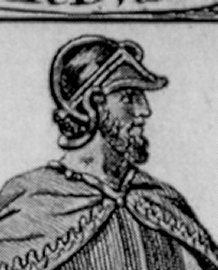
            AKA: Eadweard se Ieldra King of England
           Born: Between 871 and 875 - Wessex, England
     Christened:
           Died: 17 Jul 924 or 925 - Fardon-on-Dee, Cheshire, England
         Buried:  - New Minster, Winchester, England
         Father: Alfred the Great King of Wessex, King of England (Between 0847/0849-0899) 9 10 11
         Mother: Ealhswith of the Gaini, Queen of the Anglo-Saxons (Abt 0852-0904/0905) 12 13 14
Marriage: Abt 919
Other Spouse: Ecgwynn ( - ) - Abt 893
Other Spouse: Elfreda (Abt 0878- ) 7 15 16 - 899
Events
• King of England: 899-924.
Wife Eadgifu 17 18
            AKA: Edgiva
           Born: Abt 881
     Christened:
           Died: 25 Aug 968
         Buried:
         Father: Sigehelm Ealdorman of Kent (Abt 0855-      ) 18 19
         Mother:
Children
1 M Edmund I "the Magnificent" King of England 20 21
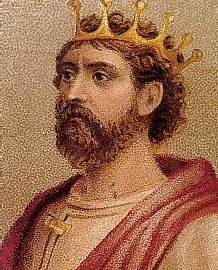
            AKA: Eadmund King of England, Edmund I "the Elder" King of England, Edmund I "the Magnificent" King of England
           Born: 920 or 921 - Wessex, England
     Christened:
           Died: 26 May 946 - England
         Buried: 967 - Glastonbury Abbey, Somerset, England
         Spouse: St. Ælfgifu (      -0944) 22
           Marr: 940
2 M Edred
           Born:
     Christened:
           Died:
         Buried:
3 F Saint Edburga of Winchester
           Born:
     Christened:
           Died:
         Buried:
4 F Eadgifu
            AKA: Edgifu of England
           Born:
     Christened:
           Died:
         Buried:
Spouse: Louis d'Aveugle King of Arles ( - )
Research Notes: Husband - Edward I "the Elder" King of England
From Wikipedia - Edward the Elder :
Edward I the Elder (Old English : se Ieldra) (c. 870 - 17 July 924 ) was King of England (899 - 924 ). He was the son of Alfred the Great (Ælfr se Gr) and Alfred's wife, Ealhswith , and became King of Wessex upon his father's death in 899 .
Family
Edward had four siblings, including Ethelfleda , Queen of the Mercians and Ælfthryth, Countess of Flanders .
King Edward had about fourteen children from three marriages, and may have had illegitimate children too.
Edward married (although the exact status of the union is uncertain) a young woman of low birth called Ecgwynn around 893 , and they became the parents of the future King Athelstan and a daughter who married Sihtric , King of Dublin and York in 926. Nothing is known about Ecgwynn other than her name, which was not even recorded until after the Conquest . [5][6]
When he became king in 899 , Edward set Ecgwynn aside and married Ælfflæd , a daughter of Æthelhelm, the ealdorman of Wiltshire . [7] Their son was the future king, Ælfweard , and their daughter Eadgyth married Otto I, Holy Roman Emperor . The couples other children included five more daughters: Edgiva aka Edgifu, whose first marriage was to Charles the Simple ; Eadhild, who married Hugh the Great , Duke of Paris; Ælfgifu who married Conrad King of Burgundy; and two nuns Eadflæd and Eadhild. According to the entry on Boleslaus II of Bohemia , the daughter Adiva (referred to in the entry for Eadgyth ) was his wife. A son, Edwin Ætheling who drowned in 933[8] was possibly Ælfflæd's child, but that is not clear.
Edward married for a third time, about 919 , to Edgiva , aka Eadgifu,[7] the daughter of Sigehelm, the ealdorman of Kent . They had two sons who survived infancy, Edmund and Edred , and two daughters, one of whom was Saint Edburga of Winchester the other daughter, Eadgifu, married Louis d'Aveugle, King of Arles.
Eadgifu outlived her husband and her sons, and was alive during the reign of her grandson, King Edgar . William of Malmsbury 's history De antiquitate Glastonie ecclesiae claims that Edward's second wife, Aelffaed, was also alive after Edward's death, but this is the only known source for that claim.
Research Notes: Wife - Eadgifu
Second or third wife of Edward I "the Elder."
Burial Notes: Child - Edmund I "the Magnificent" King of England
Source: Wikipedia - Glastonbury Abbey (http://en.wikipedia.org/wiki/Glastonbury_abbey)
Husband Louis d'Aveugle King of Arles
           Born:
     Christened:
           Died:
         Buried:
Marriage:
Wife Eadgifu
            AKA: Edgifu of England
           Born:
     Christened:
           Died:
         Buried:
         Father: Edward I "the Elder" King of England (Between 0871/0875-0924/0925) 6 7 8
         Mother: Eadgifu (Abt 0881-0968) 17 18
Children
Research Notes: Husband - Louis d'Aveugle King of Arles
Source: Wikipedia - Edward the Elder
Research Notes: Wife - Eadgifu
Source: Wikipedia - Edward the Elder
Husband Eadgils King in Uppsala [Semi-Legendary] 23 24
            AKA: Adhel King of Sweden, Adils Ottarsson King in Uppsala, Aðísl King of Sweden, Athisl King of Sweden
           Born:
     Christened:
           Died: Abt 580
         Buried:
         Father: Ohthere King in Sweden [Semi-Legendary] (Abt 0515-Abt 0530) 24 25
         Mother:
Marriage:
Wife Yrsa of Saxony [Legendary] 26
            AKA: Urse of Saxony, Yrs of Saxony, Yrse of Saxony
           Born:
     Christened:
           Died:
         Buried:
Children
1 M Eysteinn King in Sweden [Semi-Legendary] 24 27
            AKA: Östen King of Sweden, Eystein Adilsson King in Sweden
           Born: Abt 600 - Sweden
     Christened:
           Died:
         Buried:
Research Notes: Husband - Eadgils King in Uppsala [Semi-Legendary]
Semi-legendary king of Sweden, in the house of Yngling.
From Wikipedia - Eadgils :
Eadgils, Adils, Aðils, Adillus, Aðísl at Uppsölum, Athisl, Athislus, Adhel was a semi-legendary king of Sweden , who is estimated to have lived during the 6th century.[1]
Beowulf and Old Norse sources present him as the son of Ohthere and as belonging to the ruling Yngling (Scylfing) clan . These sources also deal with his war against Onela , which he won with foreign assistance: in Beowulf he gained the throne of Sweden by defeating his uncle Onela with Geatish help, and in two Scandinavian sources (Skáldskaparmál and Skjöldunga saga ), he is also helped to defeat Onela in the Battle on the Ice of Lake Vänern , but with Danish help. However, Scandinavian sources mostly deal with his interaction with the legendary Danish king Hrólfr Kraki (Hroðulf), and Eadgils is mostly presented in a negative light as a rich and greedy king.
Name
The Norse forms are based an older (Proto-Norse ) *Aþag (where *aþa is short for *aþala meaning "noble, foremost" (German 'adel') and *g means "arrow shaft"[2]). However, the Anglo-Saxon form is not etymologically identical. The A-S form would have been *Ædgils, but Eadgils (Proto-Norse *Auða-g, *auða- meaning "wealth") was the only corresponding name used by the Anglo-Saxons[3]. The name Aðils was so exceedingly rare even in Scandinavia that among almost 6000 Scandinavian runic inscriptions, it is only attested in three runestones (U 35 , DR 221 and Br Olsen;215)[4].
Beowulf
The Anglo-Saxon epic poem Beowulf , which was composed sometime between the 8th century and the 11th century, is beside the Norwegian skaldic poem Ynglingatal (9th century) the oldest source that mentions Eadgils.
It is implied in Beowulf that the Swedish king Ohthere died and was succeeded by his younger brother Onela , because Ohthere's two sons, Eadgils and Eanmund had to seek refuge with Heardred , Hygelac 's son and successor as king of the Geats [5]. This caused Onela to attack the Geats, and Heardred was killed. Onela returned home and Beowulf succeeded Heardred as the king of Geatland . In the following lines, Onela is referred to as the Scylfings helmet and the son of Ongenþeow , whereas Eadgils and Eanmund are referred to as the sons of Ohtere:
Later in the poem, it tells that during the battle, Eadgils' brother Eanmund was killed by Onela's champion Weohstan , Wiglaf 's father. In the following lines, Eanmund also appears as the son of Ohtere and as a brother's child:
Eadgils, however, survived and later, Beowulf helped Eadgils with weapons and warriors. Eadgils won the war and killed his uncle Onela. In the following lines, Eadgils is mentioned by name and as the son of Ohtere, whereas Onela is referred to as the king:
This event also appears in the Scandinavian sources Skáldskaparmál and Skjöldunga saga , which will be treated below.
Norwegian and Icelandic sources
The allusive manner in which Eadgils and his relatives are referred to in Beowulf suggests that the scop expected his audience to have sufficient background knowledge about Eadgils, Ohthere and Eanmund to understand the references. Likewise, in the roughly contemporary Norwegian Ynglingatal , Eadgils (Aðils) is called Onela's enemy (Ála[11] dólgr), which likewise suggests that the conflict was familiar to the skald and his audience.
The tradition of Eadgils and Onela resurfaces in several Old Norse works in prose and poetry, and another matter also appears: the animosity between Eadgils and Hrólfr Kraki , who corresponds to Hroðulf in Beowulf.
Ynglingatal
The skaldic poem Ynglingatal is a poetic recital of the line of the Yngling clan . They are also called Skilfingar in the poem (in stanza 19), a name that appears in its Anglo-Saxon form Scylfingas in Beowulf when referring to Eadgils' clan. It is presented as composed by Þjóðólfr of Hvinir by Snorri Sturluson in the Ynglinga saga.
Although its age has been debated, most scholars hold to date from the 9th century[12]. It survives in two versions: one is found in the Norwegian historical work Historia Norvegiæ in Latin , and the other one in Snorri Sturluson 's Ynglinga saga , a part of his Heimskringla . It presents Aðils (Eadgils) as the successor of Óttarr (Ohthere ) and the predecessor of Eysteinn . The stanza on Aðils refers to his accidental death when he fell from his horse:
Note that Eadgils' animosity with Onela also appears in Ynglingatal as Aðils is referred to as Ole's deadly foe (Ála dólgr). This animosity is treated in more detail in the Skjöldunga saga and Skáldskaparmál , which follow.
The Historia Norwegiæ , which is a terse summary in Latin of Ynglingatal, only states that Eadgils fell from his horse and died during the sacrifices. In this Latin translation, the Dísir are rendered as the Roman goddess Diana :
Cujus filius Adils vel Athisl ante ædem Dianæ, dum idolorum, sacrificia fugeret, equo lapsus exspiravit. Hic genuit Eustein, [...][15] His son Adils gave up the ghost after falling from his horse before the temple of Diana, while he was performing the sacrifices made to idols. He became sire to Øystein, [...][16] The same information is found the Swedish Chronicle from the mid-15th century, which calls him Adhel. It is probably based on the Ynglingatal tradition and says that he fell from his horse and died while he worshipped his god.
Íslendingabók
In Íslendingabók from the early 12th century, Eadgils only appears as a name in the listing of the kings of the Yngling dynasty as Aðísl at Uppsala . The reason what that the author, Ari Þorgilsson , traced his ancestry from Eadgils, and its line of succession is the same as that of Ynglingatal.
i Yngvi Tyrkjakonungr. ii Njörðr Svíakonungr. iii Freyr. iiii Fjölnir. sá er dó at Friðfróða. v Svegðir. vi Vanlandi. vii Visburr. viii Dómaldr. ix Dómarr. x Dyggvi. xi Dagr. xii Alrekr. xiii Agni. xiiii Yngvi. xv Jörundr. xvi Aun inn gamli. xvii Egill Vendilkráka. xviii Óttarr. xix Aðísl at Uppsölum. xx Eysteinn. xxi Yngvarr. xxii Braut-Önundr. xxiii Ingjaldr inn illráði. xxiiii Óláfr trételgja...[17]
As can be seen it agrees with the earlier Ynglingatal and Beowulf in presenting Eadgils as the successor of Óttarr (Ohthere ).
Skjöldunga saga
The Skjöldunga saga was a Norse saga which is believed to have been written in the period 1180-1200. The original version is lost, but it survives in a Latin summary by Arngrímur Jónsson .
Arngrímur's summary relates that Eadgils, called Adillus, married Yrsa with whom he had the daughter Scullda . Some years later, the Danish king Helgo (Halga ) attacked Sweden and captured Yrsa, not knowing that she was his own daughter, the result of Helgo raping Olava, the queen of the Saxons . Helgo raped Yrsa as well and took her back to Denmark, where she bore the son Rolfo (Hroðulf ). After a few years, Yrsa's mother, queen Olava, came to visit her and told her that Helgo was her own father. In horror, Yrsa returned to Adillus, leaving her son behind. Helgo died when Rolfo was eight years old, and Rolfo succeeded him, and ruled together with his uncle Roas (Hroðgar ). Not much later, Roas was killed by his half-brothers Rærecus and Frodo, whereupon Rolfo became the sole king of Denmark.
In Sweden, Yrsa and Adillus married Scullda to the king of Öland , Hiørvardus/Hiorvardus/Hevardus (Heoroweard ). As her half-brother Rolfo was not consulted about this marriage, he was infuriated and he attacked Öland and made Hiørvardus and his kingdom tributary to Denmark.
After some time, there was animosity between king Adillus of Sweden and the Norwegian king Ale of Oppland . They decided to fight on the ice of Lake Vänern . Adillus won and took his helmet, chainmail and horse. Adillus won because he had requested Rolfo's aid against king Ale and Rolfo had sent him his berserkers. However, Adillus refused to pay the expected tribute for the help and so Rolfo came to Uppsala to claim his recompense. After surviving some traps, Rolfo fled with Adillus' gold, helped by his mother Yrsa. Seeing that the Swedish king and his men pursued him, Rolfo "sowed" the gold on the Fyrisvellir , so that the king's men would pick up the gold, instead of continuing the pursuit.
As can be seen, the Skjöldunga saga retells the story of Eadgils fighting his uncle Onela , but in this version Onela is no longer Eadgils' uncle, but a Norwegian king of Oppland . This change is generally considered to be a late confusion between the core province of the Swedes, Uppland , and its Norwegian namesake Oppland[18]. Whereas, Beowulf leaves the Danish court with the suspicion that Hroðulf (Rolfo Krage, Hrólfr Kraki) might claim the Danish throne for himself at the death of Hroðgar (Roas, Hróarr), it is exactly what he does in Scandinavian tradition. A notable difference is that, in Beowulf, Eadgils receives the help of the Geatish king Beowulf against Onela, whereas it is the Danish king Hroðulf who provides help in Scandinavian tradition.
Skáldskaparmál
Skáldskaparmál was written by Snorri Sturluson , c. 1220, in order to teach the ancient art of kennings to aspiring skalds . It presents Eadgils, called Aðils, in two sections.
Snorri also presents the story of Aðils and Hrólfr Kraki (Hroðulf ) in order to explain why gold was known by the kenning Kraki's seed. Snorri relates that Aðils was in war with a Norwegian king named Áli (Onela ), and they fought in the Battle on the Ice of Lake Vänern . Aðils was married to Yrsa , the mother of Hrólfr and so sent an embassy to Hrólfr asking him for help against Áli. He would receive three valuable gifts in recompense. Hrólfr was involved in a war against the Saxons and could not come in person but sent his twelve berserkers, including Böðvarr Bjarki . Áli died in the war, and Aðils took Áli's helmet Battle-boar and his horse Raven. The berserkers demanded three pounds of gold each in pay, and they demanded to choose the gifts that Aðils had promised Hrólfr, that is the two pieces of armour that nothing could pierce: the helmet battle-boar and the mailcoat Finn's heritage. They also wanted the famous ring Svíagris. Aðils considered the pay outrageous and refused.
When Hrólfr heard that Aðils refused to pay, he set off to Uppsala . They brought the ships to the river Fyris and rode directly to the Swedish king's hall at Uppsala with his twelve berserkers. Yrsa welcomed them and led them to their lodgings. Fires were prepared for them and they were given drinks. However, so much wood was heaped on the fires that the clothes started to burn away from their clothes. Hrólfr and his men had enough and threw the courtiers on the fire. Yrsa arrived and gave them a horn full of gold, the ring Svíagris and asked them to flee. As they rode over the Fyrisvellir , they saw Aðils and his men pursuing them. The fleeing men threw the gold on the plain so that the pursuers would stop to collect it. Aðils, however, continued the chase on his horse Slöngvir. Hrólfr then threw Svíagris and saw how Aðils stooped down to pick up the ring with his spear. Hrólfr exclaimed that he had seen the mightiest man in Sweden bend his back.
Ynglinga saga
The Ynglinga saga was written c. 1225 by Snorri Sturluson and he used Skjöldunga saga as a source when he told the story of Aðils[23]. Snorri relates that Aðils succeeded his father Óttar (Ohthere ) and betook himself to pillage the Saxons, whose king was Geirþjófr and queen Alof the Great. The king and consort were not at home, and so Aðils and his men plundered their residence at ease driving cattle and captives down to the ships. One of the captives was a remarkably beautiful girl named Yrsa , and Snorri writes that everyone was soon impressed with the well-mannered, pretty and intelligent girl. Most impressed was Aðils who made her his queen.
Some years later, Helgi (Halga ), who ruled in Lejre , attacked Sweden and captured Yrsa. As he did not know that Yrsa was his own daughter, he raped her, and took her back to Lejre , where she bore him the son Hrólfr kraki . When the boy was three years of age, Yrsa's mother, queen Alof of Saxony, came to visit her and told her that her husband Helgi was her own father. Horrified, Yrsa returned to Aðils, leaving her son behind, and stayed in Sweden for the rest of her life. When Hrólfr was eight years old, Helgi died during a war expedition and Hrólfr was proclaimed king.
Aðils waged a war against king Áli (Onela of Oppland , and they fought in the Battle on the Ice of Lake Vänern . Áli died in this battle. Snorri writes that there was a long account of this battle in the Skjöldunga Saga, which also contained an account of how Hrólf came to Uppsala and sowed gold on the Fyrisvellir .
Snorri also relates that Aðils loved good horses and had the best horses in his days (interestingly, the contemporary Gothic scholar Jordanes noted that the Swedes were famed for their good horses). One horse was named Slöngvi and another one Raven, which he had taken from Áli. From this horse he had bred a horse also named Raven which he sent to king Godgest of Hålogaland , but Godgest could not manage it and fell from it and died, in Omd on the island of Andøya . Aðils himself died in a similar way at the Dísablót . Aðils was riding around the Disa shrine when Raven stumbled and fell, and the king was thrown forward and hit his skull on a stone. The Swedes called him a great king and buried him at Uppsala . He was succeeded by Eysteinn
Hrólfr Kraki's saga
Hrólfr Kraki's saga is believed to have been written in the period c. 1230 - c. 1450[24]. Helgi and Yrsa lived happily together as husband and wife, not knowing that Yrsa was Helgi's daughter. Yrsa's mother queen Oluf travelled to Denmark to tell her daughter the truth. Yrsa was shocked and although Helgi wanted their relationship to remain as it was, Yrsa insisted on leaving him to live alone. She was later taken by the Swedish king Aðils as his queen, which made Helgi even more unhappy. Helgi went to Uppsala to fetch her, but was killed by Aðils in battle. In Lejre , he was succeeded by his son Hrólfr Kraki .
After some time, Böðvarr Bjarki encouraged Hrólfr to go Uppsala to claim the gold that Aðils had taken from Helgi after the battle. Hrólfr departed with 120 men and his twelve beserkers and during a rest they were tested by a farmer called Hrani (Odin in disguise) who advised Hrólfr to send back all his troops but his twelve beserkers, as numbers would not help him against Aðils.
They were at first well received, but in his hall, Aðils did his best to stop Hrólfr with pit traps and hidden warriors who attacked the Danes. Finally Aðils entertained them but put them to a test where they had to endure immense heat by a fire. Hrólfr and his beserkers finally had enough and threw the courtiers, who were feeding the fire, into the fire and lept at Aðils. The Swedish king disappeared through a hollow tree trunk that stood in his hall.
Yrsa admonished Aðils for wanting to kill her son, and went to meet the Danes. She gave them a man named Vöggr to entertain them. This Vöggr remarked that Hrólfr had the thin face of a pole ladder, a Kraki. Happy with his new cognomen Hrólfr gave Vöggr a golden ring, and Vöggr swore to avenge Hrólfr if anyone should kill him. Hrólfr and his company were then attacked by a troll in the shape of a boar in the service of Aðils, but Hrólfr's dog Gram killed it.
They then found out that Aðils had set the hall on fire, and so they broke out of the hall, only to find themselves surrounded by heavily armed warriors in the street. After a fight, king Aðils retreated to summon reinforcements.
Yrsa then provided her son with a silver drinking horn filled with gold and jewels and a famous ring, Svíagris. Then she gave Hrólf and his men twelve of the Swedish king's best horses, and all the armour and provisions they needed.
Hrólfr took a fond farewell of his mother and departed over the Fyrisvellir . When they saw Aðils and his warriors in pursuit, they spread the gold behind themselves. Aðils saw his precious Svíagris on the ground and stooped to pick it up with his spear, whereupon Hrólf cut his back with his sword and screamed in triumph that he had bent the back of the most powerful man in Sweden.
Danish sources
Chronicon Lethrense and Annales Lundenses
The Chronicon Lethrense (and the included Annales Lundenses) tell that when the Danish kings Helghe (Halga ) and Ro (Hroðgar ) were dead, the Swedish king Hakon/Athisl[25] forced the Daner to accept a dog as king. The dog king was succeeded by Rolf Krage (Hrólfr Kraki ).
Gesta Danorum
The Gesta Danorum (book 2), by Saxo Grammaticus , tells that Helgo (Halga ) repelled a Swedish invasion, killed the Swedish king Hothbrodd , and made the Swedes pay tribute. However, he committed suicide due to shame for his incestuous relationship with Urse (Yrsa ), and his son Roluo (Hrólfr Kraki ) succeeded him.
The new king of Sweden, Athislus, thought that the tribute to the Daner might be smaller if he married the Danish king's mother and so took Urse for a queen. However, after some time, Urse was so upset with the Swedish king's greediness that she thought out a ruse to run away from the king and at the same time liberate him of his wealth. She encited Athislus to rebell against Roluo, and arranged so that Roluo would be invited and promised a wealth in gifts.
At the banquet Roluo was at first not recognised by his mother, but when their fondness was commented on by Athisl, the Swedish king and Roluo made a wager where Roluo would prove his endurance. Roluo was placed in front of a fire that exposed him to such heat that finally a maiden could suffer the sight no more and extinguished the fire. Roluo was greatly recompensed by Athisl for his endurance.
When the banquet had lasted for three days, Urse and Roluo escaped from Uppsala, early in the morning in carriages where they had put all the Swedish king's treasure. In order to lessen their burden, and to occupy any pursuing warriors they spread gold in their path (later in the work, this is referred to as "sowing the Fyrisvellir "), although there was a rumour that she only spread gilded copper. When Athislus, who was pursuing the escapers saw that a precious ring was lying on the ground, he bent down to pick it up. Roluo was pleased to see the king of Sweden bent down, and escaped in the ships with his mother.
Roluo later defeated Athislus and gave Sweden to young man named Hiartuar (Heoroweard ), who also married Roluo's sister Skulde . When Athislus learnt that Hiartuar and Skulde had killed Roluo, he celebrated the occasion, but he drank so much that he killed himself.
Archaeology
According to Snorri Sturluson , Eadgils was buried in one of the royal mounds of Gamla Uppsala , and he is believed to be buried in Adils' Mound (also known as the Western mound or Thor's mound) one of the largest mounds at Uppsala . An excavation in this mound showed that a man was buried there c. 575 on a bear skin with two dogs and rich grave offerings. There were luxurious weapons and other objects, both domestic and imported, show that the buried man was very powerful. These remains include a Frankish sword adorned with gold and garnets and a board game with Roman pawns of ivory . He was dressed in a costly suit made of Frankish cloth with golden threads, and he wore a belt with a costly buckle. There were four cameos from the Middle East which were probably part of a casket. The finds show the distant contacts of the House of Yngling in the 6th century.
Snorri's account that Adils had the best horses of his days, and Jordanes' account that the Swedes of the 6th century were famed for their horses find support in archaeology. This time was the beginning of the Vendel Age , a time characterised by the appearance of stirrups and a powerful mounted warrior elite in Sweden, which rich graves in for instance Valsgärde and Vendel .
Research Notes: Wife - Yrsa of Saxony [Legendary]
Legendary.
From Wikipedia - Yrsa :
Yrsa, Yrse, Yrs or Urse (6th century[1]) was a tragic heroine of Scandinavian legend.
She appears in several versions relating to her husband, the Swedish king Eadgils , and/or to her father and rapist/lover/husband Halga (the younger brother of king Hroðgar who received Beowulf ) and their son Hroðulf . The consensus view is that the people surrounding Yrsa are the same people as those found in Beowulf [2], and the common claim in Beowulf studies that Hroðulf probably was the son of Halga is taken from the Yrsa tradition. Several translators (e.g. Burton Raffel ) and scholars have emended her name from a corrupt line (62) in the manuscript of Beowulf, although this is guesswork.
In the Ynglinga saga , Snorri Sturluson describes her personality as follows (Samuel Laing's translation):
"Yrsa was not one of the slave girls, and it was soon observed that she was intelligent, spoke well, and in all respects was well behaved. All people thought well of her, and particularly the king; and at last it came to this that the king celebrated his wedding with her, and Yrsa became queen of Sweden, and was considered an excellent woman.
Chronicon Lethrense and Annales Lundenses
The Chronicon Lethrense (and the included Annales Lundenses) tells that one day, the Danish king Helghe arrived in Halland /Lolland [3] and slept with Thore, the daughter of one of Ro's farmers. This resulted in Yrse. Much later, he met Yrse, and without knowing that she was his daughter, he made her pregnant with Rolf Krage. Lastly, he found out that Yrse was his own daughter, went east and killed himself.
Ro is the same personage as Hroðgar , who received Beowulf at Heorot . His co-king Helghe is the same as Hroðgar's brother Halga , and Rolf Krage is the same personage as Hroðgar's nephew Hroðulf . However, in Beowulf, it is never explained in what way they were uncle and nephew.
Gesta Danorum
The Gesta Danorum (book 2) reports that Helgo was the brother of the Danish king Ro, but whereas Ro was king of the Danish lands, Helgo had inherited the sea. One day during his sea roving, arrived at Thurø , where he found and raped the young girl Thora, who became pregnant with Urse. When Helgo after many years returned to Thurø, Thora avenged her lost virginity by sending Urse to Helgo who, unknowingly raped his own daughter. This resulted in Roluo Kraki.
During a Swedish invasion, Ro was killed by Hothbrodd , the king of Sweden. Helgo avenged his brother's death and made the Swedes pay tribute. However, he then chose to commit suicide due to his shame for his incestuous relationship with Urse, and their son Roluo Kraki succeeded him. Athislus, the new king of Sweden thought that the tribute to the Daner might be smaller if he married the Danish king's mother and so took Urse for a queen. However, after some time, Urse was so upset with the Swedish king's greediness that she thought out a ruse to run away from the king and at the same time liberate him of his wealth. She encited Athislus to rebell against Roluo, and arranged so that Roluo would be invited and promised a wealth in gifts.
When the banquet had lasted for three days, Urse and Roluo escaped from Uppsala, early in the morning in carriages where they had put all the Swedish king's treasure. In order to lessen their burden, and to occupy any pursuing warriors they spread gold in their path, although there was a rumour that she only spread gilded copper. When Athislus, who was pursuing the escapers saw that a precious ring was lying on the ground, he bent down to pick it up. Roluo was pleased to see the king of Sweden bent down, and escaped in the ships with his mother.
This account is more elaborate than that of Chronicon Lethrense and Annales Lundenses. Helgo is the same personage as Helghe/Halga . His brother the Danish king Ro is the same as Hroðgar , Roluo is the same as Hroðulf /Rolf Krage, and the Swedish king Athislus is the same as Eadgils , the Swedish king of Beowulf. Yrse is here called Urse, and the story of her son fleeing the Swedish king with all his treasure is also found in the following accounts. It is noteworthy that all the Danish sources, Chronicon Lethrense, Annales Lundenses and Gesta Danorum differ on where Halga found Yrsa, but make her Danish. The Icelandic sources that follow make her a Saxon , on the other hand, and not Danish.
Hrólfr Kraki's saga
In Hrólfr Kraki's saga , Helgi (i.e. Halga ) went to the Saxons wanting to woo their warlike queen Oluf. She was, however, not interested and humiliated Helgi by shaving his head and covering him with tar, while he was asleep, and sending him back to his ship. Some time later, Helgi returned and through a ruse, he kidnapped the queen for a while during which time he made her pregnant.
Having returned to her kingdom, the queen bore a child, a girl which she named Yrsa after her dog. Yrsa was set to live as a shepherd, until she was 12 years old, when she met her father Helgi who fell in love with her, not knowing it was his daughter. Oluf kept quiet about the parentage and saw it as her revenge that Helgi would wed his own daughter. Helgi and Yrsa had the son Hrólfr Kraki (Hroðulf).
Learning that Helgi and Yrsa lived happily together, queen Oluf travelled to Denmark to tell her daughter the truth. Yrsa was shocked and although Helgi wanted their relationship to remain as it was, Yrsa insisted on leaving him to live alone. She was later taken by the Swedish king Aðils (Eadgils ) as his queen, which made Helgi even unhappier.
Missing Yrsa, Helgi went to Uppsala to fetch her, but was killed by Aðils in battle. Yrsa was naturally upset that the man who was closest to her was killed by her husband, and promised Aðils that his berserkers would all be slain if she could help it. She was no happier in the king's company and she was not interested in making up with him either. Later, when a young Swedish warrior named Svipdag arrived to test his skills, she greatly supported him in his fights with the berserkers who eventually were all slain. Svipdag chose not to remain with king Aðils and instead he sought service with Yrsa's son Hrólfr who had succeeded Helgi as the king of Denmark.
After some time, when Aðils owed Hrólfr not only the gold he had taken from Helgi during the battle, but also tribute for his help fighting king Áli (i.e. Onela of Beowulf ) in the Battle on the Ice of Lake Vänern , Hrólfr arrived at Uppsala to gather his tribute. Aðils did his best to stop Hrólfr through different ruses, but had to go away to gather reinforcements. While the Swedish king was gone, Yrsa provided her son with more gold than was due to him. Then she gave Hrólfr and his men twelve of the Swedish king's best horses (Aðils was famous for his well-bred horses), and all the armour and provisions they needed.
Hrólfr took a fond farewell of his mother and departed over the Fyrisvellir . When they saw Aðils and his warriors in pursuit, they spread the gold behind themselves. Aðils saw his precious Svíagris on the ground and stooped to pick it up with his spear, whereupon Hrólfr cut his back with his sword and screamed in triumph that he had bent the back of the most powerful man in Sweden.
Later, Hrólfr was killed by his brother-in-law Hjörvarðr (i.e. the Heoroweard of Beowulf ) through treason and when the battle was over Hrólfr's sister the half-elven Skuld ruled Denmark. Yrsa exacted revenge by sending a large Swedish army ledd by Vogg who captured Skuld before she could summon her army. Skuld was tortured to death and Hrólfr's daughters took over the rule of Denmark.
This account resembles that of the Gesta Danorum, but is more elaborate. A notable difference is that Yrsa is no longer Danish but Saxon, and that Yrsa stayed in Sweden, when her son Hroðulf fled Eadgils with the gold.
Skjöldunga saga
The Skjöldunga saga [4][5] relates that Helgo (Halga ) was the king of Denmark together with his brother Roas (Hroðgar ). Helgo raped Olava, the queen of the Saxons , and she bore a daughter named Yrsa. The girl later married king Adillus (Eadgils ), the king of Sweden. Yrsa and Adillus had the daughter Scullda .
Some years later, Helgo attacked Sweden and captured Yrsa. He raped Yrsa, his own daughter, and took her back to Denmark, where she bore the son Rolfo (Hroðulf ). After a few years, Yrsa's mother, queen Olava, came to visit her and told her that Helgo was her own father. In horror, Yrsa returned to Adillus, leaving her son behind. Helgo died when Rolfo was eight years old, and Rolfo succeeded him, and ruled together with his uncle Roas. Not much later, Roas was killed by his half-brothers Rærecus and Frodo (Froda ), whereupon Rolfo became the sole king of Denmark.
In Sweden, Yrsa and Adillus married their Scullda to the king of Öland , Hiørvardus (also called Hiorvardus and Hevardus, and who corresponds to Heoroweard in Beowulf ). As her half-brother Rolfo was not consulted about this marriage, he was infuriated and he attacked Öland and made Hiørvardus and his kingdom tributary to Denmark.
Adillus requested Rolfo's aid against the Norwegian king Ale (Onela ). Rolfo sent his berserkers, but when the war had been won, Adillus refused to pay. Rolfo came to Uppsala and after some adventures he could flee with Adillus' gold, helped by his mother Yrsa, and he "sowed" it on the Fyrisvellir .
This account differs from Hrólf Kraki's saga in the respect that Yrsa was first peacefully married to Eadgils, and later captured by Halga, who raped her and made her pregnant with Hroðulf. In Hrólfr Kraki's saga, she was first captured by Halga who had Hroðulf with him. Learning that Halga was her father, she returned to Saxland from where Eadgils kidnapped her. In Hrólfr Kraki's saga, Helgi dies when more or less trying to save her from Eagdils, while the Skjöldunga saga presents her marriage with Eadgils as a happier one, and Halga died in a different war expedition.
Ynglinga saga
The Skjöldunga saga [6] was used by Snorri Sturluson as a source when he told the story of Aðils (Eadgils ) and Yrsa. What remains of the Skjöldunga saga is a Latin summary by Arngrímur Jónsson , and so the two versions are basically the same, the main difference being that Arngrímur's version is more terse.
Snorri relates that Aðils betook himself to pillage the Saxons, whose king was Geirþjófr and queen Alof the Great. The king and consort were not at home, and so Aðils and his men plundered their residence at ease driving cattle and captives down to the ships. One of the captives was a remarkably beautiful girl named Yrsa, and Snorri writes that everyone was soon impressed with the well-mannered, pretty and intelligent girl. Most impressed was Aðils who made her his queen.
Some years later, Helgi (Halga ), who ruled in Lejre , attacked Sweden and captured Yrsa. He raped Yrsa, his own daughter, and took her back to Lejre , where she bore him the son Hrólfr (Hroðulf ). When the boy was three years of age, Yrsa's mother, queen Alof of Saxony, came to visit her and told her that her husband Helgi was her own father. Horrified, Yrsa returned to Aðils, leaving her son behind, and stayed in Sweden for the rest of her life. When Hrólfr was eight years old, Helgi died during a war expedition and Hrólfr was proclaimed king.
Snorri finishes his account by briefly mentioning that the Skjöldunga saga contained an extensive account of how Hrólfr came to Uppsala and sowed gold on the Fyrisvellir .
Skáldskaparmál
In the Skáldskaparmál , Yrsa's husband king Aðils (Eadgils ) requested Yrsa's son Hrólfr's help against the Norwegian king Áli (Onela ). Hrólfr was busy fighting the Saxons but sent his berserkers.
When Hrólfr heard that Aðils refused to pay, he set off to Uppsala . They brought the ships to the river Fyris and rode directly to the Swedish king's hall at Uppsala with his twelve berserkers. Yrsa welcomed them and led them to their lodgings. Fires were prepared for them and they were given drinks. However, so much wood was heaped on the fires that the clothes started to burn away from their clothes. Hrólfr and his men had enough and threw the courtiers on the fire. Yrsa arrived and gave them a horn full of gold, the ring Svíagris and asked them to flee. As they rode over the Fyrisvellir , they saw Aðils and his men pursuing them. The fleeing men threw their gold on the plain so that the pursuers would stop to collect the gold. Aðils, however, continued the chase on his horse Slöngvir. Hrólfr then threw Svíagris and saw how Aðils stooped down to pick up the ring with his spear. Hrólfr exclaimed that he had seen the mightiest man in Sweden bend his back.
Husband Eahlmund King of Kent
           Born: Abt 745
     Christened:
           Died: 827 - Kent, England
         Buried:
         Father: Eafa of Wessex (Abt 0723-      ) 28
         Mother: < > [Kentish princess] (      -      ) 29
Marriage:
Wife
           Born:
     Christened:
           Died:
         Buried:
Children
1 M Egbert King of Wessex
            AKA: Ecgberht King of the West Saxons
           Born: Abt 775 - Kent, England
     Christened:
           Died: Between 837 and 839 - Wessex, England
         Buried:
Spouse: Rædburga (Abt 0777- ) 30
Research Notes: Husband - Eahlmund King of Kent
King in Kent 784
Source: Ancestral Roots of Certain American Colonists Who Came to America before 1700 by Frederick Lewis Weis and Walter Lee Sheppard, Jr, ed. by William R. Beall & Kaleen E. Beall (Baltimore, 2008), Line 1-11. Married perhaps a daughter of Aethelberht II, King of Kent, 725-762.
From http://wc.rootsweb.com/cgi-bin/igm.cgi?op=GET&db=:3174654&id=I593872468 :
King of Kent (762-764, c784-c785)
It has been suggested that Ealhmund was the same as the earlier Eanmund, whose name appears confirming a charter of Sigered, the king of West Kent. If this is so then Ealhmund was the more senior king. He has been associated with with Ealhmund, the father of the famous Egbert of Wessex---if this is so, then we know that he was descended from Ingeld, the brother of Ine. It is quite probable that his father or grandfather had married into the Kentish royal family, thus establishing his claim on the Kentish kingdom. Ealhmund was, however, deposed by Offa of Mercia when he invaded Kent in 764. He would have been a yound king at the time, probably in his early twenties, with no power to oppose Offa. He almost certainly went into exile, but later became allied with Egbert II, the king who had displaced him but who in turn rebelled against Offa. When Egbert died, sometime in the early 780's, Ealhmund returned to the kingship. For a second time he faced the wrath of Offa, which this time was more violent and conclusive. Ealhmund was almost certainly killed, and Kent came directly under Offa's rule until the revolution of Eadbert Praen in 796.
!British Kings and Queens pg. 224
From Wikipedia - Ealhmund of Kent :
Ealhmund was born in 745 and died in 827 . Ealhmund, was King of Kent in 784 . His father was Eoffa de Wessex .
There is little historical evidence for his reign. An abstract of a charter dated 784 survives [1] , in which Ealhmund granted land to the Abbot of Reculver . But by the following year Offa of Mercia seems to have been ruling directly, as he issued a charter [2] without any mention of a local king.
According to the Anglo-Saxon Chronicle , Ealhmund was the father of Ecgberht III , later King of Wessex and Kent and son of Eafa the West Saxon, and therefore a member of the House of Wessex (see House of Wessex family tree ).
Husband Sigeferth
           Born:
     Christened:
           Died: Bef 1015
         Buried:
Marriage: Bef 1015
Wife Ealdgyth 31 32
            AKA: Edith, Eldgyth
           Born:
     Christened:
           Died:
         Buried:
Other Spouse: Edmund II "Ironside" King of England (Abt 0989-1016) 33 34 - 1015
Events
• Flourished: 1015-1016.
Children
Research Notes: Husband - Sigeferth
A Danish nobleman
Source: Ancestral Roots of Certain American Colonists Who Came to America before 1700 by Frederick Lewis Weis and Walter Lee Sheppard, Jr, ed. by William R. Beall & Kaleen E. Beall (Baltimore, 2008), line 1-29 (Edmund II)
Research Notes: Wife - Ealdgyth
From Wikipedia - Ealdgyth (floruit 1015-1016) :
Ealdgyth (floruit 1015-1016), modern English Edith, may have been the name of the wife of Sigeferth son of Earngrim, thegn of the Seven Boroughs, and later of King Edmund Ironside . She was probably the mother of Edmund's sons Edward the Exile and Edmund.
The Anglo-Saxon Chronicle records that Sigeferth and his brother Morcar , described as "foremost thegns of the Seven Burghs" were killed at an assembly of the English nobility at Oxford . Ealdorman Eadric Streona is said to have killed them "dishonourably" after having invited them to his rooms. The Seven Burghs, otherwise unknown, are presumed to have been the Five Burghs and Torksey and York . Following the killings, King Æthelred the Unready had the property of Sigeferth and Morcar seized and ordered that Sigeferth's widow, whose name the Chronicle does not record, should be detained at Malmesbury Abbey . The chronicle of John of Worcester calls her Ealdgyth.[1]
In the late summer of 1015, at some time between 15 August and 8 September, Edmund Ironside raised a revolt against his father King Æthelred. Either then, or perhaps even earlier, he removed Sigeferth's widow from Malmesbury, against his father's wishes, and married her. Sigeferth and Morcar's friends and allies supported Edmund after this.[2] While two charters issued by Edmund which mention his wife survive from about this time, neither of them contain her name in the surviving texts.[3]
It is generally, but not universally, supposed that Ealdgyth, if that was her name, was the mother of Edmund Ironside's sons.[4] These were Edmund, who died young in exile, and Edward the Exile, who returned to England late in the reign of his uncle King Edward the Confessor and died soon afterwards. Whether she went into exile with her children following Edmund's death in 1016 is unknown.
One reason advanced for supposing that John of Worcester may have been mistaken in naming this woman Ealdgyth is that Sigeferth's brother Morcar had also been married to a woman named Ealdgyth. This Ealdgyth was the daughter of Ælfthryth, and niece of Ælfhelm, Ealdorman of York and Wulfric Spot . While Ealdgyth is a common female name in the period, this coincidence has raised the suspicion that the Worcester chronicle has confused Sigeferth's widow with his sister-in-law.[5]
Sources
1. Wikipedia.org, http://en.wikipedia.org/wiki/Owain_Gwynedd. Cit. Date: 12 Apr 2009.
2. Davies, John, A History of Wales. (Rev. ed. New York: Penguin Group, 2007.), pp. 80, 121, 137.
3. Weis, Frederick Lewis and Walter Lee Sheppard, Jr; William R. Beall and Kaleen E. Beall, eds, Ancestral Roots of Certain American Colonists Who Came to America before 1700 (8th ed. Baltimore: Genealogical Publishing Company, 2008.), Line 176B-25.
4. Weis, Frederick Lewis and Walter Lee Sheppard, Jr; William R. Beall and Kaleen E. Beall, eds, Ancestral Roots of Certain American Colonists Who Came to America before 1700 (8th ed. Baltimore: Genealogical Publishing Company, 2008.), Line 170-4.
5. Wikipedia.org.
6. Weis, Frederick Lewis and Walter Lee Sheppard, Jr; William R. Beall and Kaleen E. Beall, eds, Ancestral Roots of Certain American Colonists Who Came to America before 1700 (8th ed. Baltimore: Genealogical Publishing Company, 2008.), Line 1-15, 45-16.
7. Wikipedia.org, Edward the Elder.
8. http://wc.rootsweb.ancestry.com/cgi-bin/igm.cgi. Rec. Date: 25 Aug 2001, http://wc.rootsweb.com/cgi-bin/igm.cgi?op=GET&db=:3174654&id=I593872162.
9. Weis, Frederick Lewis and Walter Lee Sheppard, Jr; William R. Beall and Kaleen E. Beall, eds, Ancestral Roots of Certain American Colonists Who Came to America before 1700 (8th ed. Baltimore: Genealogical Publishing Company, 2008.), Line 1-14, 44-15.
10. Wikipedia.org, Alfred the Great.
11. http://wc.rootsweb.ancestry.com/cgi-bin/igm.cgi. Rec. Date: 25 Aug 2001, http://wc.rootsweb.com/cgi-bin/igm.cgi?op=GET&db=:3174654&id=I59387198.
12. Wikipedia.org, Ealhswith, Alfred the Great.
13. Weis, Frederick Lewis and Walter Lee Sheppard, Jr; William R. Beall and Kaleen E. Beall, eds, Ancestral Roots of Certain American Colonists Who Came to America before 1700 (8th ed. Baltimore: Genealogical Publishing Company, 2008.), Line 1-14 (Alfred the Great), 44-15 (Alfred the Great).
14. http://wc.rootsweb.ancestry.com/cgi-bin/igm.cgi. Rec. Date: 25 Aug 2001, http://wc.rootsweb.com/cgi-bin/igm.cgi?op=GET&db=:3174654&id=I593871981.
15. http://www.familysearch.org, Cit. Date: 31 Jul 2009.
16. http://wc.rootsweb.ancestry.com/cgi-bin/igm.cgi. Rec. Date: 25 Aug 2001, http://wc.rootsweb.com/cgi-bin/igm.cgi?op=GET&db=:3174654&id=I593872375.
17. http://wc.rootsweb.ancestry.com/cgi-bin/igm.cgi. Rec. Date: 25 Aug 2001, http://wc.rootsweb.com/cgi-bin/igm.cgi?op=GET&db=:3174654&id=I593872190.
18. Weis, Frederick Lewis and Walter Lee Sheppard, Jr; William R. Beall and Kaleen E. Beall, eds, Ancestral Roots of Certain American Colonists Who Came to America before 1700 (8th ed. Baltimore: Genealogical Publishing Company, 2008.), Line 1-15 (Edward I).
19. http://wc.rootsweb.ancestry.com/cgi-bin/igm.cgi. Rec. Date: 25 Aug 2001, http://wc.rootsweb.com/cgi-bin/igm.cgi?op=GET&db=:3174654&id=I593872191.
20. http://wc.rootsweb.ancestry.com/cgi-bin/igm.cgi. Rec. Date: 25 Aug 2001, http://wc.rootsweb.com/cgi-bin/igm.cgi?op=GET&db=:3174654&id=I593872188.
21. Wikipedia.org, Edmund I of England.
22. Weis, Frederick Lewis and Walter Lee Sheppard, Jr; William R. Beall and Kaleen E. Beall, eds, Ancestral Roots of Certain American Colonists Who Came to America before 1700 (8th ed. Baltimore: Genealogical Publishing Company, 2008.), Line 1-16 (Edmund I).
23. Wikipedia.org, Eadgils. Cit. Date: 19 Jul 2009.
24. http://www.familysearch.org, Cit. Date: 19 Jul 2009.
25. Wikipedia.org, Ohthere. Cit. Date: 19 Jul 2009.
26. Wikipedia.org, Yrsa. Cit. Date: 19 Jul 2009.
27. Wikipedia.org, Eysteinn. Cit. Date: 19 Jul 2009.
28. http://wc.rootsweb.ancestry.com/cgi-bin/igm.cgi. Rec. Date: 25 Aug 2001, http://wc.rootsweb.com/cgi-bin/igm.cgi?op=GET&db=:3174654&id=I593872469.
29. Wikipedia.org, House of Wessex family tree.
30. http://wc.rootsweb.ancestry.com/cgi-bin/igm.cgi. Rec. Date: 25 Aug 2001, http://wc.rootsweb.com/cgi-bin/igm.cgi?op=GET&db=:3174654&id=I593872467.
31. Wikipedia.org, Ealdgyth (floruit 1015–1016).
32. Weis, Frederick Lewis and Walter Lee Sheppard, Jr; William R. Beall and Kaleen E. Beall, eds, Ancestral Roots of Certain American Colonists Who Came to America before 1700 (8th ed. Baltimore: Genealogical Publishing Company, 2008.), Line 1-19 (Edmund II).
33. Weis, Frederick Lewis and Walter Lee Sheppard, Jr; William R. Beall and Kaleen E. Beall, eds, Ancestral Roots of Certain American Colonists Who Came to America before 1700 (8th ed. Baltimore: Genealogical Publishing Company, 2008.), Line 1-19.
34. Wikipedia.org, Edmund Ironside. Cit. Date: 5 Oct 2009.