Husband Olaf Vermundsson 1
           Born: Abt 391 - Denmark
     Christened:
           Died:
         Buried:
         Father: Vermund Frodasson (Abt 0369-      ) 2
         Mother:
Marriage: Abt 411 - Denmark
Wife Danpi 3
           Born: Abt 395 - <Denmark>
     Christened:
           Died:
         Buried:
Children
1 M Dan Olafsson 4
           Born: Abt 412 - Denmark
     Christened:
           Died:
         Buried:
Husband
           Born:
     Christened:
           Died:
         Buried:
Marriage:
Wife Danpi 5
           Born: Abt 343
     Christened:
           Died:
         Buried:
Children
1 F Drott Danpsson 6
           Born: Abt 365 - <Sweden>
     Christened:
           Died:
         Buried:
Spouse: Domaldi Visbursson (Abt 0340- ) 7
Husband Murchadh King of Leinster 8
            AKA: Murrough King of Leinster
           Born: Abt 1025 - Ireland
     Christened:
           Died: 1090
         Buried:
         Father: Dermot King of Leinster (Abt 0995-      ) 9
         Mother: Dearbhforghaill of Leinster (Abt 1000-1080) 9
Marriage:
Wife Darforgaill of Leinster 9
           Born: Abt 1030 - Ireland
     Christened:
           Died:
         Buried:
Children
1 M Donnhadh King of Leinster 9
           Born: Abt 1050 - Ireland
     Christened:
           Died: 8 Dec 1090 - Dublin, Leinster, Ireland
         Buried:
Husband David of Llanuwchllyn
           Born:
     Christened:
           Died:
         Buried:
         Father: Ieuan Vychan of Llanuwchllyn (      -      ) 10
         Mother:
Marriage:
Wife
           Born:
     Christened:
           Died:
         Buried:
Children
1 M David Lloyd of Glanllyn Tegid
            AKA: David Lloyd of Llanuwchllyn
           Born:
     Christened:
           Died:
         Buried:
Research Notes: Husband - David of Llanuwchllyn
Source: The History of the Princes, the Lords Marcher, and the Ancient Nobility of Powys Fadog, Vol. 6, by J. Y. W. Lloyd, London, 1887, p. 122
Husband David (details suppressed for this person)
           Born:
     Christened:
           Died:
         Buried:
Marriage:
Wife Brenda Lynn Bynum (details suppressed for this person)
           Born:
     Christened:
           Died:
         Buried:
         Father: Barney Franklin Bynum Jr. (1922-2009)
         Mother: Ardis Patricia Johnson
Other Spouse: Jerry Herron
Children
Husband David
           Born:
     Christened:
           Died:
         Buried:
Marriage:
Wife
           Born:
     Christened:
           Died:
         Buried:
Children
1 M Rhys ap David
           Born:
     Christened:
           Died:
         Buried:
Husband David I "The Saint" King of Scots 11 12
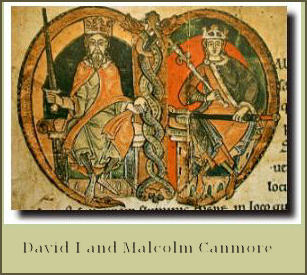
            AKA: Dabíd mac Maíl Choluim
           Born: Abt 1083
     Christened:
           Died: 24 May 1153 - Carlisle
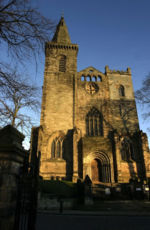
         Buried:  - Dunfermline Abbey, Fife, Scotland
         Father: Malcolm III Canmore King of Scots (Abt 1031-1093) 13 14
         Mother: Saint Margaret of Scotland (1045-1093) 15 16
Marriage: 1113 or 1114
Events
• Prince of the Cumbrians: 1113-1124.
• Crowned: King of Scots, 23 Apr 1124, Scone, (Perth and Kinross), Scotland.
Wife Maud of Huntingdon 17 18 19
            AKA: Matilda of Huntingdon, Maude of Huntingdon
           Born: Abt 1074
     Christened:
           Died: 1131
Buried:
         Father: Waltheof II Earl of Northumberland (1050-1076) 20 21 22
         Mother: Judith of Lens (1054-      ) 20 22 23
Other Spouse: Simon de Senlis Earl of Huntingdon and Northampton ( -Abt 1110) 24 25 - Abt 1090
Events
• Countess of Huntingdon and Northumberland:
Children
1 M Henry of Huntingdon, Earl of Northumberland & Huntingdon 18 26
            AKA: Henry Prince of Scotland
           Born: 1114
     Christened:
           Died: 12 Jun 1152
         Buried:
         Spouse: Ada de Warenne (      -Abt 1178) 18 27 28
           Marr: 1139
Research Notes: Husband - David I "The Saint" King of Scots
From Wikipedia - David I of Scotland :
David I or Dabíd mac Maíl Choluim (Modern : Daibhidh I mac [Mhaoil] Chaluim;[1] 1083 x 1085 - 24 May 1153) was a 12th-century ruler who was Prince of the Cumbrians (1113-1124) and later King of the Scots (1124-1153). The youngest son of Malcolm III and Margaret , David spent most of his childhood in Scotland , but was exiled to England temporarily in 1093. Perhaps after 1100, he became a dependent at the court of King Henry I . There he was influenced by the Norman and Anglo-French culture of the court.
When David's brother Alexander I of Scotland died in 1124, David chose, with the backing of Henry I, to take the Kingdom of Scotland (Alba ) for himself. He was forced to engage in warfare against his rival and nephew, Máel Coluim mac Alaxandair . Subduing the latter seems to have taken David ten years, a struggle that involved the destruction of Óengus , Mormaer of Moray . David's victory allowed expansion of control over more distant regions theoretically part of his Kingdom. After the death of his former patron Henry I, David supported the claims of Henry's daughter and his own niece, the former Empress-consort, Matilda , to the throne of England. In the process, he came into conflict with King Stephen and was able to expand his power in northern England, despite his defeat at the Battle of the Standard in 1138.
The term "Davidian Revolution " is used by many scholars to summarise the changes which took place in the Kingdom of Scotland during his reign. These included his foundation of burghs , implementation of the ideals of Gregorian Reform , foundation of monasteries , Normanisation of the Scottish government, and the introduction of feudalism through immigrant French and Anglo-French knights.
Childhood and flight to England
David was born at an unknown point between 1083 and 1085.[2] He was probably the eighth son of King Malcolm III , and certainly the sixth and youngest produced by Malcolm's second marriage to Queen Margaret .[3]
In 1093 King Malcolm and David's brother Edward were killed at the river Aln during an invasion of Northumberland .[4] David and his two brothers Alexander and Edgar , both future kings of Scotland, were probably present when their mother died shortly afterwards.[5] According to later medieval tradition, the three brothers were in Edinburgh when they were besieged by their uncle, Donald Bane .[6]
Donald became King of Scotland.[7] It is not certain what happened next, but an insertion in the Chronicle of Melrose states that Donald forced his three nephews into exile, although he was allied with another of his nephews, Edmund .[8] John of Fordun wrote, centuries later, that an escort into England was arranged for them by their maternal uncle Edgar Ætheling .[9]
Intervention of William Rufus and English exile
William Rufus , King of the English, opposed Donald's accession to the northerly kingdom. He sent the eldest son of Malcolm III, David's half-brother Donnchad , into Scotland with an army. Donnchad was killed within the year,[10] and so in 1097 William sent Donnchad's half-brother Edgar into Scotland. The latter was more successful, and was crowned King by the end of 1097.[11]
During the power struggle of 1093-97, David was in England. In 1093, was probably about nine years old.[12] From 1093 until 1103 David's presence cannot be accounted for in detail, but he appears to have been in Scotland for the remainder of the 1090s. When William Rufus was killed, his brother Henry Beauclerc seized power and married David's sister, Matilda . The marriage made David the brother-in-law of the ruler of England. From that point onwards, David was probably an important figure at the English court.[13] Despite his Gaelic background, by the end of his stay in England, David had become a full-fledged Normanised prince. William of Malmesbury wrote that it was in this period that David "rubbed off all tarnish of Scottish barbarity through being polished by intercourse and friendship with us".[14]
Prince of the Cumbrians, 1113-1124
David's time as Prince of the Cumbrians marks the beginning of his life as a great territorial lord. The year of these beginnings was probably 1113, when Henry I arranged David's marriage to Matilda, Countess of Huntingdon , who was the heiress to the Huntingdon-Northampton lordship. As her husband David used the title of Earl , and there was the prospect that David's children by her would inherit all the honours borne by Matilda's father Waltheof . 1113 is the year when David, for the first time, can be found in possession of territory in what is now Scotland.
Obtaining the inheritance
David's brother, King Edgar, had visited William Rufus in May 1099 and bequeathed to David extensive territory to the south of the river Forth .[15] On 8 January 1107, Edgar died. It has been assumed that David took control of his inheritance , the southern lands bequeathed by Edgar, soon after the latter's death.[16] However, it cannot be shown that he possessed his inheritance until his foundation of Selkirk Abbey late in 1113.[17] According to Richard Oram , it was only in 1113, when Henry returned to England from Normandy, that David was at last in a position to claim his inheritance in southern "Scotland".[18]
King Henry's backing seems to have been enough to force King Alexander to recognise his younger brother's claims. This probably occurred without bloodshed, but through threat of force nonetheless.[19] David's aggression seems to have inspired resentment amongst some native Scots. A Gaelic quatrain from this period complains that:
Olc a ndearna mac Mael Colaim, It's bad what Máel Coluim's son has done;, ar cosaid re hAlaxandir, dividing us from Alexander; do-ní le gach mac rígh romhaind, he causes, like each king's son before; foghail ar faras Albain. the plunder of stable Alba. [20] If "divided from" is anything to go by, this quatrain may have been written in David's new territories in southern "Scotland".[21]
The lands in question consisted of the pre-1975 counties of Roxburghshire , Selkirkshire , Berwickshire , Peeblesshire and Lanarkshire . David, moreover, gained the title princeps Cumbrensis, "Prince of the Cumbrians ", as attested in David's charters from this era.[22] Although this was a large slice of Scotland south of the river Forth, the region of Galloway-proper was entirely outside David's control.[23]
David may perhaps have had varying degrees of overlordship in parts of Dumfriesshire , Ayrshire , Dunbartonshire and Renfrewshire .[24] In the lands between Galloway and the Principality of Cumbria, David eventually set up large-scale marcher lordships, such as Annandale for Robert de Brus, Cunningham for Hugh de Morville, and possibly Strathgryfe for Walter Fitzalan .[25]
In England
In the later part of 1113, King Henry gave David the hand of Matilda of Huntingdon, daughter and heiress of Waltheof, Earl of Northumberland . The marriage brought with it the "Honour of Huntingdon", a lordship scattered through the shires of Northampton , Huntingdon , and Bedford ; within a few years, Matilda de Senlis bore a son, whom David named Henry after his patron.[26]
The new territories which David controlled were a valuable supplement to his income and manpower, increasing his status as one of the most powerful magnates in the Kingdom of the English. Moreover, Matilda's father Waltheof had been Earl of Northumberland , a defunct lordship which had covered the far north of England and included Cumberland and Westmorland , Northumberland -proper, as well as overlordship of the bishopric of Durham. After King Henry's death, David would revive the claim to this earldom for his son Henry.[27]
David's activities and whereabouts after 1114 are not always easy to trace. He spent much of his time outside his principality, in England and in Normandy. Despite the death of his sister on 1 May 1118, David still possessed the favour of King Henry when his brother Alexander died in 1124, leaving Scotland without a king.[28]
Political and military events in Scotland during David's kingship
Michael Lynch and Richard Oram portray David as having little initial connection with the culture and society of the Scots;[29] but both likewise argue that David became increasingly re-Gaelicised in the later stages of his reign.[30] Whatever the case, David's claim to be heir to the Scottish kingdom was doubtful. David was the youngest of eight sons of the fifth from last king. Two more recent kings had produced sons. William fitz Duncan , son of King Donnchad II, and Máel Coluim , son of the last king Alexander, both preceded David in terms of the slowly emerging principles of primogeniture . However, unlike David, neither William nor Máel Coluim had the support of Henry. So when Alexander died in 1124, the aristocracy of Scotland could either accept David as King, or face war with both David and Henry I.[31]
Coronation and struggle for the kingdom
Alexander's son Máel Coluim chose war. Orderic Vitalis reported that Máel Coluim mac Alaxandair "affected to snatch the kingdom from [David], and fought against him two sufficiently fierce battles; but David, who was loftier in understanding and in power and wealth, conquered him and his followers".[32] Máel Coluim escaped unharmed into areas of Scotland not yet under David's control, and in those areas gained shelter and aid.[33]
In either April or May of the same year David was crowned King of Scotland (Gaelic : rí(gh) Alban; Latin : rex Scottorum )[34] at Scone . If later Scottish and Irish evidence can be taken as evidence, the ceremony of coronation was a series of elaborate traditional rituals,[35] of the kind infamous in the Anglo-French world of the 12th century for their "unchristian" elements.[36] Ailred of Rievaulx, friend and one time member of David's court, reported that David "so abhorred those acts of homage which are offered by the Scottish nation in the manner of their fathers upon the recent promotion of their kings, that he was with difficulty compelled by the bishops to receive them".[37]
Outside his "Cumbrian" principality and the southern fringe of Scotland-proper, David exercised little power in the 1120s, and in the words of Richard Oram, was "king of Scots in little more than name".[38] He was probably in that part of Scotland he did rule for most of the time between late 1127 and 1130.[39] However, he was at the court of Henry in 1126 and in early 1127,[40] and returned to Henry's court in 1130, serving as a judge at Woodstock for the treason trial of Geoffrey de Clinton .[39] It was in this year that David's wife, Matilda of Huntingdon, died. Possibly as a result of this,[41] and while David was still in southern England,[42] Scotland-proper rose up in arms against him.
The instigator was, again, his nephew Máel Coluim, who now had the support of Óengus of Moray . King Óengus was David's most powerful "vassal", a man who, as grandson of King Lulach of Scotland , even had his own claim to the kingdom. The rebel Scots had advanced into Angus , where they were met by David's Mercian constable , Edward ; a battle took place at Stracathro near Brechin . According to the Annals of Ulster , 1000 of Edward's army, and 4000 of Óengus' army, including Óengus himself, died.[43]
According to Orderic Vitalis, Edward followed up the killing of Óengus by marching north into Moray itself, which, in Orderic's words, "lacked a defender and lord"; and so Edward, "with God's help obtained the entire duchy of that extensive district".[44] However, this was far from the end of it. Máel Coluim escaped, and four years of continuing "civil war" followed; for David this period was quite simply a "struggle for survival".[45]
It appears that David asked for and obtained extensive military aid from his patron, King Henry. Ailred of Rievaulx related that at this point a large fleet and a large army of Norman knights, including Walter l'Espec, were sent by Henry to Carlisle in order to assist David's attempt to root out his Scottish enemies.[46] The fleet seems to have been used in the Irish Sea , the Firth of Clyde and the entire Argyll coast, where Máel Coluim was probably at large among supporters. In 1134 Máel Coluim was captured and imprisoned in Roxburgh Castle .[47] Since modern historians no longer confuse him with Malcolm MacHeth , it is clear that nothing more is ever heard of Máel Coluim mac Alaxadair, except perhaps that his sons were later allied with Somerled .[48]
Pacification of the west and north
Richard Oram puts forward the suggestion that it was during this period that David granted Walter fitz Alan the kadrez of Strathgryfe , with northern Kyle and the area around Renfrew , forming what would become the "Stewart" lordship of Strathgryfe; he also suggests that Hugh de Morville may have gained the kadrez of Cunningham and the settlement of "Strathyrewen" (i.e. Irvine ). This would indicate that the 1130-34 campaign had resulted in the acquisition of these territories.[49]
How long it took to pacify Moray is not known, but in this period David appointed his nephew William fitz Duncan to succeed Óengus, perhaps in compensation for the exclusion from the succession to the Scottish throne caused by the coming of age of David's son Henry . William may have been given the daughter of Óengus in marriage, cementing his authority in the region. The burghs of Elgin and Forres may have been founded at this point, consolidating royal authority in Moray.[50] David also founded Urquhart Priory , possibly as a "victory monastery", and assigned to it a percentage of his cain (tribute) from Argyll.[51]
During this period too, a marriage was arranged between the son of Matad, Mormaer of Atholl , and the daughter of Haakon Paulsson , Earl of Orkney . The marriage temporarily secured the northern frontier of the Kingdom, and held out the prospect that a son of one of David's Mormaers could gain Orkney and Caithness for the Kingdom of Scotland. Thus, by the time Henry I died on 1 December 1135, David had more of Scotland under his control than ever before.[52]
Dominating the north
While fighting King Stephen and attempting to dominate northern England in the years following 1136, David was continuing his drive for control of the far north of Scotland. In 1139, his cousin, the five year old Harald Maddadsson , was given the title of "Earl" and half the lands of the earldom of Orkney , in addition to Scottish Caithness. Throughout the 1140s Caithness and Sutherland were brought back under the Scottish zone of control.[53] Sometime before 1146 David appointed a native Scot called Aindréas to be the first Bishop of Caithness , a bishopric which was based at Halkirk , near Thurso , in an area which was ethnically Scandinavian.[54]
In 1150, it looked like Caithness and the whole earldom of Orkney were going to come under permanent Scottish control. However, David's plans for the north soon began to encounter problems. In 1151, King Eystein II of Norway put a spanner in the works by sailing through the waterways of Orkney with a large fleet and catching the young Harald unawares in his residence at Thurso. Eystein forced Harald to pay fealty as a condition of his release. Later in the year David hastily responded by supporting the claims to the Orkney earldom of Harald's rival Erlend Haraldsson , granting him half of Caithness in opposition to Harald. King Eystein responded in turn by making a similar grant to this same Erlend, cancelling the effect of David's grant. David's weakness in Orkney was that the Norwegian kings were not prepared to stand back and let him reduce their power.[55]
England
David's relationship with England and the English crown in these years is usually interpreted in two ways. Firstly, his actions are understood in relation to his connections with the King of England. No historian is likely to deny that David's early career was largely manufactured by King Henry I of England. David was the latter's "greatest protégé",[56] one of Henry's "new men".[57] His hostility to Stephen can be interpreted as an effort to uphold the intended inheritance of Henry I, the succession of his daughter, Matilda , the former Empress of the Holy Roman Empire. David carried out his wars in her name, joined her when she arrived in England, and later knighted her son, the future Henry II .[58]
However, David's policy towards England can be interpreted in an additional way. David was the independence-loving king trying to build a "Scoto-Northumbrian" realm by seizing the most northerly parts of the English kingdom. In this perspective, David's support for Matilda is used as a pretext for land-grabbing. David's maternal descent from the House of Wessex and his son Henry's maternal descent from the English Earls of Northumberland is thought to have further encouraged such a project, a project which only came to an end after Henry II ordered David's child successor Máel Coluim IV to hand over the most important of David's gains. It is clear that neither one of these interpretations can be taken without some weight being given to the other.[59]
Usurpation of Stephen and First Treaty of Durham
Henry I had arranged his inheritance to pass to his daughter Empress Matilda . Instead, Stephen , younger brother of Theobald II, Count of Blois , seized the throne.[60] David had been the first lay person to take the oath to uphold the succession of Matilda in 1127, and when Stephen was crowned on 22 December 1135, David decided to make war.[61]
Before December was over, David marched into northern England, and by the end of January he had occupied the castles of Carlisle , Wark , Alnwick , Norham and Newcastle . By February David was at Durham, but an army led by King Stephen met him there. Rather than fight a pitched battle, a treaty was agreed whereby David would retain Carlisle, while David's son Henry was re-granted the title and half the lands of the earldom of Huntingdon, territory which had been confiscated during David's revolt. On Stephen's side he received back the other castles; and while David would do no homage, Stephen was to receive the homage of Henry for both Carlisle and the other English territories. Stephen also gave the rather worthless but for David face-saving promise that if he ever chose to resurrect the defunct earldom of Northumberland, Henry would be given first consideration. Importantly, the issue of Matilda was not mentioned. However, the first Durham treaty quickly broke down after David took insult at the treatment of his son Henry at Stephen's court.[62]
Renewal of war and Clitheroe
When the winter of 1136-37 was over, David again invaded England. The King of the Scots confronted a northern English army waiting for him at Newcastle. Once more pitched battle was avoided, and instead a truce was agreed until November. When November fell, David demanded that Stephen hand over the whole of the old earldom of Northumberland. Stephen's refusal led to David's third invasion, this time in January 1138.[63]
The army which invaded England in the January and February 1138 shocked the English chroniclers. Richard of Hexham called it "an execrable army, savager than any race of heathen yielding honour to neither God nor man" and that it "harried the whole province and slaughtered everywhere folk of either sex, of every age and condition, destroying, pillaging and burning the vills, churches and houses".[64] Several doubtful stories of cannibalism were recorded by chroniclers, and these same chroniclers paint a picture of routine enslavings, as well as killings of churchmen, women and infants.[65]
By February King Stephen marched north to deal with David. The two armies avoided each other, and Stephen was soon on the road south. In the summer David split his army into two forces, sending William fitz Duncan to march into Lancashire , where he harried Furness and Craven . On 10 June, William fitz Duncan met a force of knights and men-at-arms. A pitched battle took place, the battle of Clitheroe , and the English army was routed.[66]
Battle of the Standard and Second Treaty of Durham
By later July, 1138, the two Scottish armies had reunited in "St Cuthbert's land", that is, in the lands controlled by the Bishop of Durham , on the far side of the river Tyne . Another English army had mustered to meet the Scots, this time led by William, Earl of Aumale . The victory at Clitheroe was probably what inspired David to risk battle. David's force, apparently 26,000 strong and several times larger than the English army, met the English on 22 August at Cowdon Moor near Northallerton , North Yorkshire .[67]
The Battle of the Standard , as the encounter came to be called, was unsuccessful for the Scots. Afterwards, David and his surviving notables retired to Carlisle. Although the result was a defeat, it was not by any means decisive. David retained the bulk of his army and thus the power to go on the offensive again. The siege of Wark, for instance, which had been going on since January, continued until it was captured in November. David continued to occupy Cumberland as well as much of Northumberland .[68]
On 26 September Cardinal Alberic , Bishop of Ostia , arrived at Carlisle where David had called together his kingdom's nobles, abbots and bishops. Alberic was there to investigate the controversy over the issue of the Bishop of Glasgow's allegiance or non-allegiance to the Archbishop of York. Alberic played the role of peace-broker, and David agreed to a six week truce which excluded the siege of Wark. On 9 April David and Stephen's wife Matilda of Boulogne met each other at Durham and agreed a settlement. David's son Henry was given the earldom of Northumberland and was restored to the earldom of Huntingdon and lordship of Doncaster ; David himself was allowed to keep Carlisle and Cumberland. King Stephen was to retain possession of the strategically vital castles of Bamburgh and Newcastle. This effectively fulfilled all of David's war aims.[68]
Arrival of Matilda and the renewal of conflict
The settlement with Stephen was not set to last long. The arrival in England of the Empress Matilda gave David an opportunity to renew the conflict with Stephen. In either May or June, David travelled to the south of England and entered Matilda's company; he was present for her expected coronation at Westminster Abbey , though this never took place. David was there until September, when the Empress found herself surrounded at Winchester .[69]
This civil war, or "the Anarchy " as it was later called, enabled David to strengthen his own position in northern England. While David consolidated his hold on his own and his son's newly acquired lands, he also sought to expand his influence. The castles at Newcastle and Bamburgh were again brought under his control, and he attained dominion over all of England north-west of the river Ribble and Pennines , while holding the north-east as far south as the river Tyne, on the borders of the core territory of the bishopric of Durham. While his son brought all the senior barons of Northumberland into his entourage, David rebuilt the fortress of Carlisle. Carlisle quickly replaced Roxburgh as his favoured residence. David's acquisition of the mines at Alston on the South Tyne enabled him to begin minting the Kingdom of Scotland 's first silver coinage. David, meanwhile, issued charters to Shrewsbury Abbey in respect to their lands in Lancashire .[70]
Bishopric of Durham and the Archbishopric of York
However, David's successes were in many ways balanced by his failures. David's greatest disappointment during this time was his inability to ensure control of the bishopric of Durham and the archbishopric of York. David had attempted to appoint his chancellor, William Comyn, to the bishopric of Durham, which had been vacant since the death of Bishop Geoffrey Rufus in 1140. Between 1141 and 1143, Comyn was the de facto bishop, and had control of the bishop's castle; but he was resented by the chapter . Despite controlling the town of Durham, David's only hope of ensuring his election and consecration was gaining the support of the Papal legate, Henry of Blois , Bishop of Winchester and brother of King Stephen. Despite obtaining the support of the Empress Matilda, David was unsuccessful and had given up by the time William de St Barbara was elected to the see in 1143.[71]
David also attempted to interfere in the succession to the archbishopric of York. William FitzHerbert , nephew of King Stephen, found his position undermined by the collapsing political fortune of Stephen in the north of England, and was deposed by the Pope. David used his Cistercian connections to build a bond with Henry Murdac , the new archbishop. Despite the support of Pope Eugenius III , supporters of King Stephen and William FitzHerbert managed to prevent Henry taking up his post at York. In 1149, Henry had sought the support of David. David seized on the opportunity to bring the archdiocese under his control, and marched on the city. However, Stephen's supporters became aware of David's intentions, and informed King Stephen. Stephen therefore marched to the city and installed a new garrison. David decided not to risk such an engagement and withdrew.[72] Richard Oram has conjectured that David's ultimate aim was to bring the whole of the ancient kingdom of Northumbria into his dominion. For Oram, this event was the turning point, "the chance to radically redraw the political map of the British Isles lost forever".[73]
Scottish Church
Historical treatment of David I and the Scottish church usually emphasises David's pioneering role as the instrument of diocesan reorganisation and Norman penetration, beginning with the bishopric of Glasgow while David was Prince of the Cumbrians, and continuing further north after David acceded to the throne of Scotland. Focus too is usually given to his role as the defender of the Scottish church's independence from claims of overlordship by the Archbishop of York and the Archbishop of Canterbury .
Ecclesiastical disputes
One of the first problems David had to deal with as king was an ecclesiastical dispute with the English church. The problem with the English church concerned the subordination of Scottish sees to the archbishops of York and/or Canterbury, an issue which since his election in 1124 had prevented Robert of Scone from being consecrated to the see of St Andrews (Cell Ríghmonaidh). It is likely that since the 11th century the bishopric of St Andrews functioned as a de facto archbishopric. The title of "Archbishop" is accorded in Scottish and Irish sources to Bishop Giric [82] and Bishop Fothad II .[83]
The problem was that this archiepiscopal status had not been cleared with the papacy, opening the way for English archbishops to claim overlordship of the whole Scottish church. The man responsible was the new aggressively assertive Archbishop of York, Thurstan . His easiest target was the bishopric of Glasgow, which being south of the river Forth was not regarded as part of Scotland nor the jurisdiction of St Andrews. In 1125, Pope Honorius II wrote to John, Bishop of Glasgow ordering him to submit to the archbishopric of York.[84] David ordered Bishop John of Glasgow to travel to the Apostolic See in order to secure a pallium which would elevate the bishopric of St Andrews to an archbishopric with jurisdiction over Glasgow.[85]
Thurstan travelled to Rome, as did the Archbishop of Canterbury, William de Corbeil , and both presumably opposed David's request. David however gained the support of King Henry, and the Archbishop of York agreed to a year's postponement of the issue and to consecrate Robert of Scone without making an issue of subordination.[86] York's claim over bishops north of the Forth were in practice abandoned for the rest of David's reign, although York maintained her more credible claims over Glasgow.[87]
In 1151, David again requested a pallium for the Archbishop of St Andrews. Cardinal John Paparo met David at his residence of Carlisle in September 1151. Tantalisingly for David, the Cardinal was on his way to Ireland with four pallia to create four new Irish archbishoprics. When the Cardinal returned to Carlisle, David made the request. In David's plan, the new archdiocese would include all the bishoprics in David's Scottish territory, as well as bishopric of Orkney and the bishopric of the Isles . Unfortunately for David, the Cardinal does not appear to have brought the issue up with the papacy. In the following year the papacy dealt David another blow by creating the archbishopric of Trondheim, a new Norwegian archbishopric embracing the bishoprics of the Isles and Orkney.[88]
Succession and death
Perhaps the greatest blow to David's plans came on 12 July 1152 when Henry, Earl of Northumberland, David's only son and successor, died. He had probably been suffering from some kind of illness for a long time. David had under a year to live, and he may have known that he was not going to be alive much longer. David quickly arranged for his grandson Máel Coluim to be made his successor, and for his younger grandson William to be made Earl of Northumberland. Donnchad I, Mormaer of Fife , the senior magnate in Scotland-proper, was appointed as rector, or regent , and took the 11 year-old Máel Coluim around Scotland-proper on a tour to meet and gain the homage of his future Gaelic subjects. David's health began to fail seriously in the Spring of 1153, and on 24 May 1153, David died.[89] In his obituary in the Annals of Tigernach , he is called Dabíd mac Mail Colaim, rí Alban & Saxan, "David, son of Máel Coluim, King of Scotland and England", a title which acknowledged the importance of the new English part of David's realm.[90]
Monastic patronage
David was one of medieval Scotland's greatest monastic patrons. In 1113, in perhaps David's first act as Prince of the Cumbrians, he founded Selkirk Abbey for the Tironensians .[118] David founded more than a dozen new monasteries in his reign, patronising various new monastic orders.[119]
Not only were such monasteries an expression of David's undoubted piety, but they also functioned to transform Scottish society. Monasteries became centres of foreign influence,, and provided sources of literate men, able to serve the crown's growing administrative needs.[120] These new monasteries, and the Cistercian ones in particular, introduced new agricultural practices.[121] Cistercian labour, for instance, transformed southern Scotland into one of northern Europe's most important sources of sheep wool.[122]
Research Notes: Wife - Maud of Huntingdon
Widow of Simon de St. Liz.
From Wikipedia - Maud, Countess of Huntingdon :
Maud of Northumbria (1074-1130), countess for the Honour of Huntingdon , was the daughter of Waltheof II, Earl of Northumbria and Judith of Lens , the last of the major Anglo-Saxon earls to remain powerful after the Norman conquest of England in 1066. She inherited her father's earldom of Huntingdon and married twice.
Her mother, Judith, refused to marry Simon I of St Liz, 1st Earl of Northampton . This refusal angered her uncle, King William I of England , who confiscated Judith's estates after she fled the country. Instead her daughter Maud was married to Simon of St Liz in 1090. She had a number of children with St Liz including:
Matilda of St Liz (Maud), married Robert FitzRichard and then Saer de Quincy, 1st Earl of Winchester ..
Simon II de St Liz, 4th Earl of Huntingdon and Northampton .
Saint Walteof de St Liz (1100 - bt 1159 - 1160).
Her first husband died in 1109 and Maud next married King David I of Scotland in 1113. From this marriage she had one son, Henry .
The Scottish House of Dunkeld produced the remaining Earls of Huntingdon of the first creation of the title. She was succeeded to the Earldom of Huntingdon by her son Henry.
According to John of Fordun , she died in 1130 and was buried at Scone, but she appears in a charter dated 1147.
Husband David II of Scotland
           Born:
     Christened:
           Died:
         Buried:
Marriage:
Wife Joan Queen of Scots
            AKA: Joan of the Tower
           Born: 1321
     Christened:
           Died:
         Buried:
         Father: King Edward II of England (1284-1327) 29 30
         Mother: Isabella of France (Abt 1295-1358) 31 32
Children
Research Notes: Husband - David II of Scotland
Source: Wikipedia - Isabella of France
Research Notes: Wife - Joan Queen of Scots
Source: Wikipedia - Edward II of England & Isabella of France
Husband Mieszko Prince of Poland 22
           Born: Abt 922 - <Poznan, Poznan>, Poland
     Christened:
           Died: 25 May 992
         Buried:
         Father: Ziemomysl Prince of Poland (Abt 0892-Bef 0964) 22
         Mother:
Marriage: 965
Wife Dbubravka Princess of Bohemia 22
           Born: Abt 931 - <Praha, Praha>, Bohemia (Czechoslovakia)
     Christened:
           Died: 977
         Buried:
         Father: Boleslav I Duke of Bohemia (Abt 0900-0967) 22
         Mother: Bozena (Abt 0901-      ) 33
Children
1 F Swietoslava 22
            AKA: Sygryda
           Born: Abt 970 - <Poznan, Poznan>, Poland
     Christened:
           Died: After 2 Feb 1014
         Buried:
         Spouse: Svend I "Forked Beard" King of Denmark, Norway and England (Abt 0960-1014) 22
           Marr: 998
Husband Dermot King of Leinster 9
           Born: Abt 995 - Ireland
     Christened:
           Died:
         Buried:
Marriage:
Wife Dearbhforghaill of Leinster 9
            AKA: Devorgilla of Leinster
           Born: Abt 1000 - Ireland
     Christened:
           Died: 1080
         Buried:
         Father: Morough O'Brien King of Leinster (Abt 0975-      ) 9
         Mother:
Children
1 M Murchadh King of Leinster 8
            AKA: Murrough King of Leinster
           Born: Abt 1025 - Ireland
     Christened:
           Died: 1090
         Buried:
Spouse: Darforgaill of Leinster (Abt 1030- ) 9
Sources
1. Website - Genealogy, http://www.smokykin.com/ged/f002/f61/a0026106.htm.
2. Website - Genealogy, http://www.smokykin.com/ged/f002/f61/a0026108.htm.
3. http://www.familysearch.org, Cit. Date: 25 Jul 2009.
4. Website - Genealogy, http://www.smokykin.com/ged/f002/f61/a0026104.htm.
5. Website - Genealogy, http://www.smokykin.com/ged/f002/f50/a0025078.htm.
6. Website - Genealogy, http://www.smokykin.com/ged/f002/f50/a0025075.htm.
7. Website - Genealogy, http://www.smokykin.com/ged/f002/f50/a0025076.htm.
8. http://www.familysearch.org.
9. http://www.familysearch.org, Cit. Date: 18 Jul 2009.
10. Lloyd, Jacob Youde William, The History of the Princes, the Lords Marcher, and the Ancient Nobility of Powys Fadog (Vol. 6. London: Whiting & Co., 1887.), pp. 121-122.
11. Weis, Frederick Lewis and Walter Lee Sheppard, Jr; William R. Beall and Kaleen E. Beall, eds, Ancestral Roots of Certain American Colonists Who Came to America before 1700 (8th ed. Baltimore: Genealogical Publishing Company, 2008.), Line 170-22.
12. Wikipedia.org, David I of Scotland.
13. Weis, Frederick Lewis and Walter Lee Sheppard, Jr; William R. Beall and Kaleen E. Beall, eds, Ancestral Roots of Certain American Colonists Who Came to America before 1700 (8th ed. Baltimore: Genealogical Publishing Company, 2008.), Line 170-21, 171-21.
14. http://www.familysearch.org, (Kevin Bradford).
15. Weis, Frederick Lewis and Walter Lee Sheppard, Jr; William R. Beall and Kaleen E. Beall, eds, Ancestral Roots of Certain American Colonists Who Came to America before 1700 (8th ed. Baltimore: Genealogical Publishing Company, 2008.), Line 1-21, 158-23 (Eustace III).
16. Wikipedia.org, Saint Margaret of Scotland. Cit. Date: 5 Oct 2009.
17. Weis, Frederick Lewis and Walter Lee Sheppard, Jr; William R. Beall and Kaleen E. Beall, eds, Ancestral Roots of Certain American Colonists Who Came to America before 1700 (8th ed. Baltimore: Genealogical Publishing Company, 2008.), Line 130-26.
18. Lloyd, Jacob Youde William, The History of the Princes, the Lords Marcher, and the Ancient Nobility of Powys Fadog, and the Ancient Lords of Arwystli, Cedewen, and Meirionydd. (Vol. 5. London: Whiting & Co., 1885.), p. 413.
19. Wikipedia.org, Maud, Countess of Huntingdon. Cit. Date: 17 Oct 2009.
20. Wikipedia.org, Waltheof, Earl of Northumbria.
21. Weis, Frederick Lewis and Walter Lee Sheppard, Jr; William R. Beall and Kaleen E. Beall, eds, Ancestral Roots of Certain American Colonists Who Came to America before 1700 (8th ed. Baltimore: Genealogical Publishing Company, 2008.), Line 130-25 (Judith of Lens).
22. http://www.familysearch.org, Cit. Date: 26 Jul 2009.
23. Weis, Frederick Lewis and Walter Lee Sheppard, Jr; William R. Beall and Kaleen E. Beall, eds, Ancestral Roots of Certain American Colonists Who Came to America before 1700 (8th ed. Baltimore: Genealogical Publishing Company, 2008.), Line 130-25, 98A-23, 148-22 (Lambert of Boulogne).
24. Weis, Frederick Lewis and Walter Lee Sheppard, Jr; William R. Beall and Kaleen E. Beall, eds, Ancestral Roots of Certain American Colonists Who Came to America before 1700 (8th ed. Baltimore: Genealogical Publishing Company, 2008.), Line 130-26 (Maud of Huntingdon).
25. Wikipedia.org, Simon I de Senlis, Earl of Huntingdon-Northampton. Cit. Date: 17 Oct 2009.
26. Weis, Frederick Lewis and Walter Lee Sheppard, Jr; William R. Beall and Kaleen E. Beall, eds, Ancestral Roots of Certain American Colonists Who Came to America before 1700 (8th ed. Baltimore: Genealogical Publishing Company, 2008.), Line 170-23.
27. Wikipedia.org, Elizabeth of Vermandois.
28. Weis, Frederick Lewis and Walter Lee Sheppard, Jr; William R. Beall and Kaleen E. Beall, eds, Ancestral Roots of Certain American Colonists Who Came to America before 1700 (8th ed. Baltimore: Genealogical Publishing Company, 2008.), Line 89-25.
29. Weis, Frederick Lewis and Walter Lee Sheppard, Jr; William R. Beall and Kaleen E. Beall, eds, Ancestral Roots of Certain American Colonists Who Came to America before 1700 (8th ed. Baltimore: Genealogical Publishing Company, 2008.), Line 1-28.
30. Wikipedia.org, Edward II of England.
31. Wikipedia.org, Isabella of France.
32. Weis, Frederick Lewis and Walter Lee Sheppard, Jr; William R. Beall and Kaleen E. Beall, eds, Ancestral Roots of Certain American Colonists Who Came to America before 1700 (8th ed. Baltimore: Genealogical Publishing Company, 2008.), Line 101-31, 1-28 (Edward II).
33. http://www.familysearch.org, Cit. Date: 28 Jul 2009.