Husband Robert I Duke of France 1
            AKA: Robert I King of the West Franks
           Born: 866 - <Burgundy, France>
     Christened:
           Died: 15 Jun 923 - Soissons, (Aisne), Picardy, France
         Buried:
         Father: Rutpert IV Count of Wormgau, Paris, Anjou & Blois (Abt 0817-0866) 2 3
         Mother: Adelaide of Tours and Alsace (Abt 0819-After 0866) 4 5 6
Marriage:
Other Spouse: Beatrice de Vermandois (0880-After 0931) 5 7 - After 893
Events
• Count of Paris: 888.
• King of the Franks: 922-923.
Wife Aelis 3 8 9
            AKA: Adaele, Adele
           Born: Abt 864 - <France>
     Christened:
           Died:
         Buried:
Children
1 F Liegarde of France 3 10
            AKA: Adela of France, Hildebrante of France
           Born: Abt 886 - <Vermandois, (Aisne), Picardy, France>
     Christened:
           Died: After 931
         Buried:
         Spouse: Herbert II Count of Vermandois, Soissons and Troyes (Between 0880/0890-0943) 11 12 13 14
           Marr: by 907
Research Notes: Husband - Robert I Duke of France
Count of Poitiers, Count of Paris, Marquis of Neustria and Orleans, King of the West Franks (France)
Source: familysearch.org (Kevin Bradford) has title King of France.
From http://wc.rootsweb.com/cgi-bin/igm.cgi?op=GET&db=:3174654&id=I593871957 :
Duke of France, Marquis of Neustria, Count of Paris and Poitiers. Robert was killed at the battle of Soissons. He had been named King of the West Franks in 922 to succeed his brother.
Research Notes: Wife - Aelis
First wife of Robert I.
Birth Notes: Child - Liegarde of France
FamilySearch has b. abt 897 in Vermandois, Neustria.
Husband Private (details suppressed for this person)
           Born:
     Christened:
           Died:
         Buried:
         Father: Private
         Mother:
Marriage:
Wife Private (details suppressed for this person)
           Born:
     Christened:
           Died:
         Buried:
         Father: Private
         Mother: Hecuba (      -      )
Children
1 M Private (details suppressed for this person)
           Born:
     Christened:
           Died:
         Buried:
Research Notes: Husband - Aenius King of Latium [Mythological]
From Wikipedia - Aeneas :
In Greco-Roman mythology , Aeneas (Greek : Aineías; pronounced /?'ni??s/ in English ) was a Trojan hero, the son of prince Anchises and the goddess Venus . His father was also the second cousin of King Priam of Troy. The journey of Aeneas from Troy, (led by Venus, his mother) which led to the founding of the city Rome , is recounted in Virgil 's Aeneid . He is considered an important figure in Greek and Roman legend and history. Aeneas is a character in Homer 's Iliad , Quintus Smyrnaeus' Posthomerica , and Shakespeare 's Troilus and Cressida . Also, Aeneas has been known for his skills in combat during the battle of Troy. He also was one of the keys to the founding of Rome.
Mythology
In the Iliad , Aeneas is the leader of the Dardanians (Trojans - descendants of Dardanus), and a principal lieutenant of Hector , son of the Trojan king Priam . In the poem, Aeneas's mother Aphrodite frequently comes to his aid on the battlefield; he is also a favorite of Apollo . Aphrodite and Apollo rescue Aeneas from combat with Diomedes of Argos , who nearly kills him, and carry him away to Pergamos for healing. Even Poseidon , who normally favors the Greeks, comes to Aeneas's rescue when the latter falls under the assault of Achilles , noting that Aeneas, though from a junior branch of the royal family, is destined to become king of the Trojan people.
As seen in the first books of the Aeneid, Aeneas is one of the few Trojans who were not killed in battle or enslaved when Troy fell. When Troy was sacked by the Greeks, Aeneas, after being commanded by the gods to flee, gathered a group, collectively known as the Aeneads , who then traveled to Italy and became progenitors of the Romans . The Aeneads included Aeneas's trumpeter Misenus , his father Anchises , his friends Achates , Sergestus and Acmon , the healer Lapyx, the steady helmsman Palinurus , and his son Ascanius (also known as Iulus, Julus, or Ascanius Julius.) He carried with him the Lares and Penates , the statues of the household gods of Troy, and transplanted them to Italy.
(From here on, the Greek myths make room for the Roman mythology, so the Roman names of the gods will be used.) After a brief, but fierce storm sent up against the group at Juno 's request, and several failed attempts to found cities, Aeneas and his fleet made landfall at Carthage after six years of wanderings. Aeneas had a year long affair with the Carthaginian queen Dido (also known as Elissa), who proposed that the Trojans settle in her land and that she and Aeneas reign jointly over their peoples. Once again, this was in favour of Juno, who was told of the fact that her favorite city would eventually be defeated by the Trojans' descendants. However, the messenger god Mercury was sent by Jupiter and Venus to remind Aeneas of his journey and his purpose, thus compelling him to leave secretly and continue on his way. When Dido learned of this, she ordered her sister Anna to construct a pyre, she said, to get rid of Aeneas' possessions, left behind by him in his haste to leave. Standing on it, Dido uttered a curse that would forever pit Carthage against Rome. She then committed suicide by stabbing herself with the same sword she gave Aeneas when they first met and then falling on the pyre. Anna reproached the mortally wounded Dido. Meanwhile, Juno, looking down on the tragedy and moved by Dido's plight, sent Iris to make Dido's passage to Hades quicker and less painful. When Aeneas later traveled to Hades, he called to her ghost but she neither spoke to nor acknowledged him.
The company stopped on the island of Sicily during the course of their journey. After the first trip, before the Trojans went to Carthage, Achaemenides , one of Odysseus ' crew who had been left behind, traveled with them. After visiting Carthage, the Trojans returned to Sicily where they were welcomed by Acestes , king of the region and son of the river Crinisus by a Dardanian woman.
Latinus , king of the Latins , welcomed Aeneas's army of exiled Trojans and let them reorganize their life in Latium . His daughter Lavinia had been promised to Turnus , king of the Rutuli , but Latinus received a prophecy that Lavinia would be betrothed to one from another land - namely, Aeneas. Latinus heeded the prophecy, and Turnus consequently declared war on Aeneas at the urging of Juno, who was aligned with King Mezentius of the Etruscans and Queen Amata of the Latins. Aeneas' forces prevailed. Turnus was killed and his people were captured. According to Livy , Aeneas was victorious but Latinus died in the war. Aeneas founded the city of Lavinium , named after his wife. He later welcomed Dido's sister, Anna Perenna , who then committed suicide after learning of Lavinia's jealousy.
After his death, his mother, Venus asked Jupiter to make her son immortal. Jupiter agreed and the river god Numicus cleansed Aeneas of all his mortal parts and Venus anointed him with Ambrosia and Nectar, making him a god. Aeneas was recognized as the god Jupiter Indiges . Inspired by the work of James Frazer , some have posited that Aeneas was originally a life-death-rebirth deity .
Family and legendary descendants
Aeneas had an extensive family tree. His wet-nurse was Caieta , and he is the father of Ascanius with Creusa , and of Silvius with Lavinia. The former, also known as Iulus (or Julius), founded Alba Longa and was the first in a long series of kings. According to the mythology outlined by Virgil in the Aeneid, Romulus and Remus were both descendants of Aeneas through their mother Rhea Silvia, making Aeneas progenitor of the Roman people. Some early sources call him their father or grandfather,[1] but considering the commonly accepted dates of the fall of Troy (1184 BC) and the founding of Rome (753 BC), this seems unlikely. The Julian family of Rome, most notably Julius Cæsar and Augustus , traced their lineage to Ascanius and Aeneas, thus to the goddess Venus. Through the Julians, the Palemonids also make this claim. The legendary kings of Britain also trace their family through a grandson of Aeneas, Brutus .
Research Notes: Wife - Creusa of Troy [Mythological]
From Wikipedia - Creusa :
Daughter of Priam
Creusa was the daughter of Priam , wife of Aeneas , mother of Ascanius . In Virgil 's Aeneid she died escaping from Troy during the sack of Troy by the Greeks.
Husband Æthelbald King of Wessex 15
            AKA: Ethelbald King of Wessex
           Born:
     Christened:
           Died: 860
         Buried:
         Father: Æthelwulf King of Wessex and King of Kent (Between 0795/0800-0858) 16 17
         Mother: Osburga (Abt 0805-After 0876) 18 19 20
Marriage: After 13 Jan 858
Events
• King of Wessex: 858-860.
Wife Judith Princess of France 21 22 23
            AKA: Judith of Flanders
           Born: Oct 844 - France
     Christened:
           Died: After 870
         Buried:
         Father: Charles II "the Bald" of France and Holy Roman Emperor (0823-0877) 24 25
         Mother: Ermentrude of Orléans (0830-0869) 26 27 28
Other Spouse: Æthelwulf King of Wessex and King of Kent (Between 0795/0800-0858) 16 17 - 1 Oct 856 - Verberie-sur-Oise, (Oise), France
Other Spouse: Baldwin I Count of Flanders (Abt 0836-0879) 29 30 31 32 - Jan 862 - <Flanders (Belgium)>
Marriage Events
• Annulment: of marriage to Aethelbald, 860.
Children
Research Notes: Wife - Judith Princess of France
Baldwin I was her third husband.
From Wikipedia - Judith of Flanders :
Judith of Flanders (844 - 870 ) was a daughter of the Frankish king Charles the Bald . Through her marriage to two kings of Wessex she was first a queen, then later through her third marriage to Baldwin, she became Countess of Flanders .
Judith was born in October of 844, the daughter of Charles the Bald , King of the Franks , and Ermentrude .
Her father gave her in marriage to Ethelwulf , King of Wessex on October 1 , 856 at Verberie sur Oise , France. Soon after, Ethelwulf's son Ethelbald forced his father to abdicate. Following Ethelwulf's death on January 13 , 858 , Ethelbald married his widowed stepmother. However, the marriage was annulled in 860 on the grounds of consanguinity .
Elopement
Judith eloped with Baldwin in January 862 . They were likely married at the monastery of Senlis before they eloped. The couple was in hiding from Judith's father, King Charles the Bald, until October after which they went to her uncle Lothair II for protection. From there they fled to Pope Nicholas I . The pope took diplomatic action and asked Judith's father to accept the union as legally binding and welcome the young couple into his circle - which ultimately he did. The couple then returned to France and were officially married at Auxerre .
Baldwin was accepted as son-in-law and was given the land directly south of the Scheldt to ward off Viking attacks. Although it is disputed among historians as to whether King Charles did this in the hope that Baldwin would be killed in the ensuing battles with the Vikings, Baldwin managed the situation remarkably well. Baldwin succeeded in quelling the Viking threat, expanded both his army and his territory quickly, and became one of the most faithful supporters of King Charles. The March of Baldwin came to be known as the County of Flanders and was for a long time the most powerful principality of France.
Succession
Judith and Baldwin had a son, Baldwin II , Count of Flanders, born in 864 . Judith died in 870.
Husband Æthelred II "the Redeless" King of England 33 34 35
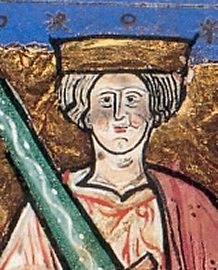
            AKA: Ethelred II "the Unready" King of England
           Born: Abt 968 - <Wessex>, England
     Christened:
           Died: 23 Apr 1016 - <London, Middlesex>, England
         Buried:  - St. Paul's, London, Middlesex, England
         Father: Edgar "the Peaceful" King of England (0944-0975) 35 36
         Mother: Ælfthryth (0945-1000) 35 37
Marriage: Abt 1002
Other Spouse: Ælfgifu of York (Abt 0968-Abt 1002) 35 38 39 - 985
Events
• King of England: 978-1016.
Wife Emma Princess of Normandy 35 40
           Born:
     Christened:
           Died: 1052
         Buried:
         Father: Richard I Duke of Normandy (0933-0996) 41 42 43 44 45
         Mother: Gunnora de Crepon (Abt 0936-Abt 1031) 46 47 48 49
Other Spouse: Canute King of Denmark and England ( - ) - 1017
Children
Research Notes: Husband - Æthelred II "the Redeless" King of England
From Wikipedia - Ethelred the Unready :
Ethelred II (c. 968 - April 23 , 1016 ), also known as Ethelred the Unready or Aethelred the Unready (Old English Æþelræd Unræd), was King of England (978 -1013 , and 1014 -1016 ). He was the son of Edgar , King of all England (959 -975 ) and Ælfthryth . The majority of his reign (991 -1016) was marked by a defensive war against Viking invaders...
Conflict with the Danes
England had experienced a period of peace after the reconquest of the Danelaw in the mid-10th century . However, a new wave of raids began in 980 and a sizable Danish force began a sustained campaign in 991 . During the next quarter of a century England was devastated by a succession of large Danish armies, either under the leadership of King Sweyn I of Denmark or of other commanders such as Olaf Tryggvason and Thorkell the Tall , which Ethelred's government failed to combat effectively. He was only able to halt the depredations of these armies by the payment of large sums of money known as Danegeld . Each payment led to the withdrawal of the Danes, but on each occasion a fresh onslaught began after a year or two, and each Danegeld payment was much larger than the last. Ethelred's most desperate response was the massacre of the Danes living in England on St Brice 's Day (November 13 ) 1002 . Finally in 1013 English resistance collapsed and Sweyn conquered the country, forcing Ethelred into exile, but after his victory Sweyn lived for only another five weeks. In 1014 , Canute the Great was proclaimed King of England by the Danish army in England, but was forced out of England that year. Canute launched a new invasion in 1015 . Subsequently, Ethelred's control of England was already collapsing once again when he died at London on 23 April 1016 . Ethelred was buried in St Paul's and was succeeded by his son, Edmund Ironside .
Marriages and issue
Ethelred married first Ælfgifu , daughter of Thored , the ealdorman of York , by whom he had six sons: Æthelstan Ætheling (died 1011), Edmund Ironside , Ecgberht Ætheling , Eadred Ætheling , Eadwig Ætheling (killed 1017) and Eadgar Ætheling the Elder . They also had as many as four daughters: Edith, who married Eadric Streona , ealdorman of Mercia , and Ælfgifu, who married Uchtred the Bold , ealdorman of Bamburgh . Less certainly there may also have been a daughter named Wulfhild married to Ulfcytel Snillingr , and perhaps a fourth daughter, whose name is not recorded, who was abbess of Wherwell .
His second marriage, in 1002, was to Emma of Normandy , whose grandnephew, William I of England , would later use this relationship as the basis of his claim on the throne. They had two sons, Eadweard (later King of England and known now as Edward the Confessor ) and Ælfred Ætheling . By this marriage, he also had Goda of England , who married Drogo of Mantes , Count of Vexin ...
Research Notes: Wife - Emma Princess of Normandy
Source: Ancestral Roots of Certain American Colonists Who Came to America before 1700 by Frederick Lewis Weis and Walter Lee Sheppard, Jr, ed. by William R. Beall & Kaleen E. Beall (Baltimore, 2008), line 1-18 (Aethelred II)
Husband Gospatric I 1st Earl of Dunbar 50 51
            AKA: Gospatric Earl of Northumberland
           Born: Abt 1040 - <Northumberland, England>
     Christened:
           Died: 1075
         Buried:  - Norham, Northumberland, England
         Father: Maldred Lord of Carlisle and Allerdale (Abt 1015-1045) 51 52
         Mother: Ealdgyth Princess of Northumbria (Abt 1020-      ) 53 54
Marriage:
Events
• Earl of Northumberland: 1067.
• 1st Earl of Dunbar: 1072-1075.
• Lord of Carlisle and Allerdale:
• Visited Rome: 1061.
Wife Æthelreda Princess of England 54
           Born: Abt 1042 - <Dunbar, East Lothian, Scotland>
     Christened:
           Died:
         Buried:
Children
1 M Waltheof Lord of Allerdale 51 55
            AKA: Waldeve Lord of Allerdale, Waltheof Earl of Dunbar
           Born: Abt 1062 - <Dunbar, East Lothian, Scotland>
     Christened:
           Died: 1138
         Buried:
Spouse: Sigrid (Abt 1075-After 1126) 54 56
2 M Uchtred of North Umberland 26
           Born: Abt 1080 - <Raby>, Durham, England
     Christened:
           Died:
         Buried:
Husband Æthelswith 57
           Born:
     Christened:
           Died:
         Buried:
         Father: Æthelwulf King of Wessex and King of Kent (Between 0795/0800-0858) 16 17
         Mother: Osburga (Abt 0805-After 0876) 18 19 20
Marriage:
Wife Burgred of Mercia
           Born:
     Christened:
           Died:
         Buried:
Children
Research Notes: Wife - Burgred of Mercia
Source: Wikipedia - Æthelwulf King of Wessex
Husband Æthelwulf King of Wessex and King of Kent 16 17
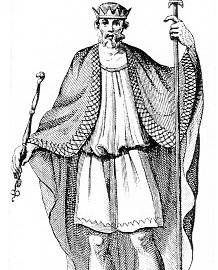
            AKA: Aethelwulf King of Wessex, Ethelwulf King of Wessex
           Born: Between 795 and 800
     Christened:
           Died: 13 Jan 858
         Buried:
         Father: Egbert King of Wessex (Abt 0775-Between 0837/0839)
         Mother: Rædburga (Abt 0777-      ) 58
Marriage: Bef 844
Other Spouse: Judith Princess of France (0844-After 0870) 21 22 59 - 1 Oct 856 - Verberie-sur-Oise, (Oise), France
Events
• King of Wessex: 839-855.
Wife Osburga 18 19 20
            AKA: Osburh
           Born: Abt 805 - Hampshire, England
     Christened:
           Died: After 876 - England
         Buried:
         Father: Oslac Royal Cup Bearer (Abt 0779-      ) 60
         Mother:
Events
• Repudiated: by Aethelwulf, 853.
Children
1 M Aethelred I King of Wessex
           Born: Abt 844
     Christened:
           Died: 871 - Merton, England
         Buried:
2 M Alfred the Great King of Wessex, King of England 18 61 62
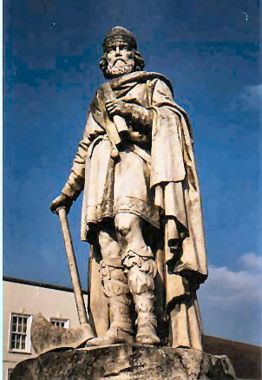
AKA: Ælfred King of the Anglo-Saxons, Ælfred se Greata King of the Anglo-Saxons
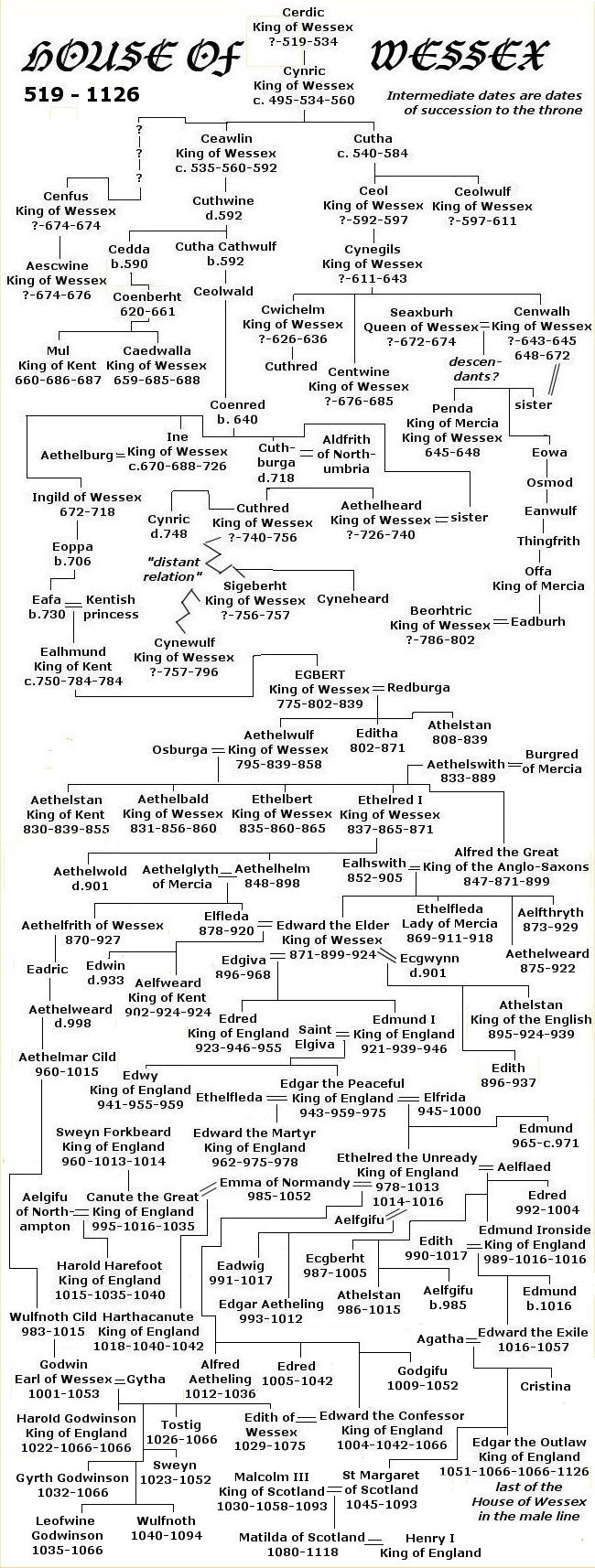
           Born: Between 847 and 849 - Wantage, Berkshire, England
     Christened:
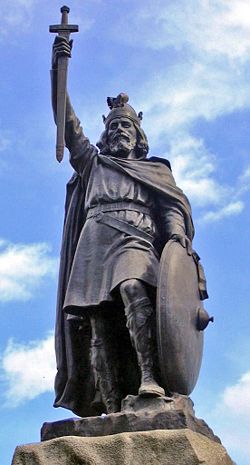
           Died: 26 Oct 899
         Buried:  - Old Minster [New Minster], Wessex, [Winchester, ] England
         Spouse: Ealhswith of the Gaini, Queen of the Anglo-Saxons (Abt 0852-0904/0905) 63 64 65
           Marr: 869
3 F Judith
           Born: 850 - England
     Christened:
           Died:
         Buried:
4 M Æthelstan 57
           Born:
     Christened:
           Died:
         Buried:
5 M Æthelswith 57
           Born:
     Christened:
           Died:
         Buried:
Spouse: Burgred of Mercia ( - )
6 M Æthelbald King of Wessex 15
            AKA: Ethelbald King of Wessex
           Born:
     Christened:
           Died: 860
         Buried:
         Spouse: Judith Princess of France (0844-After 0870) 21 22 66
           Marr: After 13 Jan 858
7 M Æthelbert 57
           Born:
     Christened:
           Died: 866
         Buried:
Research Notes: Husband - Æthelwulf King of Wessex and King of Kent
From Wikipedia - Æthelwulf of Wessex :
Æthelwulf, also spelled Aethelwulf or Ethelwulf; Old English : Æþelwulf, means 'Noble Wolf' (c. 795 - 858 ) was the elder son of King Egbert of Wessex . He conquered Kent on behalf of his father in 825. Thereafter he was styled King of Kent [1] until he succeeded his father as King of Wessex in 839 , whereupon he became King of Wessex, Kent, Cornwall, the West Saxons and the East Saxons. [2] He was crowned at Kingston upon Thames .
In 839 , Æthelwulf succeeded his father Egbert as King. Egbert had been a grizzled veteran who had fought for survival since his youth. Æthelwulf had a worrying style of Kingship. He had come naturally to the throne of Wessex. He proved to be intensly religious, cursed with little political sense, and too many able and ambitious sons. [Humble, Richard. The Saxon Kings. London: Weidenfeld and Nicolson, 1980. 41.] One of the first acts Æthelwulf did as King, was to split the kingdom. He gave the eastern half, that of Kent, Essex, Surrey and Sussex to his eldest son Athelstan (not to be confused with the later Athelstan the Glorious). Æthelwulf kept the ancient, western side of Wessex (Hampshire, Wiltshire, Dorset and Devon) for himself. Æthelwulf and his first wife, Osburga , had five sons and a daughter. After Athelstan came Ethelbald , Ethelbert , Ethelred , and Alfred . Each of his sons succeeded to the throne. Alfred, the youngest son, has been praised as one of the greatest kings to ever reign in Britain. Æthelwulf's only daughter, Aethelswith , was married as a child to the king of Mercia .
... In 853 Æthelwulf, sent his son Alfred, a child of about four years, to Rome. In 855 , about a year after his wife Osburh's death, Æthelwulf followed Alfred to Rome . In Rome, he was generous with his wealth. He distributed gold to the clergy of St. Peter's, and offered the Blessed Peter chalices of the purest gold and silver-gilt candelabra of Saxon work. [Hodgkin, RH. A History of the Anglo-Saxons. London: Oxford UP, 1935. 512.] During the return journey in 856 he married Judith a Frankish princess and a great-granddaughter of Charlemagne. She was about twelve years old, the daughter of Charles the Bald , King of the West Franks .
Upon their return to England in 856 Æthelwulf met with an acute crisis. His eldest son Ethelbald (Athelstan had since died) had devised a conspiracy with the Ealdorman of Somerset and the Bishop of Sherborne to oppose Æthelwulf's resumption of the kingship once he returned. There was enough support of Æthelwulf to either have a civil war, or to banish Ethelbald and his fellow conspirators. Instead Æthelwulf yielded Wessex proper to his son, and accepted Surrey, Sussex and Essex for himself. he ruled there until his death on January 13 , 858 . The family quarrel, had it been allowed to continue, could have ruined the House of Egbert. Æthelwulf and his advisors deserved the adoration bestowed upon them for their restraint and tolerance.
... He was buried first at Steyning and then later transferred to the Old Minster in Winchester . His bones now reside in one of several mortuary chests in Winchester Cathedral .
Research Notes: Wife - Osburga
Husband Æthelwulf King of Wessex and King of Kent 16 17
            AKA: Aethelwulf King of Wessex, Ethelwulf King of Wessex
           Born: Between 795 and 800
     Christened:
           Died: 13 Jan 858
         Buried:
         Father: Egbert King of Wessex (Abt 0775-Between 0837/0839)
         Mother: Rædburga (Abt 0777-      ) 58
Marriage: 1 Oct 856 - Verberie-sur-Oise, (Oise), France
Other Spouse: Osburga (Abt 0805-After 0876) 18 19 20 - Bef 844
Events
• King of Wessex: 839-855.
Wife Judith Princess of France 21 22 67
            AKA: Judith of Flanders
           Born: Oct 844 - France
     Christened:
           Died: After 870
         Buried:
         Father: Charles II "the Bald" of France and Holy Roman Emperor (0823-0877) 24 25
         Mother: Ermentrude of Orléans (0830-0869) 26 27 28
Other Spouse: Æthelbald King of Wessex ( -0860) 15 - After 13 Jan 858
Other Spouse: Baldwin I Count of Flanders (Abt 0836-0879) 29 30 31 32 - Jan 862 - <Flanders (Belgium)>
Children
Research Notes: Husband - Æthelwulf King of Wessex and King of Kent
From Wikipedia - Æthelwulf of Wessex :
Æthelwulf, also spelled Aethelwulf or Ethelwulf; Old English : Æþelwulf, means 'Noble Wolf' (c. 795 - 858 ) was the elder son of King Egbert of Wessex . He conquered Kent on behalf of his father in 825. Thereafter he was styled King of Kent [1] until he succeeded his father as King of Wessex in 839 , whereupon he became King of Wessex, Kent, Cornwall, the West Saxons and the East Saxons. [2] He was crowned at Kingston upon Thames .
In 839 , Æthelwulf succeeded his father Egbert as King. Egbert had been a grizzled veteran who had fought for survival since his youth. Æthelwulf had a worrying style of Kingship. He had come naturally to the throne of Wessex. He proved to be intensly religious, cursed with little political sense, and too many able and ambitious sons. [Humble, Richard. The Saxon Kings. London: Weidenfeld and Nicolson, 1980. 41.] One of the first acts Æthelwulf did as King, was to split the kingdom. He gave the eastern half, that of Kent, Essex, Surrey and Sussex to his eldest son Athelstan (not to be confused with the later Athelstan the Glorious). Æthelwulf kept the ancient, western side of Wessex (Hampshire, Wiltshire, Dorset and Devon) for himself. Æthelwulf and his first wife, Osburga , had five sons and a daughter. After Athelstan came Ethelbald , Ethelbert , Ethelred , and Alfred . Each of his sons succeeded to the throne. Alfred, the youngest son, has been praised as one of the greatest kings to ever reign in Britain. Æthelwulf's only daughter, Aethelswith , was married as a child to the king of Mercia .
... In 853 Æthelwulf, sent his son Alfred, a child of about four years, to Rome. In 855 , about a year after his wife Osburh's death, Æthelwulf followed Alfred to Rome . In Rome, he was generous with his wealth. He distributed gold to the clergy of St. Peter's, and offered the Blessed Peter chalices of the purest gold and silver-gilt candelabra of Saxon work. [Hodgkin, RH. A History of the Anglo-Saxons. London: Oxford UP, 1935. 512.] During the return journey in 856 he married Judith a Frankish princess and a great-granddaughter of Charlemagne. She was about twelve years old, the daughter of Charles the Bald , King of the West Franks .
Upon their return to England in 856 Æthelwulf met with an acute crisis. His eldest son Ethelbald (Athelstan had since died) had devised a conspiracy with the Ealdorman of Somerset and the Bishop of Sherborne to oppose Æthelwulf's resumption of the kingship once he returned. There was enough support of Æthelwulf to either have a civil war, or to banish Ethelbald and his fellow conspirators. Instead Æthelwulf yielded Wessex proper to his son, and accepted Surrey, Sussex and Essex for himself. he ruled there until his death on January 13 , 858 . The family quarrel, had it been allowed to continue, could have ruined the House of Egbert. Æthelwulf and his advisors deserved the adoration bestowed upon them for their restraint and tolerance.
... He was buried first at Steyning and then later transferred to the Old Minster in Winchester . His bones now reside in one of several mortuary chests in Winchester Cathedral .
Research Notes: Wife - Judith Princess of France
Baldwin I was her third husband.
From Wikipedia - Judith of Flanders :
Judith of Flanders (844 - 870 ) was a daughter of the Frankish king Charles the Bald . Through her marriage to two kings of Wessex she was first a queen, then later through her third marriage to Baldwin, she became Countess of Flanders .
Judith was born in October of 844, the daughter of Charles the Bald , King of the Franks , and Ermentrude .
Her father gave her in marriage to Ethelwulf , King of Wessex on October 1 , 856 at Verberie sur Oise , France. Soon after, Ethelwulf's son Ethelbald forced his father to abdicate. Following Ethelwulf's death on January 13 , 858 , Ethelbald married his widowed stepmother. However, the marriage was annulled in 860 on the grounds of consanguinity .
Elopement
Judith eloped with Baldwin in January 862 . They were likely married at the monastery of Senlis before they eloped. The couple was in hiding from Judith's father, King Charles the Bald, until October after which they went to her uncle Lothair II for protection. From there they fled to Pope Nicholas I . The pope took diplomatic action and asked Judith's father to accept the union as legally binding and welcome the young couple into his circle - which ultimately he did. The couple then returned to France and were officially married at Auxerre .
Baldwin was accepted as son-in-law and was given the land directly south of the Scheldt to ward off Viking attacks. Although it is disputed among historians as to whether King Charles did this in the hope that Baldwin would be killed in the ensuing battles with the Vikings, Baldwin managed the situation remarkably well. Baldwin succeeded in quelling the Viking threat, expanded both his army and his territory quickly, and became one of the most faithful supporters of King Charles. The March of Baldwin came to be known as the County of Flanders and was for a long time the most powerful principality of France.
Succession
Judith and Baldwin had a son, Baldwin II , Count of Flanders, born in 864 . Judith died in 870.
Notes: Marriage
Source: http://wc.rootsweb.com/cgi-bin/igm.cgi?op=GET&db=:3174654&id=I593871945
Husband Afonso I King of Portugal 68 69
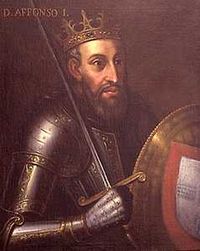
            AKA: Affonso I "the Conqueror" King of Portugal and the Algarves, Afonso Henriques King of Portugal, Alfonso I King of Portugal, Henriquez I King of Portugal
           Born: 25 Jul 1109 - Viseu, Viseu, Portugal
     Christened:
           Died: 6 Dec 1185 - Coimbra, Coimbra, Portugal
         Buried:  - Santa Cruz Monastery, Coimbra, Coimbra, Portugal
         Father: Henry of Burgundy, Count of Portugal (1069-1112) 70 71 72
         Mother: Theresa of Leon and Castile (Abt 1070-1130) 72
Marriage: Bef Jun 1146 - Chambéry, Savoie, France
Wife Maud of Savoy 73 74 75
            AKA: Mafalda of Savoy, Mahaut of Savoy, Mathilda of Savoy, Matilde Countess of Savoy
           Born: 1125 - <Chambéry, Savoie>, France
     Christened:
           Died: 4 Nov 1158 - Coimbra, Coimbra, Portugal
         Buried:  - Igreja Santa Cruz, Coimbra, Coimbra, Portugal
         Father: Amadeus III Count of Savoy, Maurienne and Turin (Abt 1095-1148) 76
         Mother: Mathilde Comtesse d'Albon (Abt 1116-After 1145) 72 77
Children
1 F Urraca of Portugal 75 78 79
            AKA: Urraca Affonsez of Portugal
           Born: Abt 1150 - <Coimbra, Coimbra>, Portugal
     Christened:
           Died: 16 Oct 1188 - Valladolid, Valladolid, Spain
         Buried:
         Spouse: Fernando II King of Léon (1137-1188) 75 80 81
           Marr: Abt Jun 1165 - Coimbra, Coimbra, Portugal. (Annulled in Jun 1175)
2 M Sancho I King of Portugal
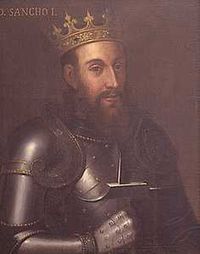
           Born: 11 Nov 1154 - Coimbra, Coimbra, Portugal
     Christened:
           Died: 26 Mar 1212 - Coimbra, Coimbra, Portugal
         Buried:
         Spouse: Dulce Berenguer of Barcelona (1152-1198)
           Marr: 1174
Research Notes: Husband - Afonso I King of Portugal
First king of Portugal.
From Wikipedia - Afonso I of Portugal :
Afonso I (English Alphonzo or Alphonse), more commonly known as Afonso Henriques (pronounced [?'fõsu ?'?ik??] ), or also Affonso (Archaic Portuguese), Alfonso or Alphonso (Portuguese-Galician ) or Alphonsus (Latin version), (Viseu , 1109 , traditionally July 25 - Coimbra , 1185 December 6 ), also known as the Conqueror (Port. o Conquistador), was the first King of Portugal , declaring his independence from León .
Life
Afonso I was the son of Henry of Burgundy, Count of Portugal and Teresa of León , the illegitimate daughter of King Alfonso VI of Castile and León . He was proclaimed King on July 26 , 1139 , immediately after the Battle of Ourique , and died on December 6 , 1185 in Coimbra .
At the end of the 11th century , the Iberian Peninsula political agenda was mostly concerned with the Reconquista , the driving out of the Muslim successor-states to the Caliphate of Cordoba after its collapse. With European military aristocracies focused on the Crusades , Alfonso VI called for the help of the French nobility to deal with the Moors . In exchange, he was to give the hands of his daughters in wedlock to the leaders of the expedition and bestow royal privileges to the others. Thus, the royal heiress Urraca of Castile wedded Raymond of Burgundy , younger son of the Count of Burgundy , and her half-sister, princess Teresa of León , wedded his cousin, another French crusader, Henry of Burgundy , younger brother of the Duke of Burgundy . Henry was made Count of Portugal, a burdensome county south of Galicia , where Moorish incursions and attacks were to be expected. With his wife Teresa as co-ruler of Portugal, Henry withstood the ordeal and held the lands for his father-in-law.
From this wedlock several sons were born, but only one, Afonso Henriques (meaning "Afonso son of Henry") thrived. The boy, probably born around 1109, followed his father as Count of Portugal in 1112 , under the tutelage of his mother. The relations between Teresa and her son Afonso proved difficult. Only eleven years old, Afonso already had his own political ideas, greatly different from his mother's. In 1120 , the young prince took the side of the archbishop of Braga , a political foe of Teresa, and both were exiled by her orders. Afonso spent the next years away from his own county , under the watch of the bishop. In 1122 Afonso became fourteen, the adult age in the 12th century . He made himself a knight on his own account in the Cathedral of Zamora , raised an army , and proceeded to take control of his lands. Near Guimarães , at the Battle of São Mamede (1128 ) he overcame the troops under his mother's lover and ally Count Fernando Peres de Trava of Galicia , making her his prisoner and exiling her forever to a monastery in León . Thus the possibility of incorporating Portugal into a Kingdom of Galicia was eliminated and Afonso become sole ruler (Duke of Portugal) after demands for independence from the county's people, church and nobles. He also vanquished Alfonso VII of Castile and León , another of his mother's allies, and thus freed the county from political dependence on the crown of León and Castile . On April 6 , 1129 , Afonso Henriques dictated the writ in which he proclaimed himself Prince of Portugal.
...In 1169 , Afonso was disabled in an engagement near Badajoz by a fall from his horse , and made prisoner by the soldiers of the king of León. Portugal was obliged to surrender as his ransom almost all the conquests Afonso had made in Galicia in the previous years.
In 1179 the privileges and favours given to the Roman Catholic Church were compensated. In the papal bull Manifestis Probatum , Pope Alexander III acknowledged Afonso as King and Portugal as an independent land with the right to conquer lands from the Moors. With this papal blessing, Portugal was at last secured as a country and safe from any Castilian attempts at annexation.
In 1184 , in spite of his great age, he still had sufficient energy to relieve his son Sancho, who was besieged in Santarém by the Moors. He died shortly after, on December 6 , 1185 .
The Portuguese revere him as a hero, both on account of his personal character and as the founder of their nation . There are stories that it would take 10 men to carry his sword, and that Afonso would want to engage other monarchs in personal combat, but no one would dare accept his challenge.
Death Notes: Wife - Maud of Savoy
Ancestral Roots has d. 1157
Research Notes: Wife - Maud of Savoy
From Wikipedia - Maud of Savoy : From Wikipedia - Afonso II of Portugal : Wikipedia - Afonso II of Portugal
1. Weis, Frederick Lewis and Walter Lee Sheppard, Jr; William R. Beall and Kaleen E. Beall, eds, Ancestral Roots of Certain American Colonists Who Came to America before 1700 (8th ed. Baltimore: Genealogical Publishing Company, 2008.), Lines 48-18, 53-18, 101-18.
2. Weis, Frederick Lewis and Walter Lee Sheppard, Jr; William R. Beall and Kaleen E. Beall, eds, Ancestral Roots of Certain American Colonists Who Came to America before 1700 (8th ed. Baltimore: Genealogical Publishing Company, 2008.), Line 48-17.
3. http://www.familysearch.org, Cit. Date: 23 Jul 2009.
4. Weis, Frederick Lewis and Walter Lee Sheppard, Jr; William R. Beall and Kaleen E. Beall, eds, Ancestral Roots of Certain American Colonists Who Came to America before 1700 (8th ed. Baltimore: Genealogical Publishing Company, 2008.), Line 181-6.
5. http://www.familysearch.org, Cit. Date: 24 Jul 2009.
6. http://wc.rootsweb.ancestry.com/cgi-bin/igm.cgi. Rec. Date: 25 Aug 2001, http://wc.rootsweb.com/cgi-bin/igm.cgi?op=GET&db=:3174654&id=I593872395.
7. Weis, Frederick Lewis and Walter Lee Sheppard, Jr; William R. Beall and Kaleen E. Beall, eds, Ancestral Roots of Certain American Colonists Who Came to America before 1700 (8th ed. Baltimore: Genealogical Publishing Company, 2008.), Line 48-18, 53-18 (Robert I), 101-18 (Robert I).
8. Weis, Frederick Lewis and Walter Lee Sheppard, Jr; William R. Beall and Kaleen E. Beall, eds, Ancestral Roots of Certain American Colonists Who Came to America before 1700 (8th ed. Baltimore: Genealogical Publishing Company, 2008.), Line 49-18 (Herbert II), 48-18 (Robert I).
9. http://wc.rootsweb.ancestry.com/cgi-bin/igm.cgi. Rec. Date: 25 Aug 2001, http://wc.rootsweb.com/cgi-bin/igm.cgi?op=GET&db=:3174654&id=I593871888.
10. Weis, Frederick Lewis and Walter Lee Sheppard, Jr; William R. Beall and Kaleen E. Beall, eds, Ancestral Roots of Certain American Colonists Who Came to America before 1700 (8th ed. Baltimore: Genealogical Publishing Company, 2008.), Line 48-19, 50-18 (Herbert II).
11. Weis, Frederick Lewis and Walter Lee Sheppard, Jr; William R. Beall and Kaleen E. Beall, eds, Ancestral Roots of Certain American Colonists Who Came to America before 1700 (8th ed. Baltimore: Genealogical Publishing Company, 2008.), Line 50-18.
12. Wikipedia.org, Herbert II, Count of Vermandois.
13. http://www.familysearch.org, (Kevin Bradford).
14. http://wc.rootsweb.ancestry.com/cgi-bin/igm.cgi. Rec. Date: 25 Aug 2001, http://wc.rootsweb.com/cgi-bin/igm.cgi?op=GET&db=:3174654&id=I593871672.
15. http://wc.rootsweb.ancestry.com/cgi-bin/igm.cgi. Rec. Date: 25 Aug 2001, http://wc.rootsweb.com/cgi-bin/igm.cgi?op=GET&db=:3174654&id=I593874489.
16. Weis, Frederick Lewis and Walter Lee Sheppard, Jr; William R. Beall and Kaleen E. Beall, eds, Ancestral Roots of Certain American Colonists Who Came to America before 1700 (8th ed. Baltimore: Genealogical Publishing Company, 2008.), Line 1-13.
17. Wikipedia.org, Æthelwulf of Wessex.
18. Wikipedia.org, Alfred the Great.
19. Weis, Frederick Lewis and Walter Lee Sheppard, Jr; William R. Beall and Kaleen E. Beall, eds, Ancestral Roots of Certain American Colonists Who Came to America before 1700 (8th ed. Baltimore: Genealogical Publishing Company, 2008.), Line 1-13 (Aethelwulf).
20. http://wc.rootsweb.ancestry.com/cgi-bin/igm.cgi. Rec. Date: 25 Aug 2001, http://wc.rootsweb.com/cgi-bin/igm.cgi?op=GET&db=:3174654&id=I593871983.
21. http://wc.rootsweb.ancestry.com/cgi-bin/igm.cgi. Rec. Date: 25 Aug 2001, http://wc.rootsweb.com/cgi-bin/igm.cgi?op=GET&db=:3174654&id=I593871945.
22. Wikipedia.org, Judith of Flanders.
23. Weis, Frederick Lewis and Walter Lee Sheppard, Jr; William R. Beall and Kaleen E. Beall, eds, Ancestral Roots of Certain American Colonists Who Came to America before 1700 (8th ed. Baltimore: Genealogical Publishing Company, 2008.), Line 1-13 (AEthelwulf).
24. Weis, Frederick Lewis and Walter Lee Sheppard, Jr; William R. Beall and Kaleen E. Beall, eds, Ancestral Roots of Certain American Colonists Who Came to America before 1700 (8th ed. Baltimore: Genealogical Publishing Company, 2008.), Line 148-15, 162-16 (Judith).
25. Wikipedia.org, Charles the Bald.
26. http://www.familysearch.org, Cit. Date: 31 Jul 2009.
27. Weis, Frederick Lewis and Walter Lee Sheppard, Jr; William R. Beall and Kaleen E. Beall, eds, Ancestral Roots of Certain American Colonists Who Came to America before 1700 (8th ed. Baltimore: Genealogical Publishing Company, 2008.), Line 148-15 (Charles II).
28. Wikipedia.org, Odo I, Count of Orléans. Cit. Date: 20 Sep 2009.
29. Wikipedia.org, Baldwin I, Count of Flanders.
30. Weis, Frederick Lewis and Walter Lee Sheppard, Jr; William R. Beall and Kaleen E. Beall, eds, Ancestral Roots of Certain American Colonists Who Came to America before 1700 (8th ed. Baltimore: Genealogical Publishing Company, 2008.), Line 162-16 (Judith).
31. http://www.familysearch.org, Cit. Date: 7 Aug 2009.
32. http://wc.rootsweb.ancestry.com/cgi-bin/igm.cgi. Rec. Date: 25 Aug 2001, http://wc.rootsweb.com/cgi-bin/igm.cgi?op=GET&db=:3174654&id=I593871946.
33. Weis, Frederick Lewis and Walter Lee Sheppard, Jr; William R. Beall and Kaleen E. Beall, eds, Ancestral Roots of Certain American Colonists Who Came to America before 1700 (8th ed. Baltimore: Genealogical Publishing Company, 2008.), Line 1-18, 34-19.
34. Wikipedia.org, Ethelred "the Unready."
35. http://www.familysearch.org, Cit. Date: 17 Jul 2009.
36. Weis, Frederick Lewis and Walter Lee Sheppard, Jr; William R. Beall and Kaleen E. Beall, eds, Ancestral Roots of Certain American Colonists Who Came to America before 1700 (8th ed. Baltimore: Genealogical Publishing Company, 2008.), Line 1-17.
37. Weis, Frederick Lewis and Walter Lee Sheppard, Jr; William R. Beall and Kaleen E. Beall, eds, Ancestral Roots of Certain American Colonists Who Came to America before 1700 (8th ed. Baltimore: Genealogical Publishing Company, 2008.), Line 1-17 (Edgar).
38. Weis, Frederick Lewis and Walter Lee Sheppard, Jr; William R. Beall and Kaleen E. Beall, eds, Ancestral Roots of Certain American Colonists Who Came to America before 1700 (8th ed. Baltimore: Genealogical Publishing Company, 2008.), Line 1-18 (Ethelred II).
39. Wikipedia.org, Ælfgifu of York.
40. Weis, Frederick Lewis and Walter Lee Sheppard, Jr; William R. Beall and Kaleen E. Beall, eds, Ancestral Roots of Certain American Colonists Who Came to America before 1700 (8th ed. Baltimore: Genealogical Publishing Company, 2008.), Line 1-18 (Aethelred II).
41. Weis, Frederick Lewis and Walter Lee Sheppard, Jr; William R. Beall and Kaleen E. Beall, eds, Ancestral Roots of Certain American Colonists Who Came to America before 1700 (8th ed. Baltimore: Genealogical Publishing Company, 2008.), Line 177-3 (Nesta).
42. Website - Genealogy, http://www.smokykin.com/ged/f001/f87/a0018708.htm.
43. http://www.familysearch.org, Cit. Date: 30 Jul 2009.
44. Wikipedia.org, Richard I, Duke of Normandy. Cit. Date: 14 Aug 2009.
45. Website - Genealogy, thepeerage.com. Cit. Date: 7 Mar 2010.
46. http://www.familysearch.org, Compact Disc #125 Pin #875034 Maitland Dirk Brower. Cit. Date: 30 Jul 2009.
47. Weis, Frederick Lewis and Walter Lee Sheppard, Jr; William R. Beall and Kaleen E. Beall, eds, Ancestral Roots of Certain American Colonists Who Came to America before 1700 (8th ed. Baltimore: Genealogical Publishing Company, 2008.), Line 121E-20. Cit. Date: 30 Jul 2009.
48. Wikipedia.org, Gunnora, Duchess of Normandy. Cit. Date: 5 Sep 2009.
49. Website:, http://cybergata.com/roots/442.htm. Cit. Date: 29 Jun 2013.
50. Weis, Frederick Lewis and Walter Lee Sheppard, Jr; William R. Beall and Kaleen E. Beall, eds, Ancestral Roots of Certain American Colonists Who Came to America before 1700 (8th ed. Baltimore: Genealogical Publishing Company, 2008.), Line 38-22.
51. http://www.familysearch.org, Cit. Date: 20 Jul 2009.
52. Weis, Frederick Lewis and Walter Lee Sheppard, Jr; William R. Beall and Kaleen E. Beall, eds, Ancestral Roots of Certain American Colonists Who Came to America before 1700 (8th ed. Baltimore: Genealogical Publishing Company, 2008.), Line 172-20.
53. Weis, Frederick Lewis and Walter Lee Sheppard, Jr; William R. Beall and Kaleen E. Beall, eds, Ancestral Roots of Certain American Colonists Who Came to America before 1700 (8th ed. Baltimore: Genealogical Publishing Company, 2008.), Line 34-21.
54. http://www.familysearch.org, Cit. Date: 21 Jul 2009.
55. Weis, Frederick Lewis and Walter Lee Sheppard, Jr; William R. Beall and Kaleen E. Beall, eds, Ancestral Roots of Certain American Colonists Who Came to America before 1700 (8th ed. Baltimore: Genealogical Publishing Company, 2008.), Line 38-23.
56. Weis, Frederick Lewis and Walter Lee Sheppard, Jr; William R. Beall and Kaleen E. Beall, eds, Ancestral Roots of Certain American Colonists Who Came to America before 1700 (8th ed. Baltimore: Genealogical Publishing Company, 2008.), Line 38-23 (Waldeve).
57. Wikipedia.org, Æthelwulf King of Wessex.
58. http://wc.rootsweb.ancestry.com/cgi-bin/igm.cgi. Rec. Date: 25 Aug 2001, http://wc.rootsweb.com/cgi-bin/igm.cgi?op=GET&db=:3174654&id=I593872467.
59. Weis, Frederick Lewis and Walter Lee Sheppard, Jr; William R. Beall and Kaleen E. Beall, eds, Ancestral Roots of Certain American Colonists Who Came to America before 1700 (8th ed. Baltimore: Genealogical Publishing Company, 2008.), Line 1-13 (AEthelwulf).
60. http://wc.rootsweb.ancestry.com/cgi-bin/igm.cgi. Rec. Date: 25 Aug 2001, http://wc.rootsweb.com/cgi-bin/igm.cgi?op=GET&db=:3174654&id=I593872466.
61. Weis, Frederick Lewis and Walter Lee Sheppard, Jr; William R. Beall and Kaleen E. Beall, eds, Ancestral Roots of Certain American Colonists Who Came to America before 1700 (8th ed. Baltimore: Genealogical Publishing Company, 2008.), Line 1-14, 44-15.
62. http://wc.rootsweb.ancestry.com/cgi-bin/igm.cgi. Rec. Date: 25 Aug 2001, http://wc.rootsweb.com/cgi-bin/igm.cgi?op=GET&db=:3174654&id=I59387198.
63. Wikipedia.org, Ealhswith, Alfred the Great.
64. Weis, Frederick Lewis and Walter Lee Sheppard, Jr; William R. Beall and Kaleen E. Beall, eds, Ancestral Roots of Certain American Colonists Who Came to America before 1700 (8th ed. Baltimore: Genealogical Publishing Company, 2008.), Line 1-14 (Alfred the Great), 44-15 (Alfred the Great).
65. http://wc.rootsweb.ancestry.com/cgi-bin/igm.cgi. Rec. Date: 25 Aug 2001, http://wc.rootsweb.com/cgi-bin/igm.cgi?op=GET&db=:3174654&id=I593871981.
66. Weis, Frederick Lewis and Walter Lee Sheppard, Jr; William R. Beall and Kaleen E. Beall, eds, Ancestral Roots of Certain American Colonists Who Came to America before 1700 (8th ed. Baltimore: Genealogical Publishing Company, 2008.), Line 1-13 (AEthelwulf).
67. Weis, Frederick Lewis and Walter Lee Sheppard, Jr; William R. Beall and Kaleen E. Beall, eds, Ancestral Roots of Certain American Colonists Who Came to America before 1700 (8th ed. Baltimore: Genealogical Publishing Company, 2008.), Line 1-13 (AEthelwulf).
68. Weis, Frederick Lewis and Walter Lee Sheppard, Jr; William R. Beall and Kaleen E. Beall, eds, Ancestral Roots of Certain American Colonists Who Came to America before 1700 (8th ed. Baltimore: Genealogical Publishing Company, 2008.), Line 112-25.
69. Wikipedia.org, Afonso I of Portugal.
70. Wikipedia.org, Henry, Count of Portugal.
71. Weis, Frederick Lewis and Walter Lee Sheppard, Jr; William R. Beall and Kaleen E. Beall, eds, Ancestral Roots of Certain American Colonists Who Came to America before 1700 (8th ed. Baltimore: Genealogical Publishing Company, 2008.), Line 112-24.
72. http://www.familysearch.org, Cit. Date: 8 Aug 2009.
73. Weis, Frederick Lewis and Walter Lee Sheppard, Jr; William R. Beall and Kaleen E. Beall, eds, Ancestral Roots of Certain American Colonists Who Came to America before 1700 (8th ed. Baltimore: Genealogical Publishing Company, 2008.), Line 112-25 (Alfonso I).
74. Wikipedia.org, Maud of Savoy.
75. http://www.familysearch.org, Cit. Date: 6 Aug 2009.
76. Weis, Frederick Lewis and Walter Lee Sheppard, Jr; William R. Beall and Kaleen E. Beall, eds, Ancestral Roots of Certain American Colonists Who Came to America before 1700 (8th ed. Baltimore: Genealogical Publishing Company, 2008.), Line 274B-25.
77. Weis, Frederick Lewis and Walter Lee Sheppard, Jr; William R. Beall and Kaleen E. Beall, eds, Ancestral Roots of Certain American Colonists Who Came to America before 1700 (8th ed. Baltimore: Genealogical Publishing Company, 2008.), Line 274B-25 (Amadeus III).
78. Weis, Frederick Lewis and Walter Lee Sheppard, Jr; William R. Beall and Kaleen E. Beall, eds, Ancestral Roots of Certain American Colonists Who Came to America before 1700 (8th ed. Baltimore: Genealogical Publishing Company, 2008.), Line 112-26, 114-26 (Fernando II).
79. Wikipedia.org, Urraca of Portugal. Cit. Date: 15 Sep 2009.
80. Weis, Frederick Lewis and Walter Lee Sheppard, Jr; William R. Beall and Kaleen E. Beall, eds, Ancestral Roots of Certain American Colonists Who Came to America before 1700 (8th ed. Baltimore: Genealogical Publishing Company, 2008.), Line 114-26.
81. Wikipedia.org, Ferdinand II of León. Cit. Date: 15 Sep 2009.
82. Wikipedia.org, Beatrice of Castile (1242–1303). Cit. Date: 13 Sep 2009.
Maud of Savoy (1125 -1158 ), also known as Mafalda, Mahaut or Matilda (in Portuguese always as Mafalda),was the first queen of Portugal. She was Queen consort of Portugal through her marriage to King Afonso I of Portugal (of the House of Burgundy ; first king of Portugal ) in 1146 .
She was the second or third daughter of Amadeus III of Savoy , Count of Savoy and Maurienne , and Mahaut of Albon (the sister of Guigues IV, Comte d'Albon , "le Dauphin").
Afonso's and Maud descendants
Husband Afonso II King of Portugal
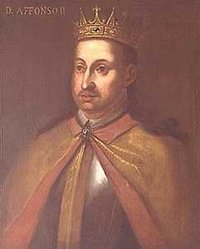
           Born: 23 Apr 1185 - Coimbra, Coimbra, Portugal
     Christened:
           Died: 25 Mar 1223 - Coimbra, Coimbra, Portugal
         Buried:  - Santa Cruz Monastery, Coimbra, Coimbra, Portugal
         Father: Sancho I King of Portugal (1154-1212)
         Mother: Dulce Berenguer of Barcelona (1152-1198)
Marriage: 1208
Wife Urracca of Castile
           Born: 1186
     Christened:
           Died: 1220
         Buried:
Children
1 M Sancho II King of Portugal
           Born: 8 Sep 1207
     Christened:
           Died: 4 Jan 1248
         Buried:
2 M Afonso III King of Portugal and the Algarve
            AKA: Alphonzo King of Portugal and the Algarve
           Born: 5 May 1210 - Coimbra, Coimbra, Portugal
     Christened:
           Died: 16 Feb 1279 - Alcobaça, Portugal
         Buried:
         Spouse: Beatrice of Castile (1242-1303) 82
           Marr: 1253
Research Notes: Husband - Afonso II King of Portugal
Afonso II (Portuguese pronounced [?'fõsu] ; English Alphonzo), or Affonso (Archaic Portuguese), Alfonso or Alphonso (Portuguese-Galician ) or Alphonsus (Latin version), nicknamed "the Fat" (Portuguese o Gordo), third king of Portugal , was born in Coimbra on April 23 , 1185 and died on March 25 , 1223 in the same city. He was the second but eldest surviving son of Sancho I of Portugal by his wife, Dulce Berenguer of Barcelona , Infanta of Aragon . Afonso succeeded his father in 1212.
Marriage and descendants
Afonso married Infanta Urraca of Castile , daughter of Alfonso VIII , King of Castile , and Leonora of Aquitaine , in 1208.
Research Notes: Wife - Urracca of Castile
Sources